-

In the late 1940s and early 1950s some of the most extreme anti communist laws were passed at state level, including the death penalty for membership of any seditious organisation and the compulsory registration of subversive parties. None of this legislation was ever actually enacted and much of it was declared unconstitutional by federal judges and counteracted by federal legislation, but it gives us a valuable snapshot of the climate of hysteria and dread in America at the time. Newsflash: Yo
-
Introduction The announcement of the Marshall Plan in June 1947 contained a revolutionary stipulation: American aid would be contingent upon European nations themselves jointly formulating a program for their own recovery. This condition was the strategic masterstroke of the entire endeavor. It forced the shattered nations of Western Europe to move beyond mere pleas for assistance and engage in a collective exercise in economic planning, a process that would itself become a powerful agent of political change. The vehicle for this process was the Organisation for European Economic Co-operation (OEEC), established in April 1948 by the Convention for European Economic…
-
Introduction The announcement of the Marshall Plan in June 1947 presented the Soviet Union with a profound strategic dilemma. The offer of American economic aid to all of Europe, including the USSR and its nascent Eastern European sphere of influence, was a masterstroke of Western diplomacy that placed the Kremlin in a precarious position. To participate would mean opening the Soviet economy to Western scrutiny, potentially loosening control over Eastern Europe, and legitimizing a U.S.-led vision for the continent. To reject it risked appearing obstructive, confirming Western accusations of Soviet hostility, and allowing the consolidation of a Western bloc from…
-

By spring 1947, Western Europe faced severe crises post-World War II, threatening democracy and allowing communism to gain traction. In response, the Marshall Plan proposed U.S. aid for recovery through European cooperation, stabilizing economies while countering Soviet influence. It ultimately forged enduring transatlantic ties and shaped the continent’s political landscape.
-
In this episode of Explaining History, we explore Mikhail Gorbachev’s bold diplomatic strategy during the mid-1980s. Between 1985 and 1988, Gorbachev sought to end the crippling arms race with the United States and ease the immense economic burden of Cold War militarisation on the Soviet Union.We examine the key moments of his diplomacy: the Geneva and Reykjavik summits, his pursuit of arms reduction agreements with President Reagan, and the wider goal of redirecting Soviet resources away from m
-
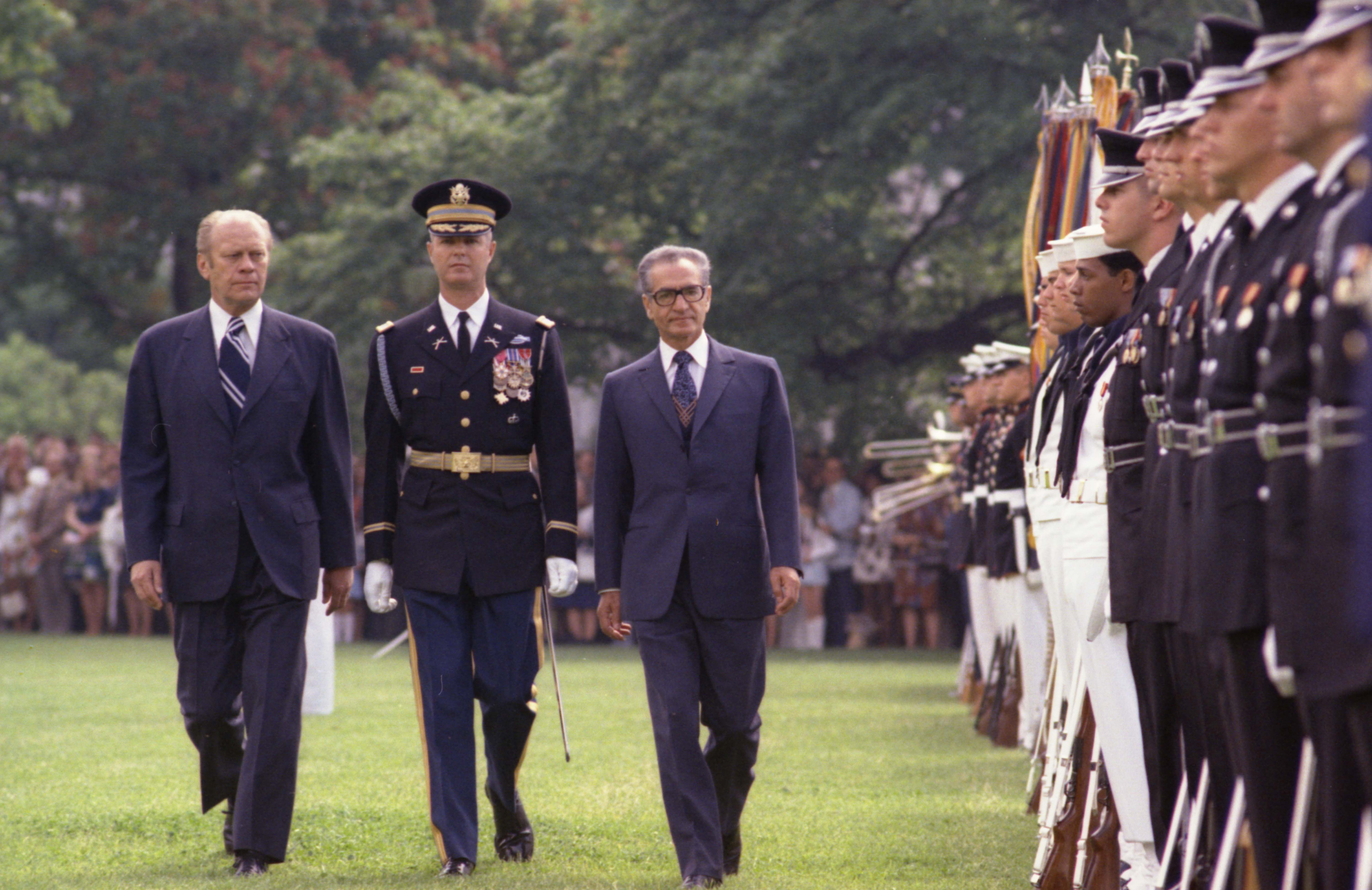
Introduction The Cold War was characterized by a bipolar global order, where states were often compelled to align with either the American or Soviet bloc. Within this framework, the regime of Mohammad Reza Shah Pahlavi in Iran was a quintessential US client state: a massive recipient of American arms, a bulwark against Soviet expansionism, and a guarantor of Western access to Persian Gulf oil. His sudden overthrow in 1979 by a popular revolution espousing a radical Islamist ideology sent shockwaves through the international system. The event was not just the fall of a dictator; it was the catastrophic failure of…
-
When the UN was founded in 1945 it was dominated by the old colonial empires. Nearly one‐third of humanity – about 750 million people – then lived under colonial rule . The original 51 member states included Britain, France, Belgium, the Netherlands and other imperial powers (and even South Africa), while many colonized peoples had no independent representation. From the start, however, the UN Charter anticipated a role in ending colonialism: it created Chapter XII’s international trusteeship system and a Trusteeship Council under Chapter XIII to “administer and supervise” territories transitioning from empire to self-rule . In theory the Trusteeship Council would…
-
Introduction The United Nations emerged at the end of World War II as a bold experiment in collective security, determined “to save succeeding generations from the scourge of war.” But in the early Cold War (roughly 1947–1956) the UN’s high-minded ideals quickly ran up against intense U.S.–Soviet rivalry. Instead of disarming, both superpowers used the UN to press their own agendas, often paralyzing the organization’s decision-making. Security Council meetings were frequently adjourned or vetoed out of existence by Moscow or Washington, even as crises raged below. The 1950 Korean War was the UN’s first major test – the Security Council’s…
-
By spring 1945 the tide of World War II had turned decisively. Nazi Germany would surrender within weeks, and even as fighting raged on in the Pacific the Axis defeat was seen as imminent. In this atmosphere U.S. President Franklin D. Roosevelt died (April 12) on “the eve of complete military victory in Europe,” just months before Japan’s defeat . His successor, Harry Truman, knew that the postwar settlement could not wait for total victory. Addressing the San Francisco meeting, Truman declared that delegates’ task was singular: “You are to write the fundamental charter” of a new organization whose “sole…