-
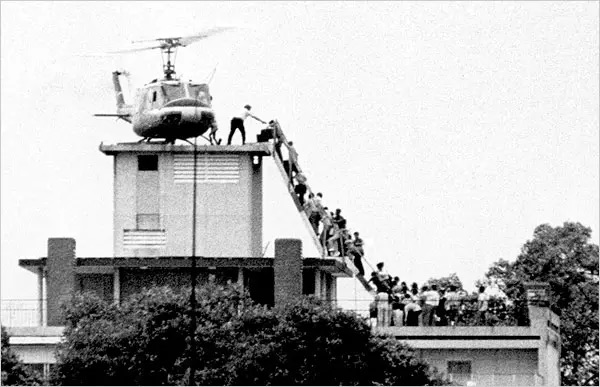
The United States spent more than a decade in Vietnam, dropped more bombs on it than were dropped by all sides in the Second World War, and lost. The defeat was not primarily military. It was political, strategic, and ultimately moral: a failure to understand what the war was, who it was against, and what winning would have required.
-

In 1991, George H.W. Bush promised a “new world order” — a world in which law and cooperation would replace force and rivalry. Within three years, 800,000 people had been murdered in Rwanda in a hundred days while the international community watched. The 1990s were not a liberal peace. They were a laboratory for the failures that would define the century to come.
-

On 30 June 1936, a small, erect man in a black cloak and a white robe walked to the podium of the League of Nations assembly hall in Geneva and waited for the jeering Italian journalists in the press gallery to be removed before he began to speak. Haile Selassie I, Emperor of Ethiopia — King of Kings, Conquering Lion of the Tribe of Judah — had travelled to Geneva to make a personal appeal to the assembled representatives of world civilisation, eight months after Italian forces under Mussolini’s orders had invaded his country, six weeks after Italian troops had…
-

On the morning of 13 December 1937, Japanese troops entered the Chinese city of Nanjing. The city had been the capital of the Nationalist government, which had fled westward ten days earlier, leaving behind a population of perhaps half a million civilians and a garrison of soldiers who had largely melted away into the city’s streets, stripped of their uniforms.
-
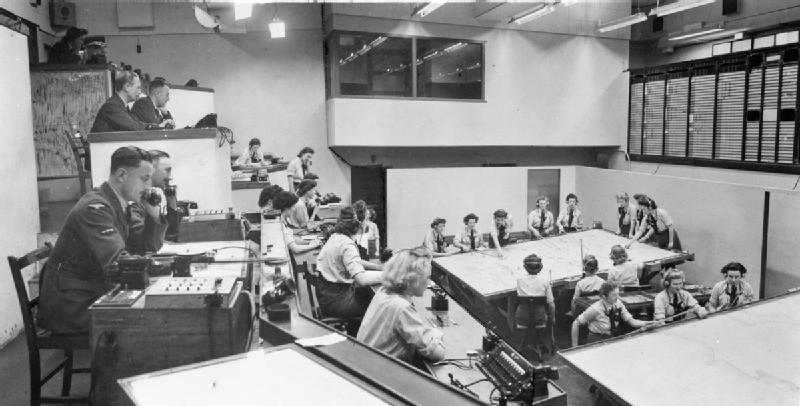
In this episode of the Explaining History Podcast, we dive into military history—a departure from our usual focus on social and diplomatic history—to explore Richard Overy’s magisterial work, The Bombing War, and the crucial role of Air Chief Marshal Hugh Dowding in Britain’s survival during the summer and autumn of 1940. I’ll be honest: I’ve often shied away from military history, partly because of how it’s been popularised. The “our lads what won it” approach has never appealed to me. But there are exceptions—Harper and Baylis’s Forgotten Armies and Forgotten Wars come to mind as social histories of war in…
-

Introduction The Western Front of the First World War occupies a uniquely grim position in the popular imagination. It is a landscape defined by static lines of trenches, the nihilistic slaughter of the Somme and Passchendaele, and the apparent futility of a generation sacrificed by an incompetent and callous high command. This pervasive narrative, often summarised by the aphorism “lions led by donkeys,” posits the conflict as a catastrophic failure of strategy and humanity, a four-year descent into meaningless attrition. While this perspective captures the profound human tragedy of the war, it fails to apprehend the underlying strategic, political, and…
-
From Restraint to Ruin – The Birth of the Bombing WarAt the dawn of World War II in 1939, a fragile consensus existed among the warring powers. Spurred by an appeal from President Roosevelt, leaders like Neville Chamberlain and even Hitler gave public undertakings to abstain from the horror of aerial attacks on civilians. There was a genuine, if naïve, belief that the looming conflict could be “humanised,” and that the bomber would be restricted to purely military targets.But how did this initia
-
Explaining History Podcast: 2025 in Review – The Year the Tech War Was LostAs 2025 draws to a close, we reflect on a pivotal year that historians may one day see as the moment the world changed forever. This episode delves into the most significant geopolitical shift of our time: the American retreat from its tech and trade war with China, and the quiet acknowledgment that the battle has been lost.Join us as we analyze the key indicators of this tipping point, from tech oligarch Peter Thiel losi
-
In this episode of the Explaining History podcast, host Nick Shepley is joined by veteran journalist and author Paul Vallely to explore the definitive inside story of Live Aid and its far-reaching legacy. Vallely’s new book, Live Aid: The Definitive 40-Year Story from Pop and Poverty to Politics and Power, chronicles the journey from the 1984–85 Ethiopian famine and the iconic 1985 Live Aid concert through four decades of activism against global poverty. The conversation delves into how a charit
-
Churchill’s Spaniards: The Spanish Republicans Who Fought for Britain in WWII — with Sean F. Scullion In this episode, I speak with historian Sean F. Scullion, author of Churchill’s Spaniards, about a remarkable and little-known story: the Spanish Republicans who escaped the fall of the Second Republic, endured internment under Vichy France, and later volunteered to fight in the British Army against fascism from 1940 to 1945. Drawing on multi-lingual archival work and over 110 family interviews,