-
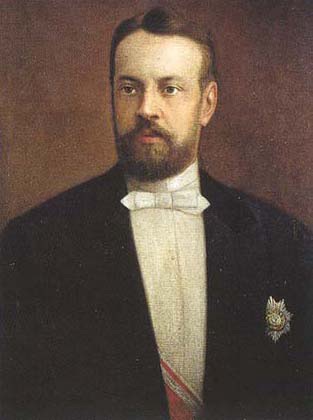
How Witte’s state-driven industrialisation of the 1890s made Russia a modern power — and manufactured the working class that would rise against the autocracy in 1905 and 1917.
-

In 1978, the People’s Republic of China was one of the poorest countries in the world. Its economy had been devastated by the convulsions of the Maoist era — the Great Leap Forward, the Cultural Revolution — and its population of nearly a billion people had a per capita income comparable to sub-Saharan Africa. Forty years later, China was the world’s second-largest economy, the largest manufacturer, the largest trading nation, and a military and technological power whose capacities no other country could ignore. The transformation was without precedent in the history of economic development.
-

A perfect storm of deregulation and loose monetary policy triggered the subprime mortgage crisis, reshaping modern finance.
-

Italy’s economic miracle from 1951 to 1963 transformed it from an agricultural country into a consumer powerhouse, driven by the Marshall Plan, industrial growth, and European integration. By 1963, Italy was a modern metropolis, with Milan gleaming in steel and glass, and families enjoying new comforts. This remarkable shift reshaped Italy’s economy and society, leaving a legacy of both progress and uneven development.
-

The 20th century redefined global labour migration with the rise of temporary guest workers, transforming economies through transient yet crucial labor cycles. Discover how these programs shaped modern capitalism’s heart.
-

Is the era of Western global dominance coming to an end? This episode explores the profound decline of Western, and particularly American, “hard” and “soft” power on the world stage.We begin by contrasting two pivotal moments in history: Lord Palmerston’s 19th-century Britain, which could blockade a nation over the dubious claims of a single subject, and the modern United States, a superpower unable to prevent a small city-state like Singapore from punishing one of its citizens. This shift illus
-
This article investigates the phenomenon of the Wirtschaftswunder (economic miracle) in West Germany from the currency reform of 1948 through the boom years of the 1950s. It analyzes the tripartite foundation of this recovery: the ordoliberal policies of Ludwig Erhard, the geopolitical stabilization provided by the Marshall Plan, and the reintegration of West Germany into global trade markets. Beyond the macroeconomic statistics, the article argues that the economic miracle served a profound sociological function. For a population burdened by moral catastrophe and military defeat, economic success became a surrogate identity. The Deutsche Mark replaced the swastika and the flag as the primary…
-
This article examines the German hyperinflation of 1921-1923 as a socioeconomic trauma that fundamentally reshaped Weimar culture, psychology, and social relations. It argues that the inflation experience represented more than an economic crisis—it constituted a metaphysical event that shattered traditional values of thrift, planning, and deferred gratification, creating what historian Bernd Widdig has termed an “inflationary mentality.” Through analysis of literary works, visual art, economic data, and firsthand accounts, this article demonstrates how the collapse of the currency created a culture of frantic immediacy, corrosive cynicism, and radical materiality. The central thesis posits that the inflation crisis forged the distinctive…
-
Explaining History Podcast: 2025 in Review – The Year the Tech War Was LostAs 2025 draws to a close, we reflect on a pivotal year that historians may one day see as the moment the world changed forever. This episode delves into the most significant geopolitical shift of our time: the American retreat from its tech and trade war with China, and the quiet acknowledgment that the battle has been lost.Join us as we analyze the key indicators of this tipping point, from tech oligarch Peter Thiel losi