-
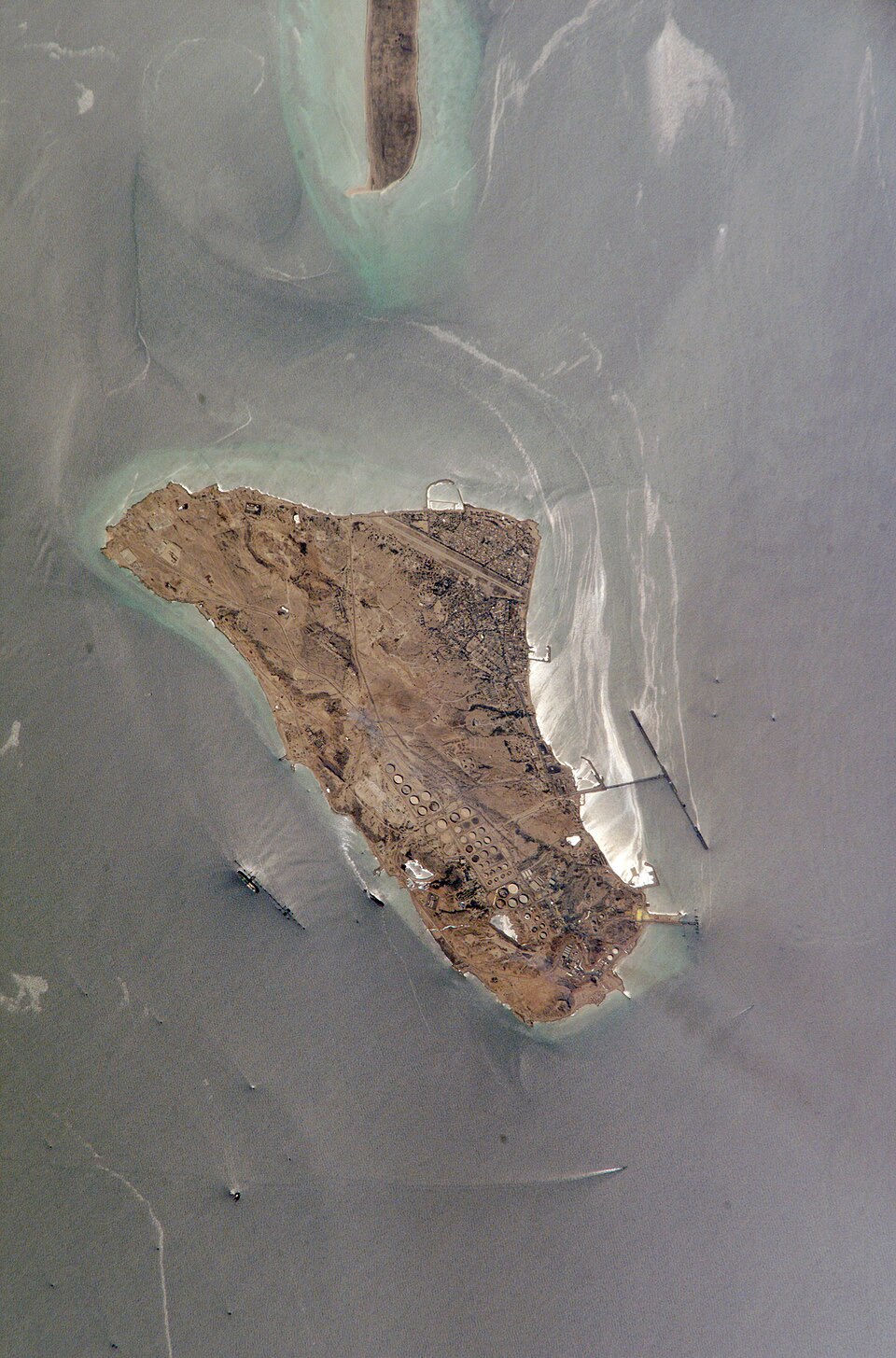
Kharg Island, a strategic coral outcrop off Iran’s western coast, plays a pivotal role in Iran’s oil exports, handling 90% of crude oil exports. Seizing it could economically cripple Iran without American troops needing to land. However, history warns against such bold moves—Gallipoli and Dien Bien Phu show the perils of holding fortified positions against asymmetric warfare.
-

The collapse of the Russian Army in World War I is often attributed to the overwhelming industrial superiority of Germany or the political decay of the Romanov dynasty. However, a closer inspection reveals a more specific, structural failure: the inability of the Russian military establishment to process the data generated by its own defeat a decade earlier.
-

Introduction The United States’ involvement in the First Indochina War represents a crucial chapter in the history of American foreign policy, marking the initial phase of what would become deep military commitment in Southeast Asia. This period witnessed the fundamental transformation of American policy from relative disinterest to substantial engagement, establishing patterns that would characterize later involvement in Vietnam. The evolution of American policy during this conflict reveals the powerful influence of Cold War mentality on foreign policy decision-making, the tensions between anti-colonial traditions and containment imperatives, and the early manifestations of what would later be termed “mission creep” in…
-
Table of Contents 1. Introduction: The Architect of Victory In the military history of the 20th Century, few figures have a legacy as significant and complex as General Vo Nguyen Giap. The principal military commander of the Viet Minh and later the People’s Army of Vietnam (PAVN), Giap orchestrated stunning victories against two of the 20th century’s most formidable Western powers: France and the United States. His career spanned decades of conflict, transforming a ragtag band of guerrillas into a disciplined, conventional force capable of achieving national liberation. This article delves into Giap’s military philosophy and strategy, dissecting the evolution…
-

The Iran-Iraq War, which erupted in September 1980 and lasted for eight grueling years, was the longest conventional war of the twentieth century and one of its most brutal. While often analyzed through a geopolitical lens as a regional power struggle or a proxy conflict influenced by the Cold War, its most profound consequences were domestic, particularly for Iran.
-
During the decade before full-scale U.S. involvement, war reporting in Vietnam was fraught with challenges. This was a formative period for journalism in the Vietnam War, when only a small cadre of reporters were on the ground and the truth often proved elusive. In this episode of Explaining History, we explore how American correspondents operated under censorship (both formal and informal), how official manipulation shaped their stories, and how some British and international reporters managed to sidestep these constraints to uncover hidden truths. Drawing on Philip Knightley’s classic study The First Casualty, we will see that the first casualty of…
-
Introduction The United Nations emerged at the end of World War II as a bold experiment in collective security, determined “to save succeeding generations from the scourge of war.” But in the early Cold War (roughly 1947–1956) the UN’s high-minded ideals quickly ran up against intense U.S.–Soviet rivalry. Instead of disarming, both superpowers used the UN to press their own agendas, often paralyzing the organization’s decision-making. Security Council meetings were frequently adjourned or vetoed out of existence by Moscow or Washington, even as crises raged below. The 1950 Korean War was the UN’s first major test – the Security Council’s…
-
By spring 1945 the tide of World War II had turned decisively. Nazi Germany would surrender within weeks, and even as fighting raged on in the Pacific the Axis defeat was seen as imminent. In this atmosphere U.S. President Franklin D. Roosevelt died (April 12) on “the eve of complete military victory in Europe,” just months before Japan’s defeat . His successor, Harry Truman, knew that the postwar settlement could not wait for total victory. Addressing the San Francisco meeting, Truman declared that delegates’ task was singular: “You are to write the fundamental charter” of a new organization whose “sole…
-
What can history’s great armies teach us about the bond between a nation and its military? In a recent podcast we explored this question with Sir Barney White-Spunner, whose new book Nations in Arms: Five Armies That Made Europe examines how five pivotal armies not only won battles but also transformed the societies they served. It’s an “incredibly timely” study, as today’s world reminds us that war can re-emerge even after decades of peace. White-Spunner argues that governments must “fundamentally re-think their relationship with armies and soldiers” in light of modern threats. By looking at five case studies – from…
-
Hi everyone, as I might have mentioned on the podcast, I’ve now got the time and the long covid recovery to start blogging again. Here’s a rundown of everything I’ve podcasted this week: Poverty, Caste and recruitment to the Indian Army during the Second World War: https://play.acast.com/s/explaininghistory/poverty-casteandrecruitmenttotheindianarmyduringworldwartwo France, Britain and the Road to Suez 1952-56: https://play.acast.com/s/explaininghistory/france-britainandtheroadtosuez1952-56 The ethnic cleansing of German civilians in Eastern Europe after 1945: https://play.acast.com/s/explaininghistory/theethniccleansingofgermanciviliansineasterneurope-1945 Anti Communism in Europe 1917-21: https://play.acast.com/s/explaininghistory/anticommunismineurope1917-21