-

The fall of the Berlin Wall on 9 November 1989 was, in a sense, a bureaucratic accident. But the accident was only possible because the system behind the wall had already ceased to function. This is the story of how the Cold War ended — and why the world it made was so different from what anyone expected.
-

On the evening of 8 May 1956, the Royal Court Theatre in Sloane Square, London, staged the premiere of a new play by a twenty-six-year-old actor and writer from Fulham named John Osborne. The audience that night included a mixture of established theatre critics and younger spectators who had been drawn in by word of mouth and a sense — difficult to define precisely but real — that something was about to happen.
-

The Europe that emerged from the Second World War in 1945 was a continent of ruins — physical, moral, and institutional. How artists and filmmakers responded to that destruction, what they chose to show and what they could not bring themselves to face, tells us as much about the possibilities and limits of cultural reconstruction as any political history of the period.
-

The Greek Civil War of 1946–49 was not merely a military conflict — it was a founding trauma that shaped everything that followed: the suppression of the left, the culture of political exclusion, and the authoritarian undertow that eventually produced the junta of 1967. To understand modern Greece, you have to understand the war that was never allowed to end.
-
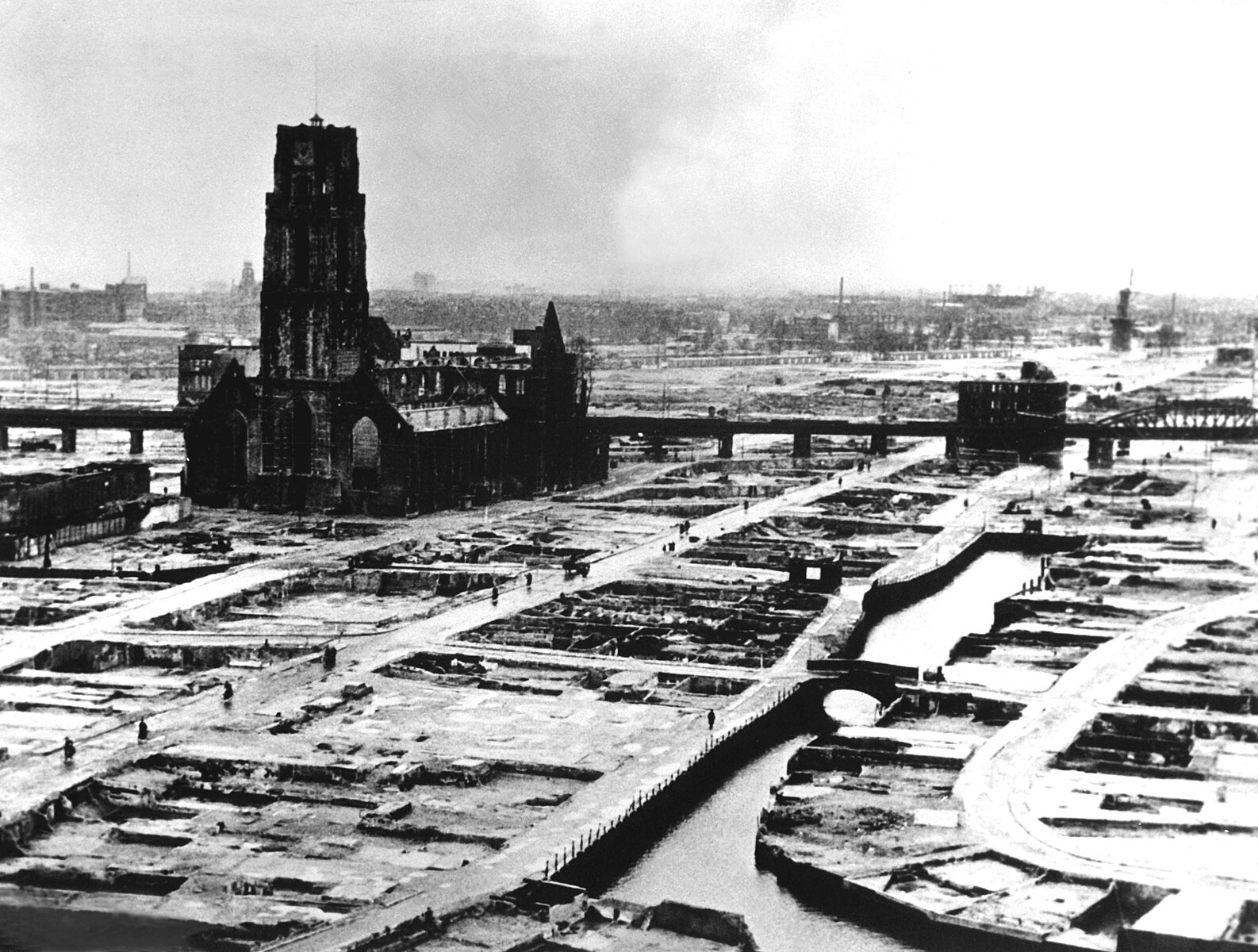
The collapse of the Low Countries in May 1940 was precipitated by a catastrophic failure of diplomatic strategy. Following the remilitarization of the Rhineland, Belgium and the Netherlands retreated into a strict, armed neutrality, severing military coordination with France and Britain. This “Policy of Independence” created a strategic vacuum on France’s northern flank, preventing the Allies from preparing defensive lines in Belgium. Consequently, Allied forces were forced to execute the risky “Dyle Plan,” rushing into unprepared positions at the moment of invasion. The lack of interoperability, the delusion of the “Oslo States” bloc, and the swift capitulation of King Leopold…
-

Churchill’s Spaniards: The Spanish Republicans Who Fought for Britain in WWII — with Sean F. Scullion In this episode, I speak with historian Sean F. Scullion, author of Churchill’s Spaniards, about a remarkable and little-known story: the Spanish Republicans who escaped the fall of the Second Republic, endured internment under Vichy France, and later volunteered to fight in the British Army against fascism from 1940 to 1945. Drawing on multi-lingual archival work and over 110 family interviews,
-
What was life really like for the poor and powerless in the wake of the Napoleonic Wars? In this episode of the Explaining History podcast, we’re joined by Katharine Quarmby, author of the powerful new historical novel, The Low Road.Set in 1813, The Low Road is a story of hardship, struggle, and love found in the most brutal corners of English life. Based on a true story unearthed from her hometown in Norfolk, Catherine’s novel follows an orphaned girl, Hannah, as she navigates the cruel institu
-
In this episode of Explaining History, Nick is joined by acclaimed author Anne Weber to discuss her new book Sanderling (Indigo Press, 2025) — a deeply personal and philosophical exploration of family, identity, and the shadow of Germany’s past.Through the story of her great-grandfather Florens Christian Rang — a theologian, lawyer, and close friend of figures such as Walter Benjamin and Martin Buber — Weber examines four generations of her family to ask profound questions:What does it mean to
-
In 1945, weeks before the Western Allies arrived in Hitler’s capital the Red Army controlled the city and began to quietly impose a new generation of German communists. Amid the ruins and devastation, ordinary Berliners, aware of their country’s crimes, began to rebuild. This episode draws on Berlin by Sinclair McKay.Go Deeper: Visit our website at www.explaininghistory.org for articles and detailed explorations of the topics discussed.▸ Join the Conversation: Our community of history enthusiast
-
Table of Contents Introduction: The Myth of Uniform Resistance The popular narrative of World War II in Europe often simplifies a complex moral landscape into a stark, tripartite story of German perpetrators, innocent victims, and heroic national resistance movements. This comforting fiction, cultivated assiduously in the decades following 1945, obscures a far more disturbing and widespread reality: the indispensable role played by the state bureaucracies, local institutions, and civilian populations of occupied and allied nations in the Holocaust. The SS and the Nazi apparatus, for all their monstrous efficiency, lacked the manpower, the local knowledge, and the administrative reach to…