-

In the 1920s, while Hollywood was perfecting the “continuity system”—a seamless, invisible style of editing designed to tell clear, character-driven stories—a revolution of a different kind was exploding in the young Soviet Union. This revolution was not just political; it was cinematic. From the rubble of the Tsarist empire and the fervor of the Bolshevik Revolution emerged a group of filmmakers and theorists who saw in cinema the ultimate tool for building a new socialist consciousness. For them, the essence of cinema was not in the shot, but in the space between the shots. They believed that meaning was not…
-
Introduction The history of internal resistance to apartheid is a narrative of strategic adaptation, ideological innovation, and generational transformation. From its formal establishment in 1912 through the watershed events of 1976, the liberation movement underwent several profound shifts in tactics, organization, and philosophical orientation, each responding to both the failures of previous approaches and the escalating brutality of the apartheid state. This article argues that the internal resistance evolved through four distinct but overlapping phases: the constitutional protest phase (1912-1949), the mass mobilization phase (1950-1960), the armed struggle phase (1961-1969), and the ideological regeneration phase (1970-1976), culminating in the Soweto…
-
Introduction The apartheid system that governed South Africa for nearly five decades stands as one of the most comprehensive and brutal systems of racial oppression in modern history. Its significance, however, extends far beyond its national boundaries, for the struggle against apartheid generated the most widespread and influential global solidarity movement of the twentieth century. This article examines apartheid and the anti-apartheid movement as interconnected phenomena: one representing the culmination of colonial racism codified into law, the other embodying the emergence of a new form of international human rights activism. This analysis argues that the anti-apartheid movement’s unprecedented success resulted…
-
Introduction Conventional histories of the First Indochina War often emphasize military campaigns, battlefield tactics, and great power involvement while neglecting the crucial political dimension that ultimately determined the conflict’s outcome. This article argues that the struggle for political legitimacy and popular support constituted what might be termed “the other war”—a parallel contest that proved equally important to military operations in deciding Vietnam’s future. While French Union forces frequently prevailed in conventional engagements, they consistently lost the political struggle for Vietnamese allegiance, ensuring that military victories remained ephemeral and ultimately meaningless. The political dimension of revolutionary warfare encompasses what contemporary analysts…
-

Introduction: Beyond the Adelita Archetype In the popular imagination, the women of the Mexican Revolution are often relegated to the romanticized archetype of the Adelita—a loyal camp follower, a source of comfort and domesticity amidst the chaos of war. While the soldaderas who fulfilled these crucial support roles were undeniably vital to the revolutionary armies, this narrow depiction obscures the multifaceted and often martial contributions of women in the conflict. It is within this historiographical lacuna that the story of Petra Herrera emerges, a figure who defied the gendered expectations of her time to become a respected and formidable military leader. Herrera’s life,…
-
Inside the Gilded Cage and Iran’s Paradox of Progress Before 1979 From the Explaining History Podcast This article is a detailed companion piece to our recent podcast episode on the paradoxes of Pre-Revolutionary Iran. It expands on the key themes and historical figures discussed in the show. Introduction On the eve of its dramatic 1979 revolution, Iran presented a dazzling and deeply deceptive picture to the world. It was a nation of soaring skyscrapers and ancient bazaars, of fighter jets and clerical scholars, of Western-educated technocrats and devoted pilgrims. At its head sat Mohammad Reza Pahlavi, the Shah of Iran,…
-
Table of Contents 1. Introduction: The Architect of Victory In the military history of the 20th Century, few figures have a legacy as significant and complex as General Vo Nguyen Giap. The principal military commander of the Viet Minh and later the People’s Army of Vietnam (PAVN), Giap orchestrated stunning victories against two of the 20th century’s most formidable Western powers: France and the United States. His career spanned decades of conflict, transforming a ragtag band of guerrillas into a disciplined, conventional force capable of achieving national liberation. This article delves into Giap’s military philosophy and strategy, dissecting the evolution…
-

The Iran-Iraq War, which erupted in September 1980 and lasted for eight grueling years, was the longest conventional war of the twentieth century and one of its most brutal. While often analyzed through a geopolitical lens as a regional power struggle or a proxy conflict influenced by the Cold War, its most profound consequences were domestic, particularly for Iran.
-
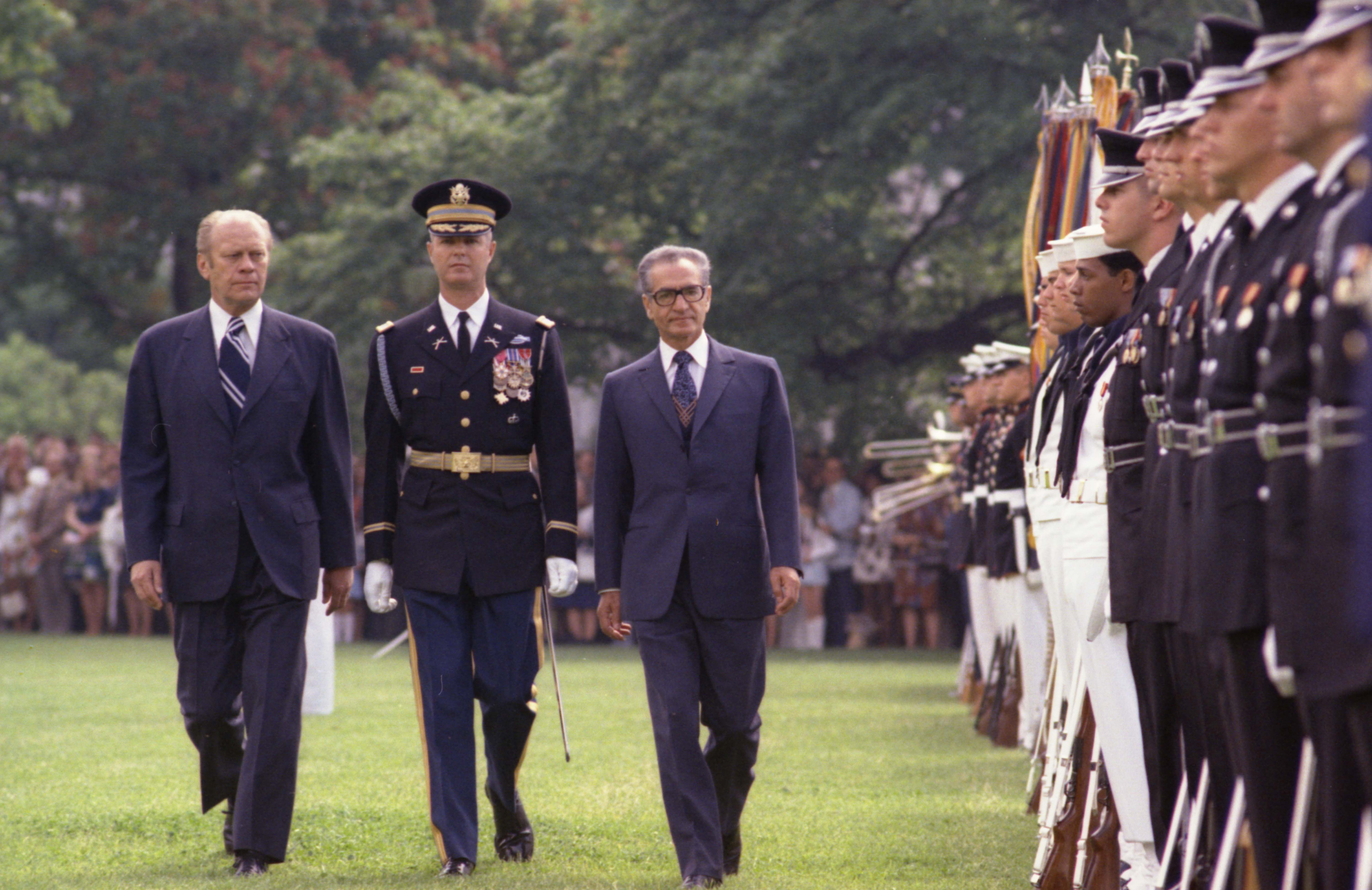
Introduction The Cold War was characterized by a bipolar global order, where states were often compelled to align with either the American or Soviet bloc. Within this framework, the regime of Mohammad Reza Shah Pahlavi in Iran was a quintessential US client state: a massive recipient of American arms, a bulwark against Soviet expansionism, and a guarantor of Western access to Persian Gulf oil. His sudden overthrow in 1979 by a popular revolution espousing a radical Islamist ideology sent shockwaves through the international system. The event was not just the fall of a dictator; it was the catastrophic failure of…
-
Introduction On November 4, 1979, a group of Iranian students scaled the walls of the U.S. Embassy in Tehran, overwhelming Marine guards and seizing 66 American diplomats and citizens. What was initially planned as a brief sit-in escalated into a 444-day ordeal that transfixed the world, crippled the presidency of Jimmy Carter, and permanently altered the relationship between the United States and Iran. The conventional narrative often frames the event as a spontaneous outburst of anger triggered by the United States’ decision to allow the deposed Shah, Mohammad Reza Pahlavi, to enter the country for medical treatment. While this was…