-
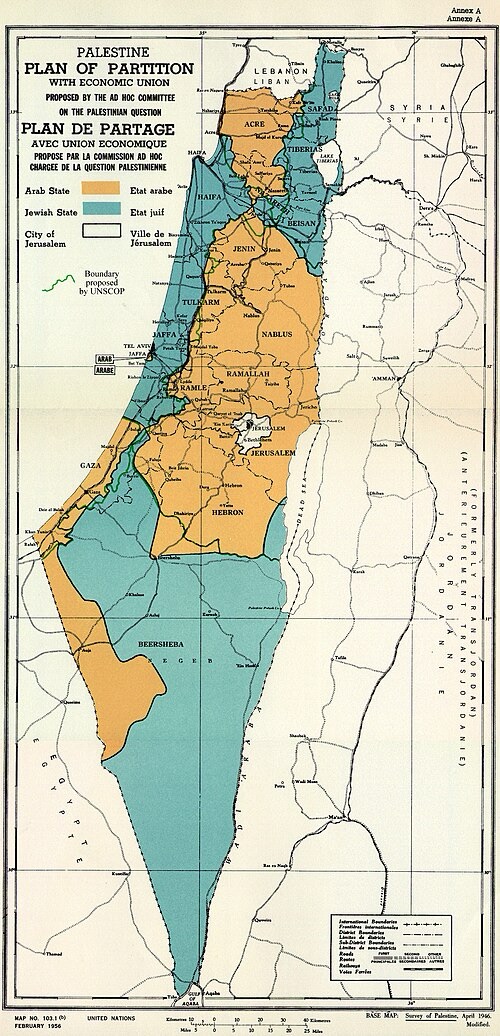
The British withdrawal in 1947-48 triggered simultaneous national traumas, laying the foundation for massive displacement and identity crises.
-

Introduction: The Funeral of Equidistance On the morning of August 9, 1971, in the gilded halls of New Delhi’s Rashtrapati Bhavan, the Indian Minister of External Affairs, Swaran Singh, and the Soviet Foreign Minister, Andrei Gromyko, affixed their signatures to a document titled the Treaty of Peace, Friendship, and Cooperation. To the casual observer of international law, the text might have appeared as a standard diplomatic instrument—a framework for cultural exchange, trade normalization, and scientific collaboration. However, in the chancelleries of Washington, Beijing, and Islamabad, the signing was recognized for what it truly was: a seismic shift in the geopolitical architecture…
-

The ceremony of surrender of Pakistan’s army in Dhaka on December 16, 1971, marked one of the most decisive and humiliating moments in modern military history. As Lieutenant General A. A. K. Niazi of the Pakistan Army signed the instrument of surrender before the Indian General Jagjit Singh Aurora, the world’s then most populous Muslim nation was formally dismembered. East Pakistan became the independent People’s Republic of Bangladesh, and what remained was a geographically truncated, psychologically shattered Pakistan. The 1971 war was not merely a military defeat; it was a catastrophic national trauma that shattered the foundational ideology on which…
-
When the UN was founded in 1945 it was dominated by the old colonial empires. Nearly one‐third of humanity – about 750 million people – then lived under colonial rule . The original 51 member states included Britain, France, Belgium, the Netherlands and other imperial powers (and even South Africa), while many colonized peoples had no independent representation. From the start, however, the UN Charter anticipated a role in ending colonialism: it created Chapter XII’s international trusteeship system and a Trusteeship Council under Chapter XIII to “administer and supervise” territories transitioning from empire to self-rule . In theory the Trusteeship Council would…
-
Introduction In 1947, the Partition of British India into India and Pakistan marked one of the most traumatic political events of the 20th century. It was not merely a line drawn on a map—it was a moment of mass displacement, communal violence, and geopolitical upheaval that continues to shape South Asia’s identity today. This guide brings together a series of in-depth historical essays that go beyond textbook accounts. Each article explores a different dimension of Partition: from the colonial state’s role in shaping religious identity to the trauma etched into generational memory. Whether you are a student, educator, or curious…
-
Introduction The 1947 Partition of British India – which cleaved the subcontinent into independent India and Pakistan (and later Bangladesh) – was not only a geopolitical event but also a profound human tragedy. It triggered the largest mass migration in recorded history, displacing an estimated 12–20 million people amid sectarian violence . In the span of just a few months, formerly harmonious towns and villages were ripped apart along religious lines; neighbors became enemies, and up to one million people were killed, with some 75,000 women abducted and raped in the communal carnage . Families fled ancestral homes that had…
-
Introduction In the late 19th and early 20th centuries, the British colonial state in India undertook an unprecedented project of counting and classifying its subjects. Decennial census operations from 1871 to 1941 attempted to enumerate a vast population of many millions, recording details like religion, caste, tribe, and occupation. This seemingly bureaucratic exercise had profound social and political consequences. By creating official categories and population statistics for religious and caste communities, the colonial census institutionalised rigid social divisions that had previously been more fluid or locally defined . Identities that were once overlapping or ambiguous were transformed into distinct, enumerated…
-
Introduction The 1947 Partition of India was accompanied by an unprecedented eruption of communal violence, with the provinces of Punjab and Bengal emerging as its bloodiest epicentres. When British colonial rule abruptly ended in August 1947, these two sprawling provinces – each religiously mixed and slated for division – descended into chaos. Across Punjab and Bengal, an estimated 12–14 million people fled their homes amid carnage and terror, producing the largest forced migration in modern history . Contemporary observers and historians have described the violence in these regions as ethnic cleansing in nature rather than “traditional” rioting . In Punjab…
-
Introduction The Bengal Famine of 1943 was one of the worst human catastrophes in colonial India, killing an estimated 2–3 million people in British-ruled Bengal through starvation and disease. It struck in the midst of World War II and the Indian independence movement, creating a perfect storm of natural distress and man-made policy failures. Beyond its immediate toll, the famine became a highly charged political episode. Multiple parties – from the British colonial government to Indian political organizations – blamed each other for the calamity. The crisis was soon woven into communal narratives, with Hindu and Muslim leaders and media…
-
Introduction: The Moment That Changed the Subcontinent? On 23 March 1940, the All-India Muslim League adopted a resolution in Lahore that is now widely seen as the foundation stone of Pakistan. Yet the Lahore Resolution itself was marked by careful ambiguity. It did not use the word “Pakistan,” nor did it explicitly call for partition. Instead, it demanded “independent states” in the Muslim-majority areas of British India. This article interrogates whether the Lahore Resolution was a definitive blueprint for sovereign statehood or a strategic bargaining chip in a rapidly polarising colonial context. It traces the evolution of Muhammad Ali Jinnah’s…