-
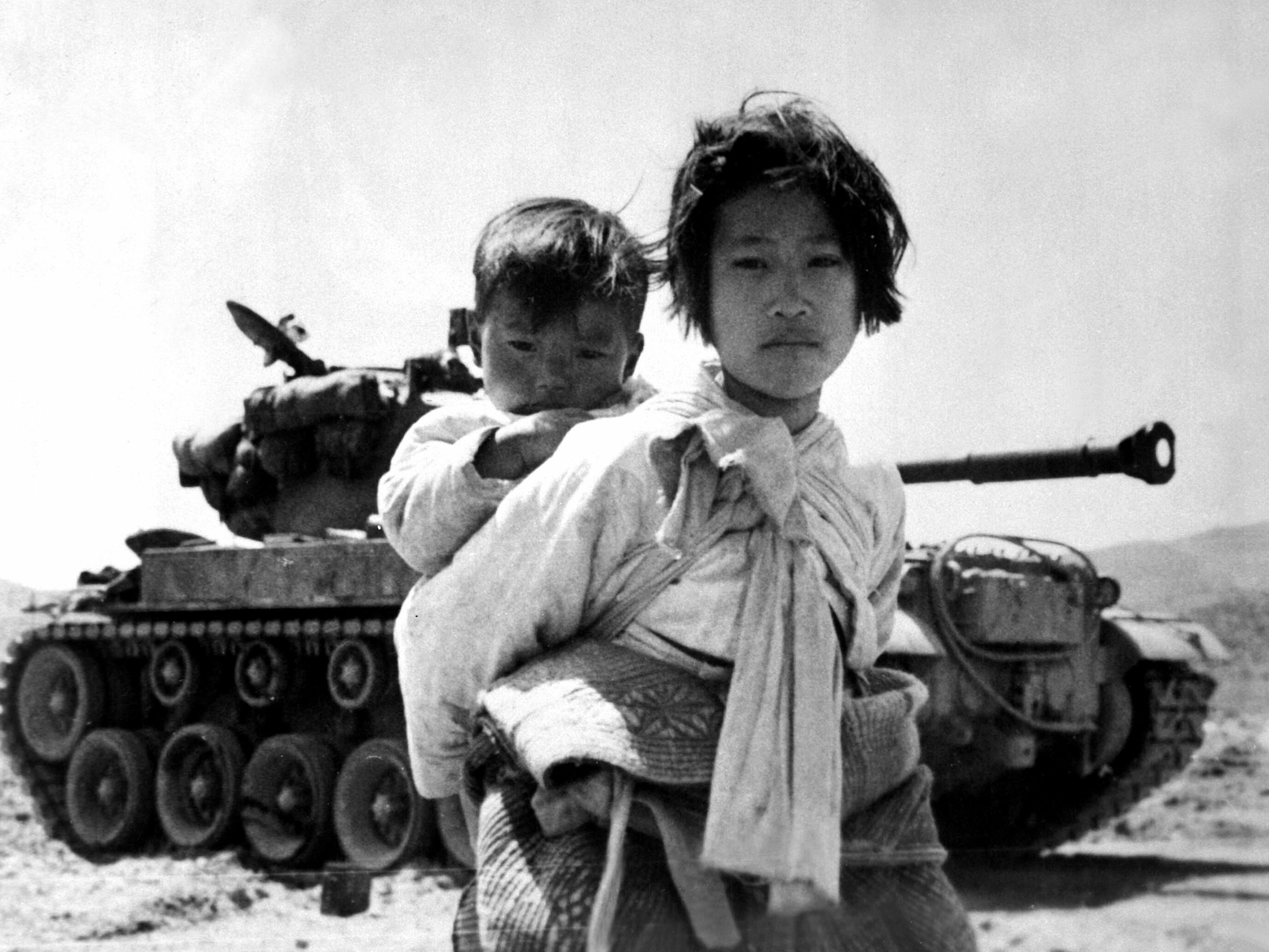
In the latest episode of the Explaining History Podcast, Paige Towers unpacks the painful history of Korean intercountry adoption – a story of good intentions, colonial attitudes, reckless systems, and the voices of adoptees finally being heard.
-

The Democratic People’s Republic of Korea (DPRK) shocked the world in October 2006 with its first nuclear test, announcing itself as a new nuclear-armed state. In the years since, Pyongyang has conducted a series of increasingly powerful underground tests (2006, 2009, 2013, January 2016, September 2016, and September 2017) while also developing long-range ballistic missiles . Each test drew international condemnation and tougher UN sanctions, but North Korea persisted. Regional media – for example, South Korean news – prominently covered these events (see below) as Seoul felt directly threatened. According to seismic data, the first test in 2006 yielded under…
-
The Sunshine Policy (1998–2008) marked the most sustained era of South Korean engagement with the North since the Korean War. Initiated by President Kim Dae-jung, it pursued “genuine, long-term improvements in inter-Korean relations” through economic cooperation, people-to-people exchanges, and dialogue . Its goals – often summarized as “de facto unification” and permanent peace – rested on five chief ideals identified by scholar Chung-in Moon: absolute rejection of war, incremental unification, transforming the North through engagement, placing South Korea at the center of the solution, and building domestic consensus . In practice, Sunshine meant “separating humanitarian and economic cooperation from political…
-
Introduction: Two Koreas, Two Identities The 1953 armistice halted the Korean War’s open conflict but cemented the peninsula’s division into two rival states. In the decades since, North Korea (the Democratic People’s Republic of Korea) and South Korea (the Republic of Korea) have each pursued aggressive nation-building projects to shore up their legitimacy. These efforts were rooted in starkly different political ideologies – the North’s doctrine of Juche (self-reliance) versus the South’s early ethos of anti-communist nationalism – and were carried out through comprehensive propaganda, education programs, media control, monument-building, and state rituals. This article explores how each regime constructed…
-

South Korea’s postwar transformation – famously dubbed the “Miracle on the Han River” – is one of the 20th century’s most dramatic development stories. Between the end of the Korean War in 1953 and the dawn of the 1990s, South Korea vaulted from war-torn poverty to newly industrialized prosperity. This rapid economic rise was accompanied by sweeping modernization and eventually, profound political change. How did South Korea go from ruins to riches in under four decades? This article explores the foundations laid in the 1950s under Syngman Rhee, the state-driven industrial boom under Park Chung-hee, the crucial roles of U.S.…
-
Introduction: A victory of survival When the guns fell silent along the Imjin and the Yalu in July 1953, the Democratic People’s Republic of Korea (DPRK) had survived—but only just. The Korean War had levelled cities, annihilated industrial plant, uprooted millions, and killed perhaps a tenth of the peninsula’s population. From that near-ruin, Kim Il-sung and the Workers’ Party of Korea (WPK) set out to rebuild a socialist state that would be more centralized, more militarized, and more ideologically disciplined than before the war. Between the armistice and the end of the 1970s, North Korea constructed an all-encompassing party-security apparatus;…
-
Introduction The armistice signed on July 27, 1953 halted the Korean War’s open hostilities but cemented a division of the peninsula that persists to this day . In the aftermath, North and South Korea embarked on starkly divergent trajectories – politically, economically, and socially – yet their fates remained deeply intertwined. Over the ensuing decades, the Democratic People’s Republic of Korea (North Korea) and the Republic of Korea (South Korea) pursued parallel paths shaped by Cold War rivalry, internal transformations, intermittent diplomatic engagement, and recurring military tensions. This article explores the post-1953 history of the two Koreas, tracing how each…
-
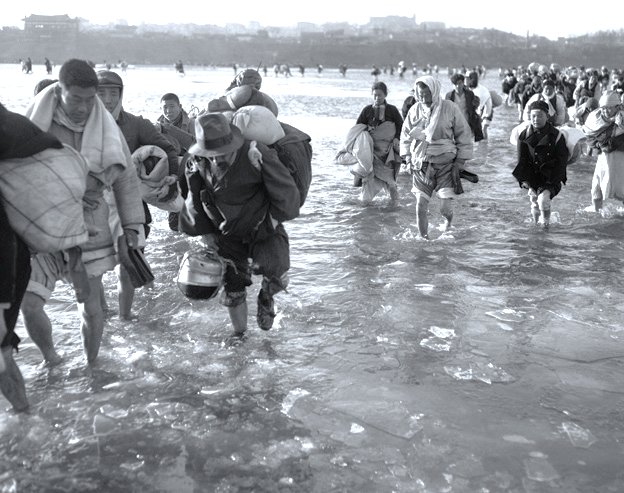
On October 19, 1950, units of the Chinese People’s Volunteer Army (PVA) quietly crossed the Yalu (Amnok) River into North Korea, dramatically altering the course of the Korean War. Only a year after its founding in 1949, the People’s Republic of China (PRC) plunged into a major conflict against the United States and United Nations forces. Why did China intervene in Korea, risking a confrontation with a far superior U.S. military? This question has fueled extensive historical debate. The Chinese leadership’s decision was shaped by a complex mix of political, military, and ideological motivations amid the early Cold War climate.…
-
By September 1950, the Korean War appeared to be nearing a grim conclusion. The United Nations forces and the South Korean army were cornered in the Pusan Perimeter, a small defensive enclave in the far southeast of the peninsula, battered by constant North Korean attacks. The North Korean People’s Army (NKPA), though bloodied and overstretched, seemed poised for a final, victorious push. Yet, in Tokyo, General Douglas MacArthur, the Supreme Commander of UN forces, was preparing not for a last stand, but for one of the most audacious and risky military operations in modern history: an amphibious landing at the…
-
The dawn of June 25, 1950, was deceptively quiet along the 38th parallel. For the soldiers of the Republic of Korea (ROK) army, it was just another day of uneasy vigilance along the world’s most fortified border. Yet, in the pre-dawn darkness, a thunderous artillery barrage shattered the stillness, heralding an event that would not only transform the Korean Peninsula but also define the contours of the Cold War for decades to come. The North Korean People’s Army (NKPA), a formidable force honed by Soviet training and equipped with modern tanks and artillery, launched a full-scale, multi-pronged invasion of the…