-
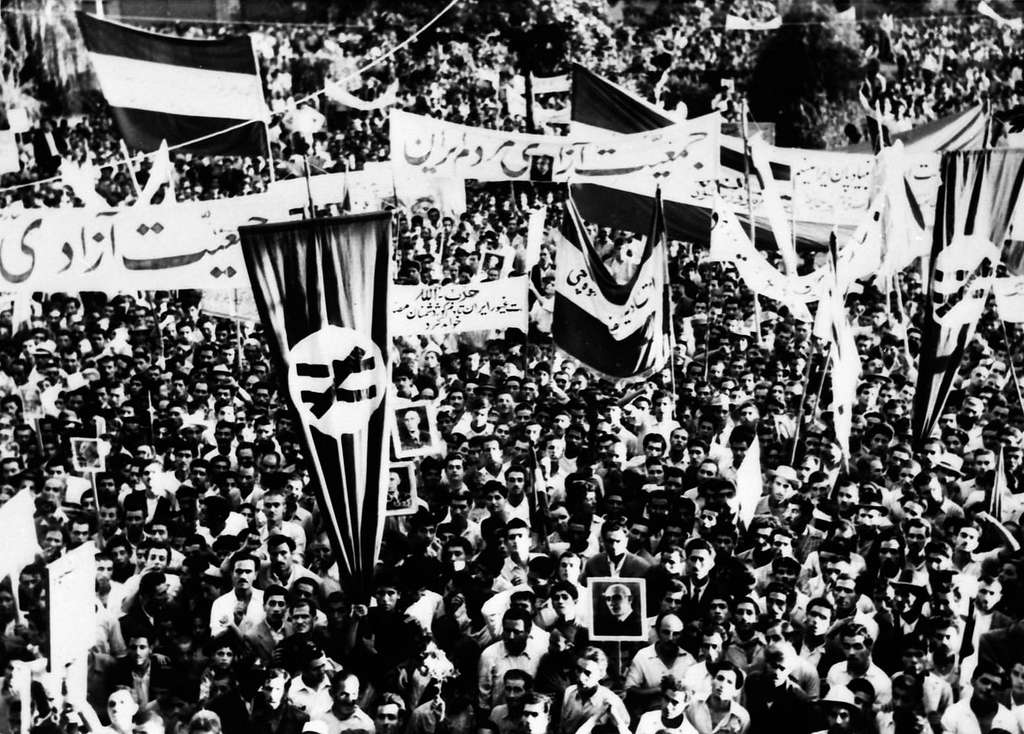
In one decisive episode, a democratically elected leader was removed in a covert Anglo-American operation, foreign powers reasserted control over Iranian oil, and the Shah’s autocracy was restored.
-

Introduction The United Nations emerged at the end of World War II as a bold experiment in collective security, determined “to save succeeding generations from the scourge of war.” But in the early Cold War (roughly 1947–1956) the UN’s high-minded ideals quickly ran up against intense U.S.–Soviet rivalry. Instead of disarming, both superpowers used the UN to press their own agendas, often paralyzing the organization’s decision-making. Security Council meetings were frequently adjourned or vetoed out of existence by Moscow or Washington, even as crises raged below. The 1950 Korean War was the UN’s first major test – the Security Council’s…
-
By spring 1945 the tide of World War II had turned decisively. Nazi Germany would surrender within weeks, and even as fighting raged on in the Pacific the Axis defeat was seen as imminent. In this atmosphere U.S. President Franklin D. Roosevelt died (April 12) on “the eve of complete military victory in Europe,” just months before Japan’s defeat . His successor, Harry Truman, knew that the postwar settlement could not wait for total victory. Addressing the San Francisco meeting, Truman declared that delegates’ task was singular: “You are to write the fundamental charter” of a new organization whose “sole…
-
By the late summer of 1944, World War II’s momentum had decisively shifted in favor of the Allies. In Europe, Allied armies had landed in Normandy, liberated Paris, and were pressing toward Germany’s borders, while Soviet forces swept westward across Eastern Europe . The “halcyon days” of mid-1944, as historian Michael Howard called them, saw the looming defeat of Nazi Germany and Imperial Japan, prompting Allied leaders to turn their focus from winning the war to securing the peace . Amid the optimism, serious questions arose: How would a shattered world be rebuilt, and what kind of international order could…
-
By late 1943 the course of World War II had decisively shifted. After the Soviet victory at Stalingrad (Feb. 1943) and the crushing of German forces at Kursk (July 1943), the Axis powers were retreating on all fronts. In Italy the Allies had invaded Sicily and toppled Mussolini, and in the Pacific the U.S. was advancing from Guadalcanal to Bougainville. With the pendulum swinging to Allied advantage, the “Big Three” (Churchill, Roosevelt, Stalin) recognized the need to plan not only final offensives but also the postwar settlement. As one commentator noted, against “a decisive turn of the tide in the Allies’ favour,…
-
In this episode of Explaining History, we explore the fraught world of war reporting in Vietnam during the decade before full-scale U.S. involvement. Drawing on Philip Knightley’s classic study The First Casualty, we examine how embedded American correspondents were constrained by censorship, official manipulation, and the Pentagon’s control over information. We also highlight the surprising advantage held by some British reporters, who—operating outside the U.S. military’s embedded framework—we
-
In this episode, I read from Pankaj Mishra’s Bland Fanatics, a searing critique of liberalism and its reception beyond the West. Mishra explores how, across much of the Global South, liberalism is not the triumphant, self-evident good it is often assumed to be in Euro-American discourse, but instead a system bound up with histories of empire, inequality, and cultural dislocation. Through his lens, we examine why the liberal ideal — so celebrated in Western political thought — can appear hollow,
-
Introduction Between 1910 and 1920, Mexico was convulsed by revolution—a tumultuous struggle that profoundly altered its government and society. The United States, as Mexico’s northern neighbor and major investor, found it difficult to remain a bystander. U.S. involvement in the Mexican Revolution was complex and often contradictory: Washington variously supported and opposed different revolutionary factions, intervened militarily on Mexican soil, and wrestled with balancing principles against economic and strategic interests . American actions—from diplomatic maneuvers and arms embargoes to full-scale military incursions—had significant short-term effects on the revolution’s course and left long-term scars on U.S.-Mexico relations. This article examines U.S.…
-
At the heart of Britain’s war time alliance was a deep wariness at what the outcome of the war would portend. Churchill was desperate for the USA to enter the war and Roosevelt saw the struggle against fascism as vital to America’s security, but the US president like Wilson before him imagined a world without European empires. In this episode we examine James Barr’s excellent book Lords of the Desert and explore the origins of wartime Anglo American rivalries in the Middle East.Newsflash: You ca
-
How did neoliberalism go from fringe idea to ruling ideology in the United States? In this deep-dive episode of Explaining History, we trace the hidden rise of America’s most influential right-wing think tanks—Heritage Foundation, Cato Institute, Manhattan Institute and more—from their birth in the 1970s oil-crisis chaos to their role in dismantling the New Deal order.You’ll discover:• The 1971 Powell Memo that sparked a billionaire-funded “war of ideas”.• How a handful of corporate dynasties (K