-

In the aftermath of the Second World War, as Britain’s Empire faded away, British Prime Ministers had few choices than to take their lead from America. Following the disaster of the Suez invasion, Britain abandoned any pretence that it might have an independent foreign policy and operated as an arm of American power in the world until the present day. As we face the possibility of a war with Iran that almost 80 per cent of the population oppose but British Prime Minister Sir Keir Starmer has str
-
In this episode, we hear from with award-winning author, journalist and broadcaster Ben Arogundade about his latest book, Hollywood Blackout.Drawing on a century of film history, Hollywood Blackout explores how the Academy Awards have both resisted and reflected changing social forces — from the Nazi invasion of Europe to the Civil Rights Movement, Vietnam, #OscarsSoWhite, and #BlackLivesMatter. Arogundade reveals how external political and cultural shocks shaped who was celebrated at the Oscars
-
Arab regimes across the Middle East have had a long history of comparative disinterest towards the Palestinian cause and apathy towards their emancipation. Israel has found willing collaborators in Egypt, Syria and the Gulf states, all of whom are happy to collaborate in the unfolding war with Iran.*****STOP PRESS*****I only ever talk about history on this podcast but I also have another life, yes, that of aspirant fantasy author and if that’s your thing you can get a copy of my debut novel The
-
The neoconservatives were at the apex of their power and influence two decades ago but the project they longed for the most, war against Iran is now underway. This time, despite the changing rhetoric from Washington, the USA has so far committed no visible combat forces to the fight. Here we explore a developing situation and the role of neoconservative ideas, the influence of US presidents and the media in these events. *****STOP PRESS*****I only ever talk about history on this podcast but I al
-
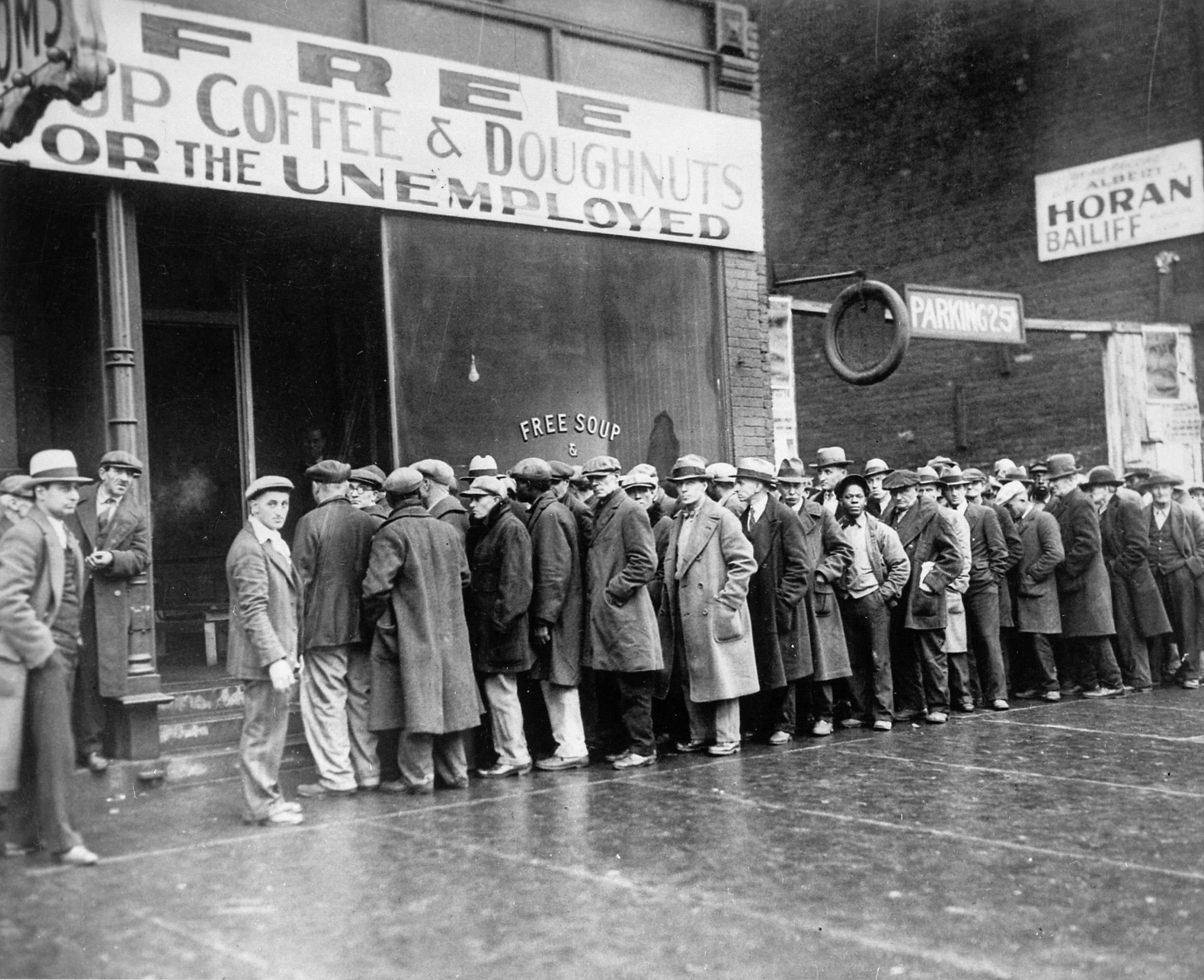
The Great Depression (1929–41) was the longest and deepest economic downturn in U.S. history. Franklin D. Roosevelt’s New Deal (1933–39) introduced sweeping relief, recovery, and reform programs, but historians and economists still debate whether these reforms ended the Depression, merely eased its worst effects, or even prolonged it. This article examines the evidence on key New Deal policies. We review relief programs for the unemployed (CCC, WPA, PWA), financial reforms (Glass–Steagall, FDIC, SEC), and massive federal spending, and we engage with historiographical and economic debates (Keynesian vs. monetarist). Finally, we consider the New Deal’s long-term structural legacy (labor rights, infrastructure,…
-
In this urgent episode, we break down last night’s dramatic Israeli raid on Iran—Operation Rising Lion—which targeted Iran’s nuclear facilities and killed top Iranian military leaders in the largest attack since the Iran–Iraq War. We unpack what happened on the ground, the immediate fallout—including Iran’s launch of over 100 drones in retaliation—and the atmosphere of panic and unity now gripping Israel as the region braces for further escalation.But this isn’t just about one night. We dig deep
-
The Great Depression (1929–39) affected nations differently. By 1933, industrial output had plunged 30–50% in many countries, and unemployment soared into double-digits (Romer 2003). Yet the timing and strength of recovery varied dramatically. For example, Sweden and the United Kingdom were largely back to or above 1929 output levels by the mid‑1930s, whereas the United States and France lagged, and Germany’s rebound was tied to its rearmament policies. This article examines case studies of the United States, the United Kingdom, Germany, France, and Sweden, analyzing how policy choices – abandoning the gold standard, fiscal and monetary stimulus, and political upheavals…
-
The Federal Reserve was founded in 1913 with the primary goal of stabilizing the banking system and providing an elastic currency. Under the Federal Reserve Act, the system comprised a Board in Washington and 12 regional Reserve Banks, each with its own president and directors. National banks were required to become members (purchasing stock in their Reserve Bank) and hold reserves there; state banks could join voluntarily . Member banks could obtain additional funds by borrowing at the “discount window” of their local Reserve Bank, pledging short-term commercial paper as collateral. This mechanism was intended to let the money supply…
-
Introduction The Great Depression of the 1930s was an economic cataclysm that struck virtually every industrialized nation. At its core was an unprecedented surge in unemployment, which not only devastated livelihoods but also shook the political and social foundations of countries around the world. This article provides a comparative analysis of unemployment during the Depression in the United States, United Kingdom, and Germany – three nations with vastly different experiences and responses. We will outline the scale and trajectory of joblessness from the 1929 crash through the mid-1930s, examine the social consequences (poverty, homelessness, migration, discontent) wrought by mass unemployment,…
-
The Smoot-Hawley Tariff Act of 1930 remains one of the most infamous trade policies in United States history. Enacted at the start of the Great Depression, this sweeping tariff hike raised U.S. import duties to record levels, aiming to shield American farmers and factories from foreign competition . Instead, it provoked a global trade war and is widely regarded as a grave policy misstep that exacerbated the worldwide economic collapse . In the decades since, Smoot-Hawley has become a byword for the perils of protectionism – a cautionary tale of how well-intended economic nationalism can spiral into retaliatory tariffs, collapsing…