-
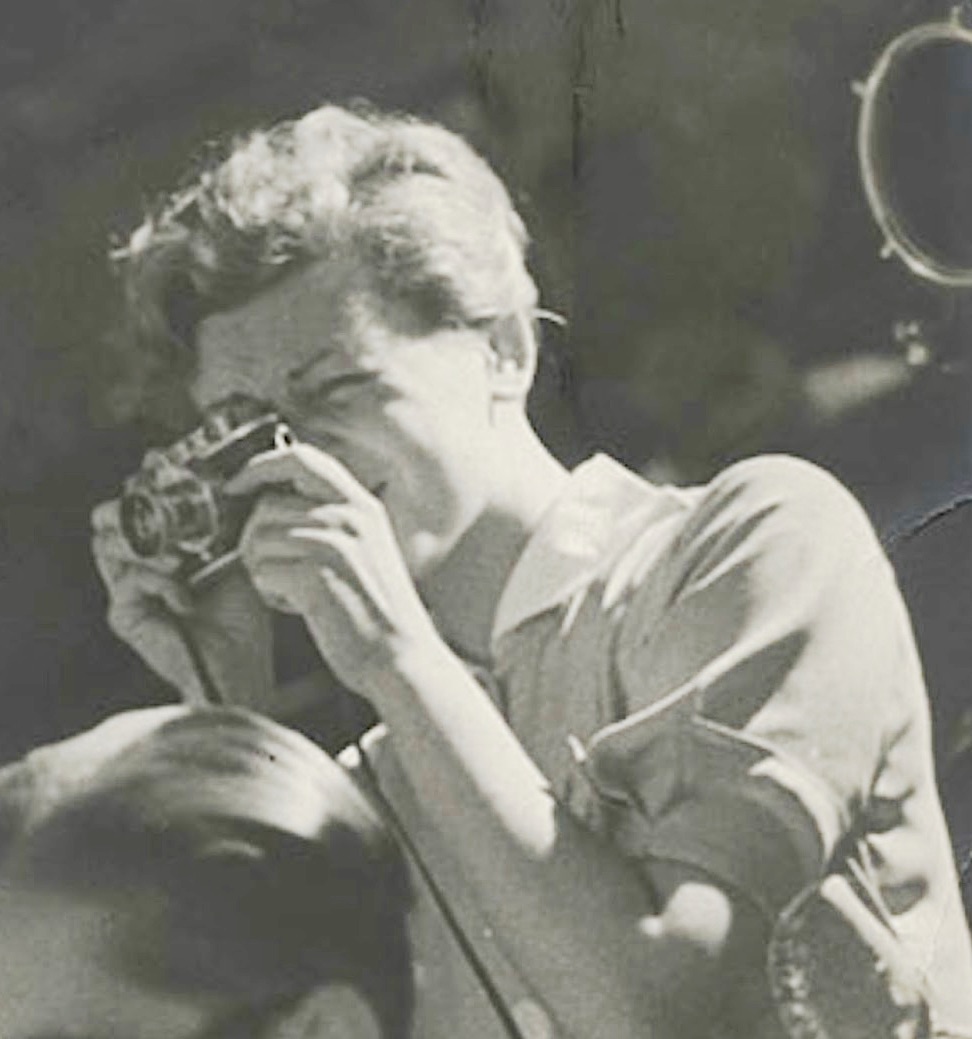
The Spanish Civil War was not only fought with rifles, artillery, and aircraft across the Iberian Peninsula; it was waged simultaneously on a global battlefield of public perception through an unprecedented and sophisticated campaign of propaganda. This conflict is frequently cited as the first “media war” of the modern age, a characterization that acknowledges the conscious, industrialized use of mass communication technologies—newsreels, radio, photojournalism, and the illustrated press—to shape narratives, mobilize international opinion, and legitimize intervention. While the technologies themselves were not entirely novel, their systematic and centralized deployment by all belligerents, aimed at both domestic and foreign audiences, represented…
-

Introduction In May 1932, the British Broadcasting Corporation moved its headquarters from the cramped, makeshift studios of Savoy Hill to a gleaming new purpose-built fortress on Portland Place: Broadcasting House. Above the entrance, a sculpture by Eric Gill depicted Shakespeare’s Prospero sending the spirit Ariel out into the world. The symbolism was deliberate and profound. Prospero, the magician of intellect and control, represented the BBC’s Director-General, John Reith. Ariel, the invisible spirit of the air, represented the medium of radio itself. This stone facade hid a radical experiment. While historians have exhaustively chronicled the BBC’s political and institutional history, less…
-
Introduction In the interwar years, Fleet Street was not merely a center of industry; it was a rival court to Westminster. The “Fourth Estate,” previously a fragmented collection of partisan journals and stately broadsheets, had coalesced into a high-volume, industrial machine dominated by a handful of men. Chief among these were Max Aitken, Lord Beaverbrook, and Harold Harmsworth, Lord Rothermere. These “Press Barons” were a new phenomenon in British public life. They were not content to merely report the news or even to influence opinion from the sidelines. They sought to dictate policy, break governments, and install their own candidates…
-
Introduction On the morning of May 4, 1896, the landscape of British society shifted, though few realized the magnitude of the tremor at the time. That morning saw the debut of the Daily Mail. It was sold on the streets of London for a halfpenny, undercutting the standard price of established newspapers by half. But the revolution was not merely economic; it was cognitive. Before the Mail, British journalism was a staid, dense, and often impenetrable affair, dominated by verbatim reports of Parliamentary debates, court circulars, and foreign correspondence written in the dry, passive voice of the Victorian establishment. The Daily Mail was different.…
-
During the decade before full-scale U.S. involvement, war reporting in Vietnam was fraught with challenges. This was a formative period for journalism in the Vietnam War, when only a small cadre of reporters were on the ground and the truth often proved elusive. In this episode of Explaining History, we explore how American correspondents operated under censorship (both formal and informal), how official manipulation shaped their stories, and how some British and international reporters managed to sidestep these constraints to uncover hidden truths. Drawing on Philip Knightley’s classic study The First Casualty, we will see that the first casualty of…
-
Partition-era India saw an explosion of partisan newspapers and intense censorship as the colonial state and emerging political parties battled for hearts and minds. In the decade before 1947, daily dailies and journals in English, Urdu, Hindi and other languages became key platforms to define us vs them. Nationalist leaders like Gandhi, Nehru and Jinnah each nurtured their own press organs (for example Nehru’s National Herald launched in 1938 ), while communal organizations and the British colonial government used print to sway opinion. The resulting media environment was starkly polarized. The British press (including papers like The Times of India…
