-
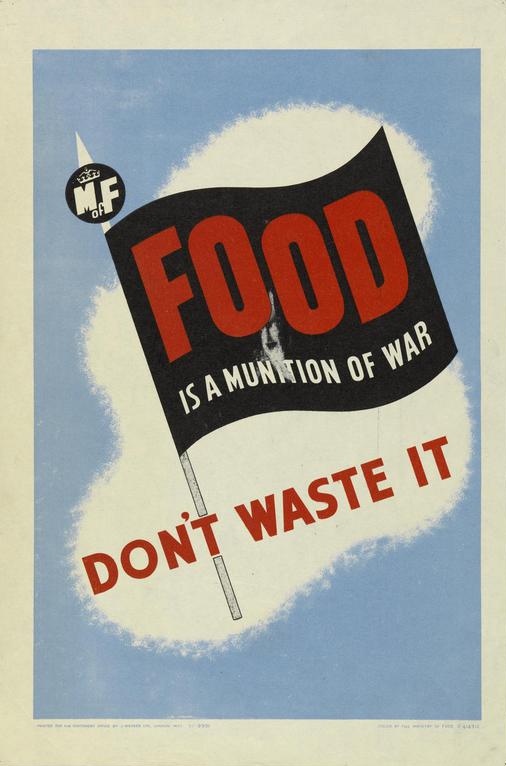
When the First World War began in 1914, nations discovered that modern war required more than guns and factories. It needed imagination. The conflict would be fought not only on the battlefield but in newspapers, cinemas, schools, and living rooms. For the first time, governments set out to manage what people felt. Posters, songs, films, and radio broadcasts became weapons in a struggle for morale. The same technologies that had been used to sell soap and cigarettes were now used to sell sacrifice and endurance. The twentieth century’s wars were also wars of culture — battles to control the stories…
-
In the immediate aftermath of World War II, the world faced the horror of unprecedented atrocities and the challenge of building a new international order. The United Nations was founded in 1945 on principles of peace and justice, but by 1948 the Cold War rivalry between the United States and the Soviet Union was already shaping global politics. In this climate of both hope and tension, two landmark achievements emerged: the Genocide Convention (adopted 9 December 1948) and the Universal Declaration of Human Rights (adopted 10 December 1948). Both drew on the war’s lessons – especially the Holocaust and other…
-
By spring 1945 the tide of World War II had turned decisively. Nazi Germany would surrender within weeks, and even as fighting raged on in the Pacific the Axis defeat was seen as imminent. In this atmosphere U.S. President Franklin D. Roosevelt died (April 12) on “the eve of complete military victory in Europe,” just months before Japan’s defeat . His successor, Harry Truman, knew that the postwar settlement could not wait for total victory. Addressing the San Francisco meeting, Truman declared that delegates’ task was singular: “You are to write the fundamental charter” of a new organization whose “sole…
-
The Yalta Conference of early February 1945 took place in a devastated World War II Europe. By that point Allied victory in Europe was all but certain – Soviet armies were closing on Berlin from the east, while American and British forces were pushing in from the west . Yet the war against Japan still raged in the Pacific, and the three leaders (Churchill, Roosevelt, StalinStalin Joseph Vissarionovich Stalin (18 December 1878 – 5 March 1953) was a Soviet politician, dictator and revolutionary who led the Soviet Union from 1924 until his death in 1953. Read More) gathered in Livadia…
-
By the late summer of 1944, World War II’s momentum had decisively shifted in favor of the Allies. In Europe, Allied armies had landed in Normandy, liberated Paris, and were pressing toward Germany’s borders, while Soviet forces swept westward across Eastern Europe . The “halcyon days” of mid-1944, as historian Michael Howard called them, saw the looming defeat of Nazi Germany and Imperial Japan, prompting Allied leaders to turn their focus from winning the war to securing the peace . Amid the optimism, serious questions arose: How would a shattered world be rebuilt, and what kind of international order could…
-
By late 1943 the course of World War II had decisively shifted. After the Soviet victory at Stalingrad (Feb. 1943) and the crushing of German forces at Kursk (July 1943), the Axis powers were retreating on all fronts. In Italy the Allies had invaded Sicily and toppled Mussolini, and in the Pacific the U.S. was advancing from Guadalcanal to Bougainville. With the pendulum swinging to Allied advantage, the “Big Three” (Churchill, Roosevelt, StalinStalin Joseph Vissarionovich Stalin (18 December 1878 – 5 March 1953) was a Soviet politician, dictator and revolutionary who led the Soviet Union from 1924 until his death in 1953.…
-
In the summer of 1942, the German Wehrmacht launched Case Blue, an massive military offensive aimed at gaining control over the resource-rich Caucasus and the strategic city of Stalingrad. The intention was twofold – to tap into the wealth of oil supplies that would fuel their military efforts and simultaneously cripple the Soviet Union’s capacity to fight back. However, achieving victory in the Caucasus proved to be a Herculean task. The German forces found themselves battling not just the determined Red Army but also a host of logistical issues. The harsh climate and rugged terrain of the Caucasus demanded a…
-
The Battle of the Atlantic was a key conflict during World War II, lasting from 1939 to 1945. It was a struggle for control of the Atlantic Ocean between the Allied powers (primarily the United Kingdom, the United States, and Canada) and the Axis powers (led by Germany).
-
British Prime Ministers in the 1920s and 1930s inherited a world created for them by David Lloyd George between 1919 and 1923, and were unable to cope with its challenges, complexities and risks. In the case of Stanley Baldwin, who ruled for most of the period as leader of a Conservative or National Government, the strain of dealing with a rapidly worsening international situation led to his resignation in 1937 and his replacement with Neville Chamberlain. The British public was steadfastly against war and rearmament, the memories of the First World War, which broke out to the shock and horror…