-

Explaining History Podcast: 2025 in Review – The Year the Tech War Was LostAs 2025 draws to a close, we reflect on a pivotal year that historians may one day see as the moment the world changed forever. This episode delves into the most significant geopolitical shift of our time: the American retreat from its tech and trade war with China, and the quiet acknowledgment that the battle has been lost.Join us as we analyze the key indicators of this tipping point, from tech oligarch Peter Thiel losi
-
The Wuchang Uprising of October 10, 1911, is often marked as the beginning of the end for over two millennia of imperial rule in China. By February 1912, the last emperor, the child Puyi, had abdicated, and the Republic of China was proclaimed. This swift political transition, however, belied a far more complex reality. The fall of the Qing was not a sudden rupture but the culmination of decades of internal decay and forced transformation. The period from 1911 to 1916 was not a clean slate but a turbulent inheritance, where the new republic grappled with the profound and often…
-
Yuan Shikai held enormous power as the commander of China’s strongest army. By early 1912, the Qing dynasty was on its last legs and a republic had been declared. In that momentous year, provinces in revolt had overthrown the emperors, and a provisional republican government had been set up in Nanjing under Sun Yat-sen . In February 1912 the child‐emperor Puyi formally abdicated “in a proclamation that transferred the government to the people’s representatives,” granting Yuan Shikai full powers to organize a provisional government . Sun Yat-sen, the revolutionary leader, then resigned to let Yuan become President in hopes of…
-
Introduction The Self-Strengthening Movement (1861–1895) was the Qing dynasty’s first major effort to modernize China and arrest its decline. In the wake of civil war and foreign invasions, a group of reform-minded officials sought to adopt Western military technology, industrial techniques, and educational practices in order to strengthen the nation—while still preserving traditional Confucian values. This article explores the origins, initiatives, challenges, and legacy of those reforms, asking whether they truly bolstered China’s power or merely offered a brief illusion of progress. The story of the Self-Strengthening Movement is a crucial chapter in understanding how and why the last Chinese…
-
Introduction: The All-Weather Friendship Gets an Economic Engine For decades, Pakistan and China have touted their relationship as an “all-weather” friendship – a bond resilient through geopolitical storms. In recent years, that diplomatic cliché has taken concrete form in the China–Pakistan Economic Corridor (CPEC), a sprawling set of infrastructure and investment projects straddling the breadth of Pakistan. CPEC is the flagship of China’s global Belt and Road Initiative (BRI) and by far the most ambitious bilateral venture in Pakistan’s modern history. From highways carving through mountains to brand-new power plants lighting up cities, its scale is unprecedented. Pakistani leaders hail…
-
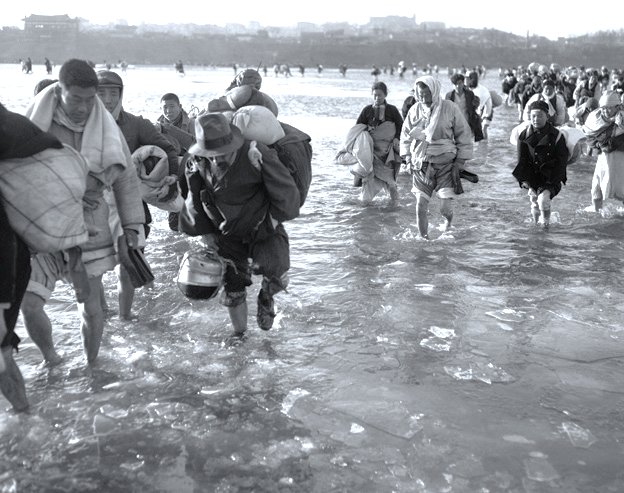
On October 19, 1950, units of the Chinese People’s Volunteer Army (PVA) quietly crossed the Yalu (Amnok) River into North Korea, dramatically altering the course of the Korean War. Only a year after its founding in 1949, the People’s Republic of China (PRC) plunged into a major conflict against the United States and United Nations forces. Why did China intervene in Korea, risking a confrontation with a far superior U.S. military? This question has fueled extensive historical debate. The Chinese leadership’s decision was shaped by a complex mix of political, military, and ideological motivations amid the early Cold War climate.…
-

How a political struggle became a project to remake the self — and why remembering it matters. Why the Cultural Revolution still speaks to us Between 1966 and 1976, China experienced a convulsion that reached into schools, homes, factories, and villages. Labeled the Cultural Revolution, it was framed as a campaign to purify the revolution by smashing “old ideas, old culture, old customs, and old habits.” In practice, it yoked high-level political struggles to mass mobilization and intimate coercion. People were not merely governed; they were enlisted to transform themselves and to police one another. That double move — political…
-
Introduction The place of the First Indochina War in French cultural memory presents a paradox: while the conflict represented a crucial historical watershed that ended France’s Asian empire and demonstrated the vulnerability of European colonial power, it occupies an ambiguous and often marginalized position in French historical consciousness. Frequently described as a “forgotten war,” particularly in comparison to the subsequent and more visceral Algerian conflict, the Indochina experience has in fact been remembered in multiple, sometimes contradictory ways: as a heroic last stand of colonial greatness, as a tragic waste of life for an unjust cause, as a crucial lesson…
-

How Mao’s Decisive Intervention Tipped the Scales for the Viet Minh From the Explaining History Podcast This article is a detailed companion piece to a future podcast episode exploring the hidden dynamics of the First Indochina War. It expands on key themes and historical arguments that will be discussed in the show. The fall of the French fortress at Dien Bien Phu in May 1954 is one of the most iconic moments of 20th-century history. A colonial European army, confident in its technological superiority, was systematically dismantled and defeated by a revolutionary Asian force. For decades, the standard narrative of…
-
The Yalta Conference of early February 1945 took place in a devastated World War II Europe. By that point Allied victory in Europe was all but certain – Soviet armies were closing on Berlin from the east, while American and British forces were pushing in from the west . Yet the war against Japan still raged in the Pacific, and the three leaders (Churchill, Roosevelt, Stalin) gathered in Livadia Palace, Crimea, to decide the final defeat of Germany and the shape of the postwar world . The setting itself was striking: Yalta was a Black Sea resort left in ruins…