-

By the late summer of 1944, World War II’s momentum had decisively shifted in favor of the Allies. In Europe, Allied armies had landed in Normandy, liberated Paris, and were pressing toward Germany’s borders, while Soviet forces swept westward across Eastern Europe . The “halcyon days” of mid-1944, as historian Michael Howard called them, saw the looming defeat of Nazi Germany and Imperial Japan, prompting Allied leaders to turn their focus from winning the war to securing the peace . Amid the optimism, serious questions arose: How would a shattered world be rebuilt, and what kind of international order could…
-
The Down to the Countryside Movement struck hardest at the very foundation of social advancement in Maoist China: education. At a time when university entrance exams were suspended and academic institutions were in turmoil, the zhiqing were removed from classrooms and sent into the fields, effectively severing their access to both formal learning and career mobility. A Generation Interrupted Between 1966 and 1977, China’s entire higher education system was disrupted or dismantled. Universities ceased admissions from 1966 to 1970, and when they reopened, entry was based not on examination but on political reliability, class background, and labor performance. This abolition…
-
The Red Guards were the student vanguard of Mao Zedong’s Cultural Revolution (1966–1976). In 1966, millions of Chinese middle- and high-school students answered Mao’s call to purge “revisionist” elements and “old culture” from society . Clad in green military-style jackets and bright red armbands, these youths enthusiastically proclaimed loyalty to Mao. As one former Red Guard recalled of the summer of 1966, “When we saw Mao wave his hand, we all went berserk. We shouted and screamed until we had no voices left” . Another looked back much later and confessed: “We became Red Guards [because] we all shared the…
-
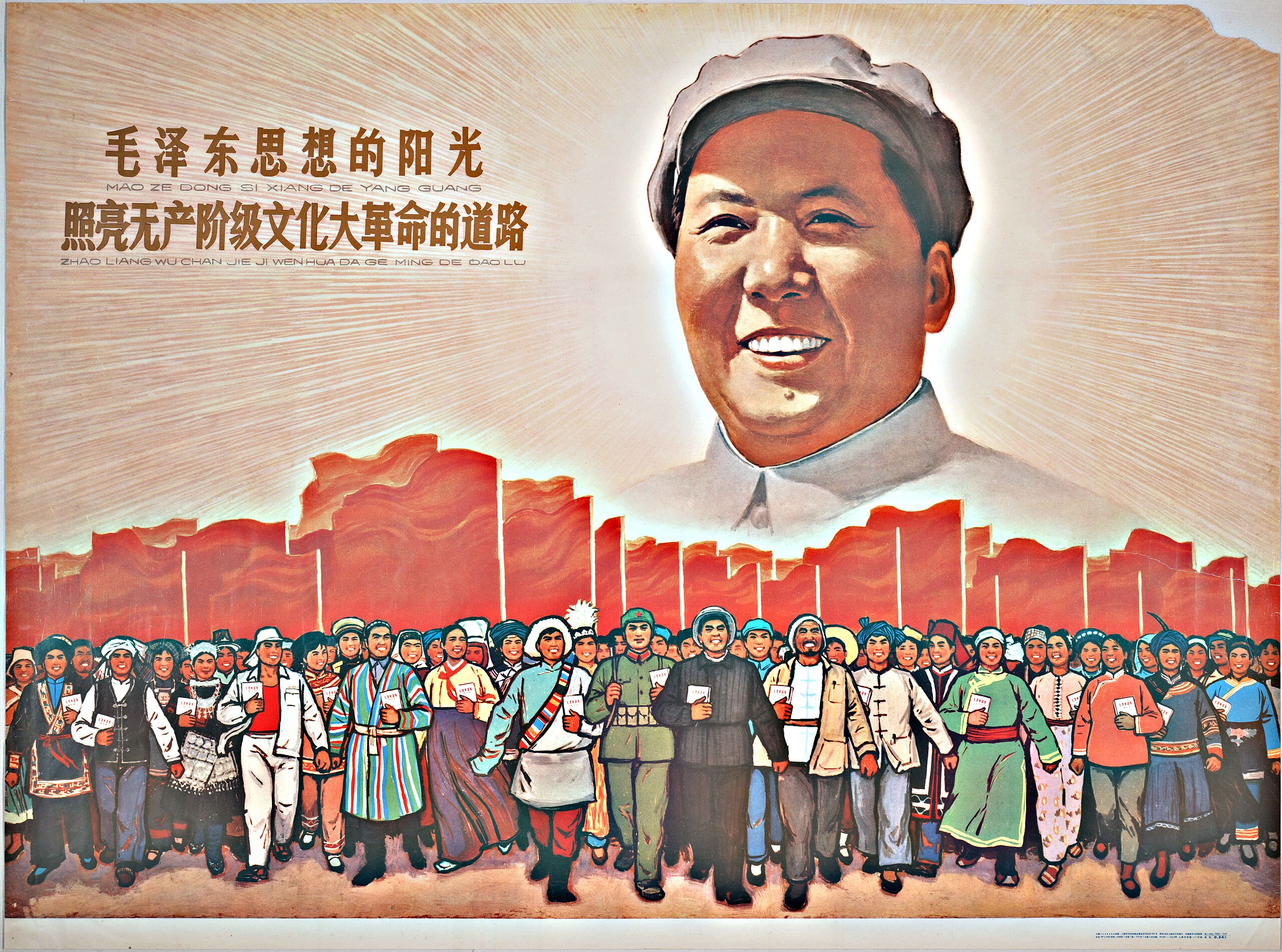
The Chinese Cultural Revolution (officially the Great Proletarian Cultural Revolution) was a decade-long political and social upheaval launched by Mao Zedong in May 1966 to “renew the spirit of the Chinese Revolution” . Far from benign, the campaign brought widespread violence and chaos: as many as 1.5–2 million people died and tens of millions were persecuted in mass campaigns . Triggered by Mao’s fear of Soviet-style “revisionism” and perceived enemies in his own party, the Cultural Revolution saw China’s youth mobilized as Red Guards to wage class struggle. In Mao’s words, it was a fight to “crush… those persons in…
-
Explore how China transformed from communism to state capitalism under Deng Xiaoping, avoiding Soviet collapse through David Harvey’s analysis of China’s unique economic model.
-
Explaining History’s reporter at large, Michael O’Sullivan write from China, where he is currently based, on the precepts of Confucian thought. A figure deeply associated with China in popular consciousness, there is no denying the influence that Confucius has had on China. From the Second century BCE until 1911, the body of this teachings Confucianism was the official orthodoxy of Imperial China and had a deep impact on Chinese Society and societies throughout Asia. Over the millennia this ideology was constantly changing with other thinkers contributing to the core Confucian beliefs of: “man is morally perfectible, that learning is the…
-

In 1966, Mao staged a return to public life and attempted to wrest back control of the Chinese Communist Party following the disaster of the Great Leap Forward. He had been a marginal figure for four years since 1962, and in the mean time more pragmatic and less ideological figures such as Liu Shaoqi and Deng Xiaoping had steered party policy. Mao would appeal directly to China’s youth, a generation who had grown up after the revolution. He would direct the energies of young people against the establishment within the party, denouncing them as ‘rightists’. This was partly the result…