-
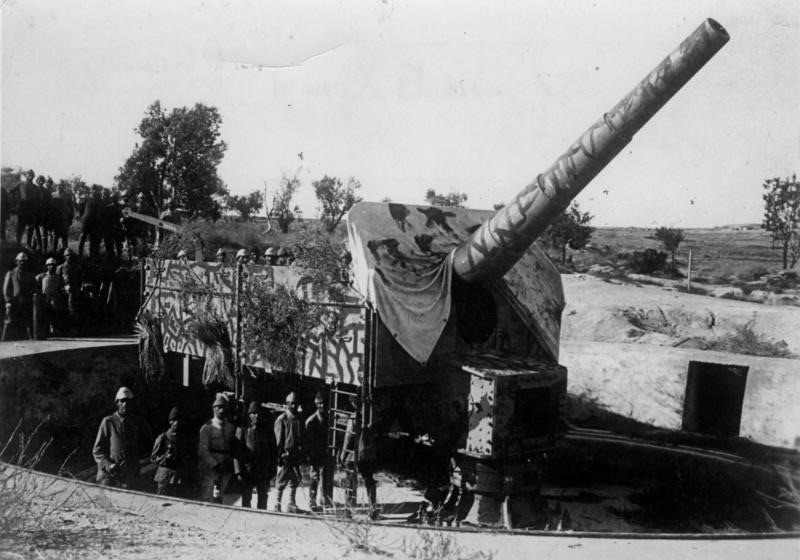
The Gallipoli Campaign, a defining moment in World War I, saw over 130,000 soldiers killed. Its meaning varies by nation: to Australians and New Zealanders, it is the birth of national consciousness; to Turks, a myth of victory; and to the British, a symbol of imperial missteps. This article explores how history and memory shape these divergent national stories.
-

Explore the transformative power of refugee testimonies. From the Armenian Genocide to the Syrian Civil War, witness how personal stories preserve memory and forge empathy in a fractured world
-

To what extent was the Luxembourg Agreement of 1952—the reparations treaty between West Germany and Israel—driven by geopolitical necessity for the Federal Republic’s Western integration, and how did Konrad Adenauer navigate overwhelming domestic opposition to forge a “special relationship” with the Jewish state? This article analyzes the genesis and impact of the Luxembourg Agreement (Luxemburger Abkommen) signed between the Federal Republic of Germany, the State of Israel, and the Jewish Claims Conference in 1952. It argues that Chancellor Konrad Adenauer championed this controversial treaty against significant resistance within his own party and the German public, motivated by a convergence of…
-
How did the issue of the “late returnees” (Spätheimkehrer) serve as the final emotional chapter of World War II for West Germany, and how did Konrad Adenauer’s diplomatic gamble in Moscow in 1955 fundamentally alter the Federal Republic’s relationship with the Soviet Union and its own citizenry? This article examines one of the most emotionally charged events in the history of the early Federal Republic: the return of the last 10,000 German prisoners of war from the Soviet Union in 1955. It analyzes the plight of German soldiers in Soviet captivity, framing their continued imprisonment a decade after the war…
-
How did the West German society of the 1950s utilize “communicative silence” as a strategy for social cohesion, and how did the transition from suppressing the Nazi past to confronting it shape the political culture of the Federal Republic? This article explores the complex psychological and legal landscape of West Germany in the decades following World War II. It argues that the immediate post-war period was characterized not by a reckoning with the Holocaust, but by a collective “amnesia” and a focus on German victimhood (expulsion, bombing, POWs). This silence was politically sanctioned by the Adenauer government’s policy of integrating…
-
Rwanda’s post-genocide story is also a battle over memory. This essay explores how history, denial, and remembrance shape Rwanda today and abroad.
-
Operation Condor was more than a mere chapter of state terror; it was a concerted campaign to rewrite reality. Its methods—midnight kidnappings, clandestine torture centers, and the creation of the desaparecido (the disappeared)—were designed not only to eliminate individuals but to erase them from the historical record, to impose a future of silence and forgetting. Yet, in the decades since the dictatorships fell, a profound and ongoing battle has raged over this very legacy. The story of Operation Condor is no longer confined to the secret meeting rooms of 1970s intelligence chiefs; it is a living, contested narrative fought in…
-
Table of Contents Introduction: The Myth of Uniform Resistance The popular narrative of World War II in Europe often simplifies a complex moral landscape into a stark, tripartite story of German perpetrators, innocent victims, and heroic national resistance movements. This comforting fiction, cultivated assiduously in the decades following 1945, obscures a far more disturbing and widespread reality: the indispensable role played by the state bureaucracies, local institutions, and civilian populations of occupied and allied nations in the Holocaust. The SS and the Nazi apparatus, for all their monstrous efficiency, lacked the manpower, the local knowledge, and the administrative reach to…
-
Introduction The place of the First Indochina War in French cultural memory presents a paradox: while the conflict represented a crucial historical watershed that ended France’s Asian empire and demonstrated the vulnerability of European colonial power, it occupies an ambiguous and often marginalized position in French historical consciousness. Frequently described as a “forgotten war,” particularly in comparison to the subsequent and more visceral Algerian conflict, the Indochina experience has in fact been remembered in multiple, sometimes contradictory ways: as a heroic last stand of colonial greatness, as a tragic waste of life for an unjust cause, as a crucial lesson…