-

The narrative of foreign participation in the Spanish Civil War has been overwhelmingly shaped by the story of the International Brigades—the leftist volunteers who fought for the Republic. This focus, while substantively justified by their numbers and symbolic weight, has often obscured a parallel phenomenon: the thousands of foreigners who took up arms for Francisco Franco’s Nationalist faction. These volunteers, ranging from ideologically driven fascists and devout Catholics to mercenaries and political exiles, constituted a significant, though less centralized, dimension of the conflict’s internationalization. Their presence was instrumental to Nationalist propaganda, which leveraged them to portray the war as a…
-
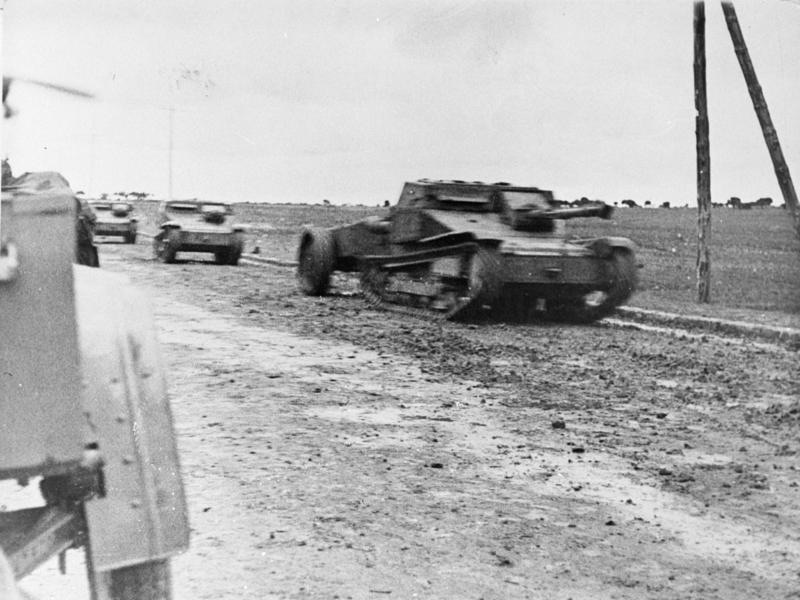
Of the various foreign interventions in the Spanish Civil War, that of Fascist Italy under Benito Mussolini occupies a singular and paradoxical position. It was, by any objective measure, an invasion: a massive, state-directed deployment of military personnel and matériel exceeding in sheer numbers the contribution of Nazi Germany, yet it has often been relegated to a secondary status in historical memory, overshadowed by the more technologically formative German intervention and the ideologically potent Soviet one. Italy’s involvement was characterized not by the covert experimentation of the Legion Condor but by a blatant, triumphalist projection of national power, intended to…
-

This article examines the powerful conservative and völkisch (ethno-nationalist) currents that developed in opposition to Weimar Germany’s cosmopolitan modernity, arguing that this “Other Germany” constituted not merely a political opposition but a comprehensive counter-culture with its own distinct aesthetics, intellectual traditions, and social practices. It demonstrates how the “conservative revolution”—a term describing thinkers who sought revolutionary means for reactionary ends—provided the ideological underpinnings for the rejection of parliamentary democracy, liberalism, and the perceived cultural decay of urban civilization. Through analysis of philosophical texts, youth movements, veteran organizations, and popular literature, this article traces how figures like Oswald Spengler, Ernst Jünger,…
-
Introduction The apartheid system that governed South Africa for nearly five decades stands as one of the most comprehensive and brutal systems of racial oppression in modern history. Its significance, however, extends far beyond its national boundaries, for the struggle against apartheid generated the most widespread and influential global solidarity movement of the twentieth century. This article examines apartheid and the anti-apartheid movement as interconnected phenomena: one representing the culmination of colonial racism codified into law, the other embodying the emergence of a new form of international human rights activism. This analysis argues that the anti-apartheid movement’s unprecedented success resulted…