
When the First World War began in 1914, nations discovered that modern war required more than guns and factories. It needed imagination. The conflict would be fought not only on the battlefield but in newspapers, cinemas, schools, and living rooms.
For the first time, governments set out to manage what people felt. Posters, songs, films, and radio broadcasts became weapons in a struggle for morale. The same technologies that had been used to sell soap and cigarettes were now used to sell sacrifice and endurance.
The twentieth century’s wars were also wars of culture — battles to control the stories people told themselves about who they were and what they were fighting for.
Mobilising the Mind
The New Science of Persuasion
By 1914, advertising and mass communication had already transformed everyday life. Governments simply redirected those tools toward patriotism.
In Britain, the newly created War Propaganda Bureau (known as Wellington House) recruited writers and artists to craft the message of national purpose. In the United States, President Woodrow Wilson established the Committee on Public Information under journalist George Creel, bringing together advertisers, filmmakers, and psychologists.
The aim was not censorship alone but creation — the shaping of emotion. The new discipline of psychology, particularly the ideas of Wilfred Trotter and Walter Lippmann, convinced policymakers that public opinion could be studied, measured, and directed like any other social force.
Posters as Weapons
No medium symbolised this new warfare better than the poster.
“Lord Kitchener Wants You” in Britain and “Uncle Sam Wants You” in America became icons of recruitment, their pointing fingers turning the gaze of the state into a personal summons.
Other posters appealed to guilt (“Daddy, what did you do in the Great War?”) or compassion (“Careless talk costs lives”). Bright colours, strong diagonals, and simplified slogans condensed complex politics into instant emotional recognition — the visual grammar of advertising repurposed for war.
The Home Front as Battlefield
Civilians in the Line of Fire
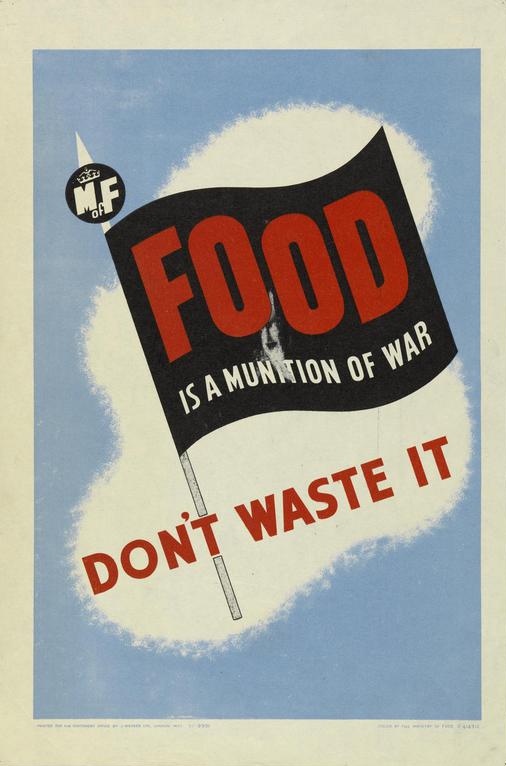
Industrial war erased the boundary between soldier and civilian. Food, fuel, and labour were as vital as ammunition.
Posters urged women to work, grow vegetables, and conserve resources: “Eat less bread,” “Make do and mend.”
In Britain, women’s war work became both necessity and propaganda symbol — the factory girl and the land girl embodying national unity. In Germany, the state distributed pamphlets linking thrift with patriotism: every saved potato was a blow against the enemy.
Controlling Information
Modern communication also created new dangers: rumours, defeatism, and dissent could spread as quickly as news.
Governments censored newspapers and telegrams while releasing carefully curated reports of heroism.
Film reels and illustrated magazines showed soldiers smiling in the mud, never dying in it. The purpose was not deception but direction — to give suffering meaning.
Propaganda as Popular Culture
Cinema Goes to War
By 1916, cinema had become a mass medium capable of reaching millions. Governments quickly recognised its power.
In Britain, the War Office Cinematograph Committee produced The Battle of the Somme (1916), mixing real footage with staged scenes. Audiences queued around the block; many wept. The film’s realism turned war into shared national experience.
In the United States, Hollywood collaborated with Washington. Films like The Kaiser: The Beast of Berlin (1918) depicted Germans as villains and American soldiers as saviours. After the armistice, the industry never lost its political role.
Music and Morale
Songs, too, became emotional weapons. “Keep the Home Fires Burning,” “It’s a Long Way to Tipperary,” and “Over There” carried cheer and longing across trenches and parlours alike.
Radio, still young, proved even more potent in the Second World War. Leaders such as Franklin D. Roosevelt and Winston Churchill mastered the microphone, speaking directly to homes. Their voices became the soundtracks of endurance.
Between Truth and Manipulation
The Fear of the Crowd
The success of wartime propaganda alarmed many intellectuals. If public opinion could be shaped so easily, what did democracy mean?
In 1922, Walter Lippmann warned that citizens lived in a world of “pseudo-environments,” perceiving reality through symbols created by elites. The mass media, he feared, would turn politics into theatre.
This anxiety deepened in the interwar years, as totalitarian regimes perfected propaganda’s dark arts.
Totalitarian Spectacle
In Nazi Germany, Joseph Goebbels’s Ministry of Propaganda fused cinema, architecture, and ritual into a continuous performance of national destiny. Filmmaker Leni Riefenstahl’s Triumph of the Will (1935) transformed political rally into visual symphony — the camera choreographing awe.
In Fascist Italy, Mussolini’s regime glorified modernity through design and spectacle, drawing directly on Futurist aesthetics.
In Stalin’s Soviet Union, posters and films celebrated collective labour and industrial triumphs, replacing saints with workers and miracles with machinery.
Everywhere, the techniques of advertising served ideology.
The Second World War: Culture under Siege
Democracies Learn the Lesson
The democracies that faced fascism in 1939 understood that propaganda was unavoidable. The difference, they claimed, was honesty.
In Britain, the Ministry of Information coordinated film, radio, and press under the slogan “Freedom is in peril — defend it with all your might.” Posters by artists like Abram Games and Fougasse combined clarity with humour.
In the United States, Frank Capra’s documentary series Why We Fight (1942–45) explained the war’s causes through montage and narration, aiming to educate as well as inspire.
The line between information and persuasion grew thin, but democratic propaganda retained one crucial element missing from its totalitarian counterpart: self-irony. British posters could laugh at rationing; American films could show doubt.
Women, Work, and Representation
The Second World War revived the imagery of the active woman. Rosie the Riveter — strong-armed, bandanna-clad — symbolised female competence and patriotic labour.
Yet when peace returned, many of these women were told to leave their jobs and resume domestic roles. The same posters that had celebrated independence were quietly replaced by ads for appliances and cosmetics.
Propaganda had once again paved the way for consumerism.
Artists and Intellectuals Respond
From Disillusionment to Reflection
Writers who had served in the Great War, from Siegfried Sassoon to Erich Maria Remarque, exposed the gulf between patriotic rhetoric and battlefield reality. Their work turned the tools of propaganda against itself, reclaiming truth through testimony.
During the Second World War, thinkers like George Orwell dissected propaganda’s mechanisms. In essays such as Politics and the English Language (1946), Orwell warned that euphemism and cliché could corrupt thought long after bombs stopped falling.
Adorno and the Culture Industry
For Theodor Adorno and Max Horkheimer, who fled Nazi Germany to the United States, wartime propaganda confirmed their suspicion that mass culture was a system of control.
In their 1944 essay The Culture Industry, they argued that radio and cinema standardised consciousness, replacing critical reflection with emotional obedience.
To them, even Hollywood’s cheerful musicals were political: they taught audiences to equate happiness with conformity.
Everyday Propaganda
Posters, Films, and Ordinary Life
Not all propaganda was sinister. Many wartime campaigns sought simply to maintain morale under unbearable pressure.
In Britain, the now-famous but rarely seen “Keep Calm and Carry On” poster captured stoic endurance. In America, Disney animators produced short films explaining taxes and savings bonds with cartoon humour.
Propaganda was not just a message but a companion — part of the emotional architecture of daily life.
Faith and Fear
Religion, too, entered the propaganda battlefield. Clergy preached national duty; churches printed pamphlets linking faith with victory.
Atheist regimes turned ideology into religion: parades became liturgies, martyrs replaced saints. Everywhere, belief was mobilised for morale.
The Cold War and the Globalisation of Persuasion
The Cultural Superpowers
After 1945, propaganda became permanent. The Cold War transformed cultural production into geopolitical competition.
America exported jazz, Hollywood, and Coca-Cola as symbols of freedom. The Soviet Union countered with ballet, cinema, and scientific triumphs. Both sides used art and media to win hearts and minds across the developing world.
Radio Free Europe and the Voice of America broadcast democracy; Soviet film festivals promised fraternity. The old war offices had evolved into public-relations empires.
The Birth of Public Relations
The line between propaganda and advertising dissolved entirely. Figures like Edward Bernays, nephew of Sigmund Freud, applied psychoanalysis to marketing and politics. His 1928 book Propaganda argued that manipulation was inevitable in mass society: “The conscious and intelligent manipulation of the organised habits and opinions of the masses is an important element in democratic society.”
In the consumer democracies of the post-war West, persuasion became the invisible governance of everyday life.
The Ethics of Persuasion
Can Propaganda Be Moral?
The twentieth century forced societies to confront a dilemma: can persuasion serve truth?
The same poster that inspired courage could incite hatred; the same film that comforted soldiers could justify atrocity. Yet without propaganda, democracies risked silence in the face of totalitarian spectacle.
As historian David Welch writes, “Propaganda is neither good nor evil; it is a tool whose morality depends on its purpose.”
Memory and Vigilance
Today, the term “propaganda” carries suspicion, yet its forms surround us — political advertising, social-media campaigns, corporate storytelling. The technologies change, but the psychology endures: repetition, emotion, identity.
The lesson of the culture wars of 1914–45 is not to condemn propaganda outright, but to understand its power — and our vulnerability to it.
Conclusion: The War for Meaning
The two world wars turned persuasion into a global industry. They taught governments that morale was as strategic as munitions, that images could move nations as surely as armies.
Out of that discovery came both the modern media state and the consumer society. After the guns fell silent, the techniques of wartime communication migrated seamlessly into peacetime marketing. The citizen became the customer; victory became satisfaction.
Yet propaganda also left a deeper legacy: an awareness that truth itself could be manufactured. Every advertisement, news story, and political slogan today bears the imprint of that realisation.
In the age of total war, culture learned to fight — and it has never stopped.
Listen & Learn: Related Podcast Collections
Explore these curated episode collections to go deeper on the history behind this article:

Leave a Reply