-
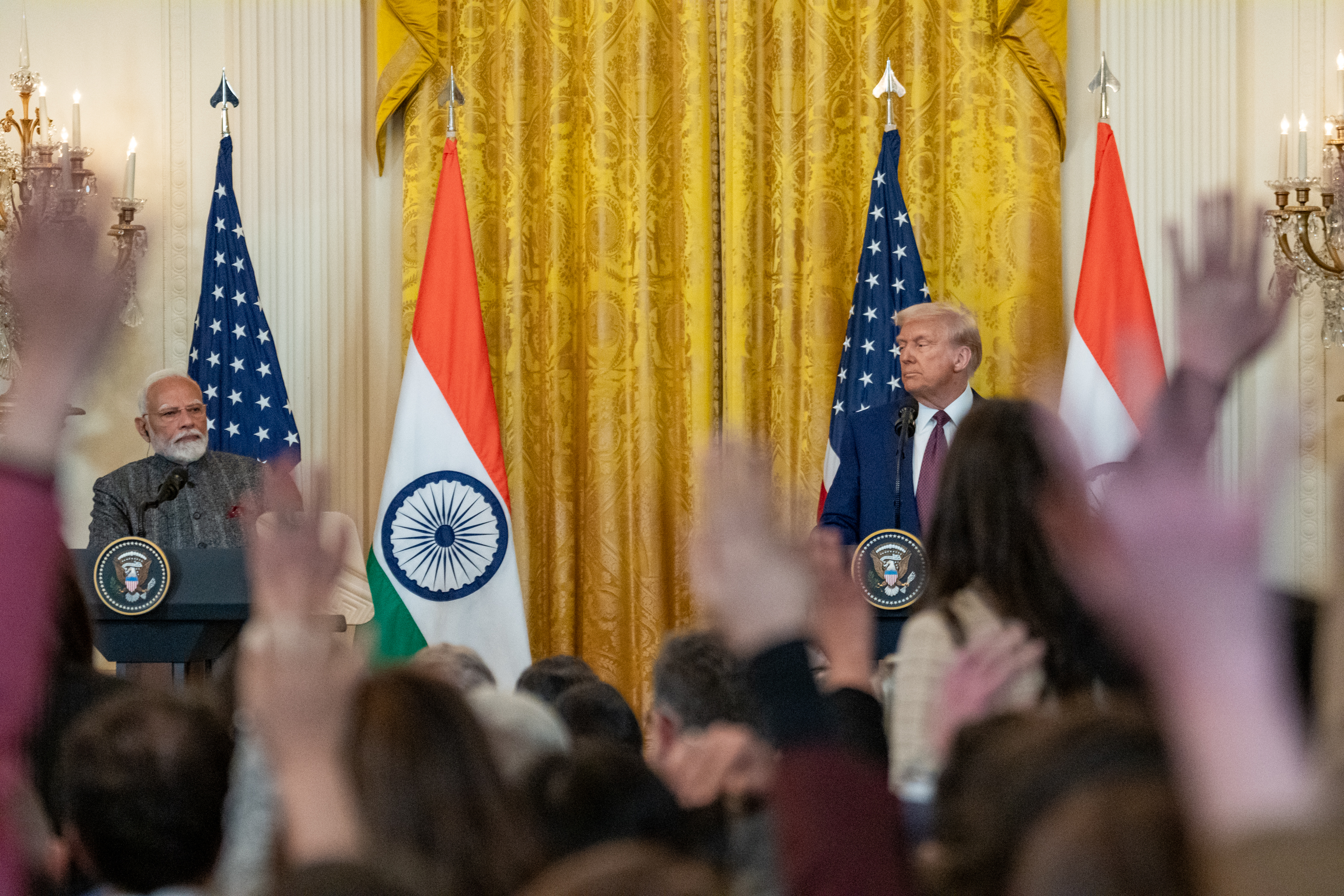
For the past twenty years, the logic of American foreign policy in Asia has been simple: Build up India to box in China. Successive administrations, from George W. Bush to Joe Biden, pursued a policy of “strategic altruism.” They bent nuclear proliferation rules, shared cutting-edge technology, and looked the other way on trade disputes, all in the hope that a strong India would serve as a democratic bulwark in the Indo-Pacific. In 2025, that era came to a crashing halt. In this week’s podcast, I explored this dramatic shift, drawing on a provocative analysis by Chinese scholar Mao Keji titled Favorite…
-

In the mid-1960s, the United States was governed by what historian Arthur Schlesinger Jr. called the “Vital Center”—a liberal consensus that believed in the New Deal at home and the containment of communism abroad. Yet, by 1968, this center had collapsed, assailed not just by the conservative right, but by a ferocious “New Left” that viewed liberalism as morally bankrupt.
-

History rarely moves in straight lines; it moves in jumps, breaks, and inflection points. Looking back at the 20th century, years like 1933, 1968, and 1989 stand out as moments where long-developing trends coalesced into irreversible change.
-

When historians look back at the early 21st century in Britain, the defining theme will not be Brexit or the pandemic, but austerity. It is a policy that has reshaped the social fabric of the nation more profoundly than any event since the Second World War. In this week’s podcast, I sat down with Dr. Rachel Morris to discuss her anthology, Levelling Down. This collection of essays from Bylines Cymru documents the devastation wrought by 15 years of cuts—a process that has arguably “de-developed” the UK. The Economics of Cruelty The logic of austerity, introduced by the Coalition government in 2010, was purportedly…
-

When we look back at the American mid-century—that chrome-plated, neon-lit era stretching roughly from 1945 to 1973—we are often confronted with a cultural memory that feels less like history and more like folklore. It is the America of The Wonder Years and Fred Flintstone: a place where a blue-collar worker with a high school education could own a detached suburban home, drive a new car every three years, and support a family on a single income. In the popular imagination, this was the era where class conflict went to die. It was the moment when the proletariat seemingly dissolved into a vast, amorphous…
-

It is nearly the end of the year, a time that naturally lends itself to reflection. I rarely talk about the podcast itself—the medium is supposed to be the vehicle, not the subject—but after 13 years, I feel it is important to discuss what Explaining History is, and perhaps more importantly, what it is not. When I started this project, I was a history teacher in Wales. It began as a “flipped learning” experiment—a way for students to absorb knowledge at home so we could focus on analysis in class. I never expected it to grow into a platform where…
-

In an age of Amazon recommendations and #BookTok, it is hard to imagine a time when discovering a new book was a curated, communal experience guided by a panel of experts. Yet, for much of the mid-20th century, that is exactly what the Book Society provided for thousands of readers across Britain and its empire.
-

When we think of the revolutions that shaped the 20th century, our minds naturally drift to 1917. The collapse of the Romanov dynasty and the rise of the Bolsheviks is the central drama of modern history. However, almost a decade earlier, another great empire underwent a convulsion that was just as significant for the future of the Middle East and Europe.