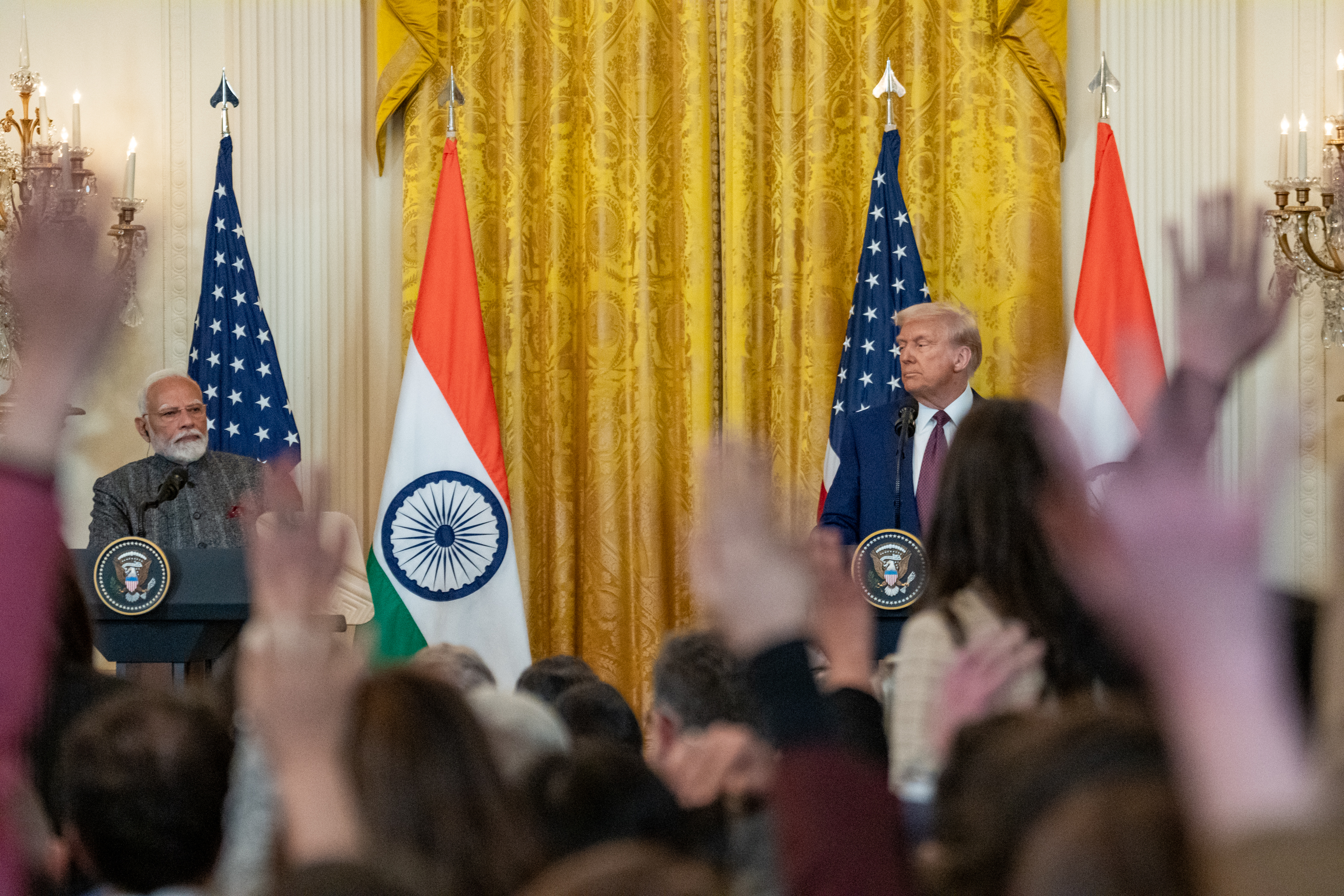

For the past twenty years, the logic of American foreign policy in Asia has been simple: Build up India to box in China. Successive administrations, from George W. Bush to Joe Biden, pursued a policy of “strategic altruism.” They bent nuclear proliferation rules, shared cutting-edge technology, and looked the other way on trade disputes, all in the hope that a strong India would serve as a democratic bulwark in the Indo-Pacific.
In 2025, that era came to a crashing halt. In this week’s podcast, I explored this dramatic shift, drawing on a provocative analysis by Chinese scholar Mao Keji titled Favorite Child to Abandoned Pawn.
The Anxiety of Decline
Mao argues that the collapse of the US-India relationship isn’t just about Trump’s personal volatility. It is a symptom of a deeper structural anxiety: the fear of American decline.
Under Biden, the US was willing to play the long game, investing in India’s rise with the expectation of future strategic dividends. But the Trump administration, obsessed with immediate returns and preservation of dwindling power, no longer views allies as partners. Instead, it views them as what Mao brutally calls “blood bags”—resources to be drained to prolong American survival.
The Price of Loyalty
India, unlike Japan or South Korea, lacks the industrial base to offer immediate economic concessions to the US. It cannot simply buy its way back into Trump’s good graces. More importantly, India has refused to bend the knee on key geopolitical issues—most notably, its relationship with Russia.
New Delhi’s insistence on buying cheap Russian oil and maintaining its ties within the BRICS framework has infuriated a Washington that demands total allegiance. Where previous administrations saw India’s “strategic autonomy” as a tolerable quirk, Trump sees it as betrayal.
The Tariff Weapon
The result has been a punitive turn. India has been one of the hardest-hit victims of Trump’s 2025 tariff wars. The special exemptions and “friend-shoring” initiatives of the Biden era have been scrapped, replaced by a transactional approach that asks, “What have you done for me lately?”
This shortsightedness is creating a dangerous vacuum. By alienating India, the US risks pushing New Delhi closer to the very rival it was meant to counter: China. As Mao Keji suggests, a future geopolitical realignment where China, India, and the Global South find common ground against a flailing, aggressive America is no longer unthinkable.
Conclusion
The rupture in US-India relations is a microcosm of the wider unraveling of the post-1945 order. The US, once the confident guarantor of global stability, is now acting like a cornered power, lashing out at friends and foes alike. As we look ahead to 2026, the question is no longer whether the American Century is ending, but how messy its final act will be.
Transcript
Nick: Hi there and welcome again to the Explaining History podcast. This is the third part of our review of the year 2025. We looked at Trump’s America and the European crisis, so it obviously makes sense to look at Asia.
I had prepared a segment looking at India, Pakistan, Bangladesh, Southeast Asia, China, Taiwan, and Korea. Then I came across a post from a Chinese foreign policy analyst, Mao Keji, titled Favorite Child to Abandoned Pawn: The Shift in Trump’s India Policy During His Second Term. It was published in the Beijing Cultural Review.
This article captures where India is at right now and explores America’s mentality in Asia. I practice humility—why have silver when you can have gold? Mao’s analysis is far more interesting than what I was going to say, so I’m going to share it with you.
India has often had an under-explored history in the gap between America and China. Western thinkers in the 90s and 2000s wondered if India would become “China Mark II.” That’s not how Indian policymakers see themselves.
Mao Keji writes:
“Over the past two decades, India and the United States have been widely regarded as natural strategic partners… Yet with the advent of Trump’s second term, US-India relations have taken a sharp downturn. India has emerged as one of the countries most severely affected by Trump’s tariff war, while also facing repeated policy provocations… effectively relegating it to the status of a strategic discard.”
This shift is often attributed to Trump’s temperament or Modi’s handling of the administration. However, Mao argues that the fundamental cause is the Trump administration’s “concern over the decline of America’s power.”
This anxiety has led Trump to adopt a cautious posture toward rivals like China and Russia, avoiding new confrontations that would deplete resources. Consequently, expectations of allies have shifted. They are no longer viewed as pieces on a chessboard to encircle enemies, but as “blood bags to relieve pressure and prolong America’s survival.”
The US now asks how much direct, immediate benefit partners can deliver. India, unlike Japan or Europe, lacks the industrial base to make material concessions. Nor is it willing to fall in line on issues like sanctions on Russia or the BRICS framework. This has prompted Trump to regard India as a target for “disciplinary coercion.”
Let’s unpack that. India is hugely reliant on cheap Russian energy. It was a big ask for the Biden administration to expect India to forego that. Trump likely saw an opportunity to replace Russia as an energy provider, but India’s refusal to bend the knee has frustrated him.
Mao continues:
“The United States is no longer willing to commit additional resources to supporting India… As the gap in national power between the two countries narrows, Washington has grown more wary… India’s self-congratulatory discourse… and the high visibility of the Indian diaspora in Western societies have intensified American perceptions of India as a threat.”
This reflects how much contemporary online racism and Trumpist discourse stems from anxiety about the fragility of Western power. Mao suggests that as long as the US is preoccupied with its decline, it will eventually see India as a competitor for “second place.”
Since the 1990s, the US pursued “strategic altruism” toward India. The Bush administration lifted nuclear sanctions and pushed through the US-India civil nuclear agreement, making India a rare exception to the Nuclear Proliferation Treaty. The Obama administration supported India’s bid for a UN Security Council seat and designated it a “major defense partner.”
This wasn’t charity; it was calculation. The US believed a strong India would balance China. They prioritized long-term strategic convergence over short-term frictions.
However, transitions between presidents often bring reflection on whether America has created a monster. Nixon looked at Germany and Japan in the 70s and worried about their economic competition. Trump is an exaggerated version of that. He asks, usually through coded racism: “Why are we giving them all our stuff?”
The abolition of USAID this year was a disastrous own goal by Trump, destroying a powerful soft power tool. But it fits his worldview.
Mao notes that the Biden administration tried to bind India closer through technology transfers and the “Indo-Pacific Economic Framework.” They even proposed a new alliance based on “frontier technologies” and defense cooperation.
All this demonstrates that America’s pursuit of strategic altruism was substantive. But that pattern of preferential treatment came to an abrupt end when Trump entered the White House for the second time.
I’m going to continue with this tomorrow. The exploration of Asia in 2025 takes a few episodes. I’ll likely do a third episode looking at Taiwan, Japan, and Korea.
Announcement:
In the first week of January, tickets will go live for our Sunday study events. These sessions are designed for students of Russian, German, and American history. Keep an eye out for updates!
Take care, everybody. All the best. Bye-bye.

Leave a Reply