

Literary tastes, readers and book clubs in the inter war period – Explaining History
In an age of Amazon recommendations and #BookTok, it is hard to imagine a time when discovering a new book was a curated, communal experience guided by a panel of experts. Yet, for much of the mid-20th century, that is exactly what the Book Society provided for thousands of readers across Britain and its empire.
In this week’s podcast, I sat down with Nicola Wilson, author of Recommended, to discuss the history of this pioneering institution. Founded in 1928, the Book Society was the UK’s first celebrity book club. Its model was simple but revolutionary: members subscribed to receive a new, first-edition hardback in the post every month, chosen by a panel of literary judges.
The “New Reading Public”
The interwar period was a time of immense cultural shift. As Wilson explains, there was a burgeoning “new reading public”—people from lower-middle and working-class backgrounds who had benefited from compulsory education and were hungry for intellectual engagement.
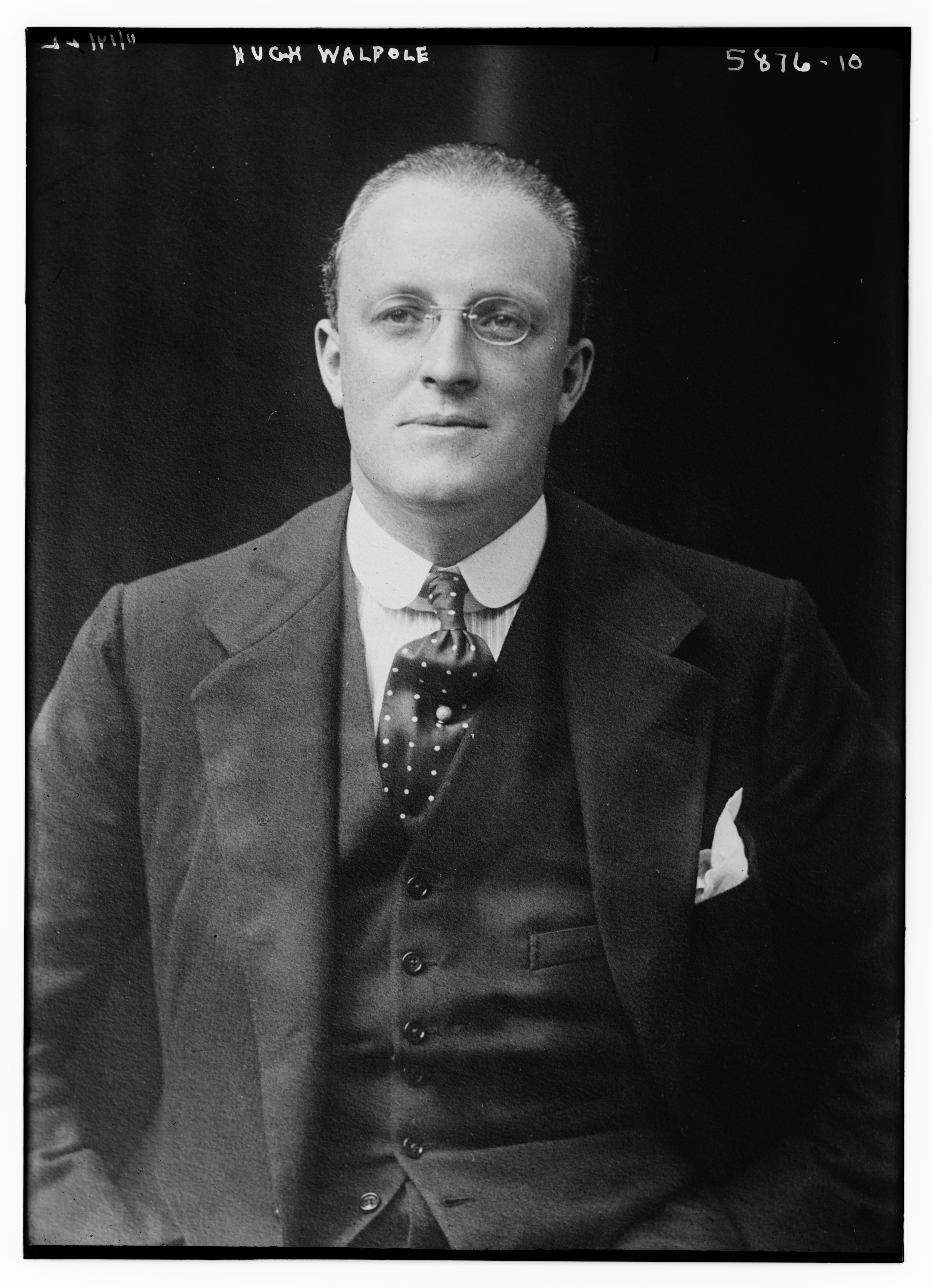
This was the era of the autodidact, where mill workers and clerks sought to improve themselves through literature. The Book Society tapped into this desire, offering guidance through the overwhelming volume of new publications. Its judges, led by the best-selling author Hugh Walpole, positioned themselves as “broadbrows”—rejecting the elitism of highbrow critics while insisting that books should be “worthwhile” and entertaining.
Cultural Gatekeepers or Patrician Guides?
There is an undeniable element of patrician guidance in the Book Society’s mission. Walpole described it as being for the “man in the street plus a little culture.” Critics at the time, such as Q.D. Leavis, scoffed at this “middleman” approach, arguing it dumbed down literature and standardized taste.
However, as we discussed, this snobbery often missed the point. The Book Society democratized access to contemporary fiction and non-fiction. It championed titles that became 20th-century classics, from Rebecca to To Kill a Mockingbird. For readers in remote parts of the UK or the colonies—like the Scottish jute-farming family in India mentioned by Wilson—the monthly parcel from London was a lifeline to the cultural conversation.
The Political Landscape
Interestingly, the Book Society also had to navigate the fraught politics of the 1930s. Unlike the openly socialist Left Book Club, the Book Society tried to remain broad in its appeal. However, the inclusion of judges like the poet Cecil Day-Lewis (a communist sympathizer) alongside the pacifist Edmund Blunden meant that debates over fascism and appeasement played out within the selection committee itself.
The End of an Era
The Book Society lasted until 1968, but its influence waned in the post-war years. The rise of the mass-market paperback (thanks to Penguin), the expansion of public libraries, and the arrival of television all chipped away at its model. Receiving a full-price hardback in the post became a luxury that fewer people needed or could afford.
Yet, its legacy remains. The idea that culture should be accessible, that reading is a communal activity, and that sometimes we all need a little help navigating the shelves, is as relevant today as it was in 1928. As Wilson notes, modern influencers like Dua Lipa are merely the spiritual heirs of Sylvia Lynd and Hugh Walpole—guides helping us find the signal in the n
Transcript
Nick: Welcome again to the Explaining History podcast. I am very pleased to welcome Nicola Wilson to the podcast today to talk about her new book, Recommended: The Book Society.
This is a history of a fascinating moment in the interwar period—an explosion in readership and mass publishing that brought books to a wider audience. It is also the story of the first “celebrity influencers” who recommended new books to this burgeoning market.
Nicola: Yes, absolutely. The book is a history of the Book Society, which was the first celebrity book club in the UK. It was set up in late 1928/early 1929, based on the American Book of the Month Club.
The idea was to send members one book every month. You committed to buying 12 books a year and received first-edition hardbacks through the post. These were often part of the publisher’s first print run, so they were potentially collectible. The society had a huge influence on taste and sales, with 10,000 members by the early 1930s. Because of the British Empire and global distribution, it really spread these chosen texts around the English-speaking world. They continued until 1968.
Nick: There is something fascinating about this period regarding “taste.” There seems to be a body of middle-class and working-class people looking to acquire intellectual taste—to be engaged with the important ideas of the day. It reminds me of Jonathan Rose’s The Intellectual Life of the British Working Classes, where you hear about cleaners reading Marx and Schopenhauer.
Nicola: Yes, in another life I’ve done work on Ethel Carnie Holdsworth, a Lancashire mill girl novelist who left school at 11 but was part of this highly literate culture via cooperative lending libraries.
That “new reading public” was the target. The Book Society was set up to give that audience suggestions on what to read. This was before many people went to university, so there was a lot of educational advice—like Arnold Bennett’s Literary Taste: How to Form It—on building a library and what was worth collecting.
Nick: Is there an element of patrician guidance here? The educated imparting knowledge down to the poor, similar to the early BBC ethos?
Nicola: Hugh Walpole, the head of the selection committee, talked about the society being for “the man in the street plus a little culture.” The idea was that books should be for everybody, not just a small elite.
They weren’t doing cheap reprints; these were full-price books. At the time, they were criticized by some for “dumbing down” literature and being “middlemen” intervening between authors and readers. But others, like socialist writer Margaret Cole, saw them as revolutionizing the book world by making titles more accessible. In the 30s, most people borrowed books from circulating libraries like Boots; the Book Society encouraged people with a little spare cash to actually buy them.
Nick: And books were quite a luxury then?
Nicola: Yes. The price was between 7s 6d and 10s 6d, which is about £25 today. Committing to that every month was significant.
Nick: Is the rise of the society partly due to innovations in printing technology allowing for mass publishing?
Nicola: That has something to do with it, though mass-market paperbacks (like Penguins) didn’t fully take off until after WWII. But the Book Society judges called themselves “broadbrows”—neither highbrow nor lowbrow. Their key criterion was that books should be entertaining and worthwhile. The selection was broad: biographies, history, travel writing, as well as fiction.
I’ve heard from families who have unearthed Book Society collections. One woman’s grandparents were in the jute industry in India and received these books every month for 20 years. It’s amazing to see a lifetime’s reading preserved like that.
Nick: Who were the key figures in the society?
Nicola: The book is really a story of the judges’ lives. Hugh Walpole was the chair until his death in 1941; he was a best-selling, knighted author. J.B. Priestley was involved early on. There was always a “token academic”—George Gordon, Vice-Chancellor of Oxford, though his wife seemed to do most of his reading!
Then there were women writers like Clemence Dane and, particularly, Sylvia Lynd. She was a professional writer and critic who lived in Hampstead and seems to have been a dominating voice on the committee behind the scenes.
In the late 30s, they brought in the poet Cecil Day-Lewis, who was part of the Popular Front and anti-fascist, alongside Edmund Blunden, a WWI poet and pacifist. I trace the debates between them on appeasement and how that reflected in the society’s choices.
Nick: It sounds like a very progressive, democratic ethos—helping people navigate ideas. Was it similar to Victor Gollancz’s Left Book Club?
Nicola: The Left Book Club came a bit later and was explicitly political, with cheaper books and a massive membership. The Book Society wasn’t political in the same way, though it navigated the political world. In their monthly magazine, they would recommend the “choice” but also list alternative titles you could swap for, including selections from the Right and Left Book Clubs. They tried to keep it open.
Nick: When did the decline begin?
Nicola: It survived into the 60s but became less successful. They tried diversifying with history and junior clubs, but the finances were precarious. By the 60s, they were still sending out full-price hardbacks, which was expensive. If you waited a year, you could get the paperback of a hit like To Kill a Mockingbird for a fraction of the cost.
Also, the Public Libraries Act of 1965 improved library services, and the end of the Empire meant the overseas membership—about 30-40%—dropped off. But they kept going; their last choice was an Iris Murdoch novel.
Nick: How did you discover this project?
Nicola: I work at the University of Reading and was in the archives of the Hogarth Press (Leonard and Virginia Woolf’s publisher). I found letters between them and the Book Society. I was surprised by how willing the Woolfs were to make changes to books like Flush or Vita Sackville-West’s The Edwardians to secure a Book Society choice. It challenged what I thought I knew about modernism.
I realized the sales impact was massive—boosting sales by 10,000–20,000 copies. I got interested in the judges’ lives, their affairs, and personal dramas, which often bled into their reviews.
Nick: It seems significant as the first of its kind in the UK.
Nicola: Yes, it shook up the book world. It’s the precursor to modern influencers or celebrity book clubs like Oprah’s or Dua Lipa’s. It’s not well known now, but so many 20th-century classics—Brideshead Revisited, Rebecca—became famous partly because they were Book Society choices.
Nick: Critics like F.R. Leavis were quite stern arbiters of taste, dismissing mass culture. Did the Book Society operate in opposition to them?
Nicola: They were tied up in it. Q.D. Leavis (F.R. Leavis’s wife) criticized the Book Society in her book Fiction and the Reading Public, claiming they were dumbing down literature and stratifying taste. That snobbery still exists. I wrote this book to be entertaining and narrative-led, and a review in The Spectator complained that I sounded “like a guest on The One Show”—as if that’s a bad thing! We should challenge that snobbery.
Nick: Absolutely. One of the great progressive trends of the 20th century was the democratization of culture.
Is the book available now?
Nicola: Yes, Recommended was published by Holland House Books last Thursday. You can get it from any good bookshop or Bookshop.org.
Nick: As always, please buy from an independent retailer or direct from the publisher if you can. Nicola, thank you so much for joining us.
Nicola: Thank you.

Leave a Reply