
In this episode of the Explaining History Podcast, we dive into military history—a departure from our usual focus on social and diplomatic history—to explore Richard Overy’s magisterial work, The Bombing War, and the crucial role of Air Chief Marshal Hugh Dowding in Britain’s survival during the summer and autumn of 1940.
I’ll be honest: I’ve often shied away from military history, partly because of how it’s been popularised. The “our lads what won it” approach has never appealed to me. But there are exceptions—Harper and Baylis’s Forgotten Armies and Forgotten Wars come to mind as social histories of war in Southeast Asia—and Richard Overy’s The Bombing War is another.
Written during a period of intense debate about the memorial to Bomber Command, Overy’s book forces us to reckon with uncomfortable questions about the Allied bombing campaign and the mass civilian death it caused. But today, I want to focus on the defensive side of the story: how Britain managed to withstand the German assault during the Battle of Britain and the Blitz.
The Architect of Victory: Hugh Dowding
At the centre of this story stands a figure who rarely gets the recognition he deserves: Air Chief Marshal Sir Hugh Dowding. As Richard Overy writes:
“The one outstanding advantage enjoyed by Fighter Command was the integrated communication and intelligence gathering on which the entire system rested. Its success was due in large part to Dowding, whose understanding of technical issues, organisational skills and fierce defence of his force made him a model commander.”
Dowding was, by all accounts, socially awkward—alternately garrulous and aloof, which earned him the nickname “Stuffy.” He was near the end of his career in 1940 and fought the battle against the German Air Force with compulsory retirement constantly hanging over him. Yet he operated a strongly centralised force that would prove decisive.
The Technology Edge: Radar and the Dowding System
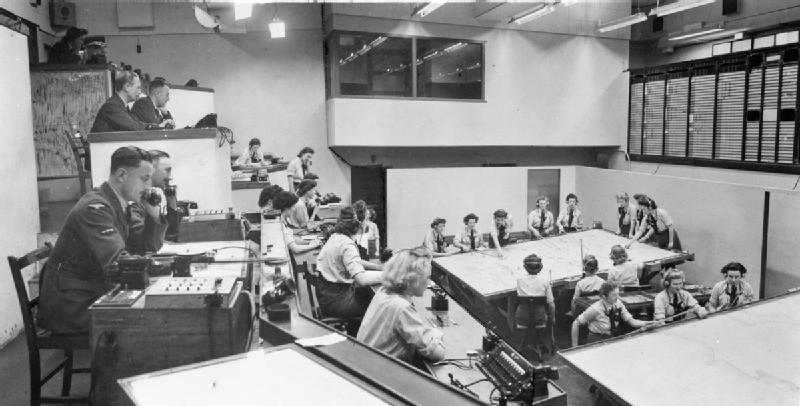
What made Fighter Command different was its integrated approach to defence. During the late 1930s, thanks to the development of a chain of radar stations around the British coast, it became possible for the first time to gain effective advanced intelligence of approaching aircraft.
By autumn 1940, the “Chain Home” network had 30 stations from Cornwall to the far north of Scotland, almost half of them on the south and east coasts facing Germany. To guard against air attack, eleven of the most important had shadow stations set up a few miles distant. There were also 31 “Chain Home Low” stations to detect aircraft flying under a thousand feet.
The radar chain was far from perfect—estimating height proved particularly difficult with hastily trained crews—but it was supplemented by a nationwide Observer Corps, which took over once aircraft had crossed the coast.
Here’s what made the system remarkable:
“The whole process could take as little as four minutes, which gave just enough time for most intercepting fighter aircraft to be airborne. Once aloft, fighters communicated with each other by radio.”
Four minutes. That’s the kind of efficiency that wins battles.
German Misapprehensions
The German Air Force fundamentally misunderstood what they were up against. They assumed British radar was relatively unsophisticated and gave it less bombing attention than it deserved. They believed RAF fighters were tied closely to the area around their home stations, lacking precisely the flexibility that the Dowding system gave them.
Most critically, they persistently underestimated the size of Fighter Command and its capacity to reinforce itself. Throughout the campaign and well into 1941, the Germans assumed the RAF could not replace its losses fully and was a constantly declining threat—even when the reality of high German losses in August and September 1940 suggested quite the opposite.
This tells us something important about the nature of the Third Reich. As I’ve argued before, following Ian Kershaw’s work, the outward appearance of order in Nazi Germany was something of an illusion. Behind it lay administrative chaos, fantasists like Göring who told Hitler what he wanted to hear, and a leadership that rarely got into the details.
Göring assumed the Battle of Britain would be easy. He paid insufficient attention to the attrition rate of pilots—men who were difficult and time-consuming to replace. By September 1940, the entire campaign was becoming a costly waste of time.
The Other Side of the Coin: British Overestimation
The British had the opposite problem: they persistently overestimated the size and range of the German frontline air force, pilot numbers, and production levels.
“Air intelligence suggested a German aircraft output of 24,400 in 1940; the true figure was 10,247. The frontline force in early August was estimated at 5,800 planes, including 2,550 bombers, when the actual figure of serviceable bombers was 37 percent of this figure.”
Against Britain, the three German air fleets employed a total of only 2,445 serviceable aircraft of all types on the eve of Eagle Day. Early evaluations wrongly assumed that German bombers and long-range fighters had sufficient range to cover the whole of the British Isles from French bases. In reality, the flying time of Messerschmitt Me 109s over the South Downs was extremely low—less than an hour in some cases.
These contrasting misperceptions shaped both sides’ attitudes. The Germans assumed they were seriously eroding an already meagre RAF. The British, believing they faced a powerful and dangerously endowed enemy, were spurred to urgent expansion and heroic defiance.
The Battle in Practice: Eagle Day and Beyond
The much-heralded “Eagle Day”—the great mass attack meant to launch the full air assault—was frustrated by poor weather on 13th August 1940. The result was chaotic: some bombers arrived without their escorts, some escorts without their bombers. German losses totalled 45 aircraft at the cost of 13 British fighters. Not a single Fighter Command aircraft had been attacked on the ground.
But the fighter-to-fighter contest we remember so vividly was only part of the story. Throughout August and September, the German Air Force flew numerous daily small raids intended to lure the RAF into battle, destroy individual military and economic targets, trigger the air raid alarm system, and induce tiredness and despondency in the population.
In August 1940, there were major raids employing hundreds of bombers—but also 1,062 smaller raids spread across the country. The city of Hull, for example, was subject to six small night raids between 20th June and 6th September that destroyed only 17 houses but kept the population in a state of perpetual alert.
“The sheer range of targets and attack categories was an exhausting schedule for German air units, and it was this as much as the damage inflicted by Fighter Command that by early September created a steady attrition of the force and a growing strain on pilots.”
Later German appraisals suggested the air force had simply been asked to do too much. Albert Kesselring, in his memoirs, dismissed the strategy as “muddle-headed.”
The Nazism Problem: Why Exhaustion Mattered
This exhaustion factor is crucial. There are only so many missions a pilot can physically fly without becoming mentally and physically incapable of continuing. Hitler’s way of thinking about military units rarely took into account the need for replenishment and downtime.
What this reveals, again, is the chaotic nature of Nazism—an ideology that thrived on endless spontaneity and dynamism, on the notion of heroic action that would win quickly and decisively. But both Britain and the Soviet Union presented Nazism with something it could not endure: a long war.
The Myth and the Reality
For those of us who grew up in Britain, it’s hard to overstate the meaning of the Battle of Britain in our national mythology. The summer and autumn of 1940—the Battle, Dunkirk, the Blitz—represent a time of disaster and crisis that somehow brought out the best of the British people. That’s how the story goes.
But the reality is more complex. The Battle of Britain, while an important part of the war in the West, never came down to the wire in the way we imagine. And for Hitler, it was something of a sideshow—he just wanted the British to stop being a nuisance while he got on with more important matters on the continent, namely the invasion of the Soviet Union.
That doesn’t diminish the courage of the pilots or the brilliance of Dowding’s system. It simply places them in their proper context.
If you enjoyed this episode, please consider supporting the Explaining History Podcast on Patreon. You’ll get access to ad-free episodes and exclusive content. And watch this space for details of our upcoming masterclass on Nazi Germany in March.
Transcript
Hi there and welcome again to the Explaining History podcast.
I don’t tend to dive into military history too often, but perhaps I should. A lot of the things that I tend to talk about are the history of ideas, social history, diplomatic history—the histories of geopolitics in the 20th century. And I’ve got to tell you, one of the reasons why I have in the past shied away from military history is because of partly how it’s popularised. The sort of “it was our lads what won it” version of things, which is obviously—I mean, there are some very, really good military history books out there. I cite, for example, Harper and Baylis’s Forgotten Armies and Forgotten Wars, which actually aren’t exclusively military histories at all. They are social histories of the war in Southeast Asia.
Anyway, one of the best bits of military writing that I’ve come across in many years is Richard Overy’s The Bombing War. And it was written, this book, at a time when debates around bombing and around Bomber Command—I think it was close to a particular war anniversary—were very, very prevalent. And there was a big controversy about the memorial to Bomber Command, which was being planned. Bomber Command and the crews of British bombers were largely neglected in the memorialization and commemoration of the war, partly because bombing itself was so controversial, for want of a better word. The questions as to what it contributed to the war are still open, with both sides fiercely debating its merits. But the consequences of mass civilian death from Allied bombing of Germany and other countries is rarely fully reckoned with. And, of course, for much of the post-war era, the British population at large had little sympathy for anything the Germans might have endured.
So the book was written in a particular context. Now, the bit I want to look at is less to do with the Allied Combined Bombing Offensive, and more to do with how Britain managed to deal with the German bombing during the Battle of Britain and subsequently the Blitz. And one key figure through it all is Hugh Dowding, a significant innovator. And when people talk about key British military figures, so on and so forth, he rarely gets a look in, but he really, really should. His impact on the defences of the British Isles is significant. So I’m going to dive into that today. And like I said, with military history, it’s not the thing that lends itself to me particularly, but I think in many cases, perhaps I should do more of it. But there are only so many hours in the day.
Richard Overy writes:
“The one outstanding advantage enjoyed by Fighter Command was the integrated communication and intelligence gathering on which the entire system rested. Its success was due in large part to Dowding, whose understanding of technical issues, organisational skills and fierce defence of his force made him a model commander. He was socially awkward, alternately garrulous and aloof, the quality that earned him the name ‘Stuffy’. He was near the end of his career in 1940 and fought the contest against the German Air Force with compulsory retirement constantly threatened. And like the German Air Force, Dowding enjoyed a good deal of independence from the Air Staff and from the Air Minister, Sir Archibald Sinclair, a career liberal politician appointed in June 1940, whose chief role was to act as a link between Parliament, Churchill and the RAF.
“Dowding operated a strongly centralised force. Only during the late 1930s did it become possible for the first time, thanks to the development of a chain of radar stations around the British coast, to gain effective advanced intelligence of approaching aircraft. Many stations were still not complete early in 1940, but by the autumn the Chain Home network had 30 stations from Cornwall to the far north of Scotland, almost half of them on the south and east coasts facing the German enemy. To avoid the danger that they might be destroyed by air attack, 11 of the most important had shadow stations set up a few miles distant. In addition, there were 31 Chain Home Low stations to detect aircraft flying under a thousand feet.
“The radar chain was far from perfect—estimating height proved difficult, particularly with crews trained too briefly—but it was supplemented by a nationwide Observer Corps which took over observation once the aircraft had crossed the coast. The whole system was held together by telephone. Radar plots of incoming raids were fed into the central operations room at Fighter Command headquarters and then relayed to Fighter Command groups and sector stations. Observer Corps sightings were sent straight to groups from Observer Corps centres. The whole process could take as little as four minutes, which gave just enough time for most intercepting fighter aircraft to be airborne. Once aloft, fighters communicated with each other by radio.”
So four minutes is quite remarkable, really, and it is testament to the organising skills of Dowding and the people that worked under him.
The central control of fighter defences and the special role played by radar were among the many factors misunderstood by the German Air Force when their air attacks were finally launched. It was assumed on the German side that British radar was relatively unsophisticated, and it got less bombing attention than had been expected. It was also believed that RAF fighters were tied closely to the area around their station and lacked precisely the flexibility and intelligence that the system in practice gave them.
These misapprehensions were compounded by a persistent underestimation of the size of Fighter Command and the capacity to reinforce it continuously with men and aircraft. It was assumed through the German campaign well into 1941 that the RAF could not replace losses fully and was a constantly declining threat, even when the reality of high German losses in August and September 1940 suggested quite a different conclusion.
I think this tells us more about the nature of the Third Reich than it tells us about Fighter Command, in a way. As I’ve said many a time before, following the Ian Kershaw argument, the outward appearance of order in the Third Reich was a kind of illusion. Behind that, there’s all sorts of administrative chaos and all sorts of people like Göring who are great fantasists and make-believers and who will tell Hitler all sorts of things. Hitler is rarely on top of the detail in areas that don’t specifically interest him. He believes Göring when Göring says that the British Expeditionary Force can be destroyed on the beaches of Dunkirk, and he believes what Göring has to say about the progress of the air campaign over Britain. And Göring himself is again not really over the detail.
Göring makes all sorts of assumptions about how easy he thinks the Battle of Britain will be, and so the loss rate—the attrition rate, which is something particularly with pilots because they’re so difficult and time-consuming to replace—he pays less attention to than he should do. And by September, it’s looking like the entire campaign is becoming a costly waste of time.
Richard Overy writes:
“The British had the opposite problem, persistently overestimating the size and range of the German frontline air force, pilot numbers and production levels. Air intelligence suggested a German aircraft output of 24,400 in 1940; the true figure was 10,247. And the frontline force in early August was estimated at 5,800 planes including 2,550 bombers, when the actual figure of serviceable bombers was 37 percent of this figure. Against Britain, the three air fleets employed a total of only 2,445 serviceable aircraft of all types on the eve of Eagle Day. Early evaluations wrongly assumed that German bombers and long-range fighters had sufficient range to cover the whole of the British Isles from French bases. The actual flying time of Messerschmitt Me 109s over the South Downs was extremely low—you’re talking less than an hour.”
So this kind of overestimation—wild overestimation—and the reality of the numbers actually tell you something about why Hitler called it all off in the end, and how important maintaining a large fighter force for Barbarossa was. The actual numbers of serviceable German aircraft are really quite perilously low when you’re thinking of the size of military campaigns that Hitler was looking to do.
Early evaluations wrongly assumed that German bombers and long-range fighters had sufficient range to cover the whole of the British Isles from French bases, while it was believed short-range fighters could reach as far as Hull when they could barely contest the airspace over London. The RAF also assumed that the German enemy had generous numbers of pilots and could make good losses of men and aircraft sufficiently to expand the size of the air force even under combat conditions—which was also never the case.
“These contrasts in perception were important in shaping the attitude of both sides during the conflict. German forces assumed that what they did by day and by night seriously eroded the capability of an already meagre RAF. British forces on the other hand were spurred to urgent expansion and heroic defiance by an enemy thought to be powerful and dangerously endowed.”
A lot of this feeds into our myths of the Battle of Britain. If you haven’t grown up in Great Britain, if you don’t live here, sometimes it’s hard to appreciate the depth and the meaning of national myth—just as in Australia, Anzac Day; or in America, the flag at Iwo Jima; or if you are in Russia, the meaning of Stalingrad. The meaning of the Battle of Britain is huge when it comes to Britain’s memory of the war. The Battle of Britain, Dunkirk, and the Blitz—the summer and autumn of 1940 is this time of disaster and crisis, and yet it somehow brings out the best of the British people. That’s how the story goes.
But the reality is that the Battle of Britain, whilst an important part of the war in the West, never came down to the wire in the way that we imagine it does. And it was also something that Hitler himself viewed as something of a sideshow. Knocking Britain out of the war and placing somebody more reasonable like Oswald Mosley in Number 10 and Edward VIII back in Buckingham Palace—this is something that Hitler wanted. He just wanted the British to stop being a nuisance while he carried on with more important matters on the continent.
After the war, wartime recollections from various German fighter pilots and also the transcripts of captured pilots who were held at prisoner of war camps bear this out: that many German fighter pilots imagined that the big show was going to be Russia, and whatever was happening with the British was just a kind of nonsense really.
The German determination to start the full air assault with a flourish on Eagle Day was frustrated by grey skies and rain. Substantial attacks had already been made since the 8th of August, and the first raids on radar installations and RAF fighter stations followed four days later, seriously damaging the Ventnor radar station on the Isle of Wight and the airfields at Manston and Hawkinge in Kent. But this was not a real battle.
German air units were finally told to prepare for Eagle Day on the 13th of August. Eagle Day was going to be the great mass attack, but poor weather persisted and the attack was half-hearted. Units had been ordered not to fly, but the message had not been received by all of them, and sorties began early in the morning and went on till the evening. Some bombers arrived without their escorts, some escorts without their bombers. German losses totalled 45 aircraft at the cost of 13 British fighters. Not a single Fighter Command aircraft had been attacked on the ground.
This was a well-known failure, but it nevertheless masks the fuller picture of German operational strategy during August, of which direct attacks on the RAF formed only a part. The fighter-to-fighter contest watched daily in the skies over southern England dramatically symbolized the struggle for the British public then and now, but it was only part of what the German Air Force actually did.
Throughout August and September and on into the winter months, the German Air Force flew numerous daily small raids by day and night intended to lure the RAF into battle, to destroy individual military and economic targets, to trigger the air raid alarm system, and to induce tiredness and despondency in the population. In August 1940, there were major raids employing hundreds of bomber aircraft, but also 1,062 smaller raids spread out over the country—the largest number of the whole campaign.
The city of Hull, for example, was subject to six small night raids between the 20th of June and the 6th of September which between them destroyed only 17 houses and badly damaged a further 47, but kept the population in a state of perpetual alert. Some of these raids were scarcely opposed by Fighter Command at night—almost none.
In addition, the German Air Force mounted Störungsangriffe (harassing attacks) against key armaments and port installations using larger numbers of heavy fighters or dive bombers, as well as armed reconnaissance flights. For the war at sea, a number of specialized units dropped mines in coastal waters and estuaries—in August 1940, only 328 were dropped, but over the following three months it was 2,766.
There were also plans to attack RAF bomber bases north of London once air superiority was achieved—Operation Luftparade—but the failure to dominate Fighter Command postponed the attempt. Only Driffield airfield in Yorkshire was severely hit by aircraft of Air Fleet 5 flying from Norway.
“The sheer range of targets and attack categories was an exhausting schedule for German air units, and it was this as much as the damage inflicted by Fighter Command that by early September created a steady attrition of the force and a growing strain on pilots. Later in the war, German appraisal of the campaign suggested that the air force had simply been asked to do too much. A view that is difficult to contest. Albert Kesselring in his memoirs dismissed the strategy as ‘muddle-headed’.”
That in itself, I think, is a really telling fact. Even if it wasn’t for the losses, the exhaustion of pilots in the Luftwaffe is important to acknowledge. There are only so many missions a pilot can actually physically do without becoming mentally and physically exhausted, or perhaps even incapable of carrying on flying.
Often, the way that Hitler thought about military units didn’t take into account the need for replenishment and the need for downtime. Part of what that shows us, again, is this sort of the muddle that Kesselring talks about—the chaotic nature of Nazism. This is an ideology that thrives on endless spontaneity and dynamism, and this sort of notion of heroic action is one that will rarely consider attrition and rarely consider exhaustion. Because the idea is, “Win well and win quick.” But what both the British and the Soviet Union do is they present Nazism with a long war, and that’s something in the long run that Nazism cannot endure.
Anyway, we shall finish there. I’m going to be doing another masterclass soon—date to be announced, we’re looking at March, and it’ll be on Nazi Germany. And then in April, I’ll be publishing the US Masterclass in the next week or so, and so I’ll have time to tidy it up a little bit and then I’ll put a link in here.
If you like the podcast and you want to support it, but also more crucially if you want to avoid listening to adverts, then do check out the Explaining History podcast on Patreon. And I’ll see you here, and I might see you there. Take care everyone, all the best, bye-bye.
Listen & Learn: Related Podcast Collections
Explore these curated episode collections to go deeper on the history behind this article:

Leave a Reply