-
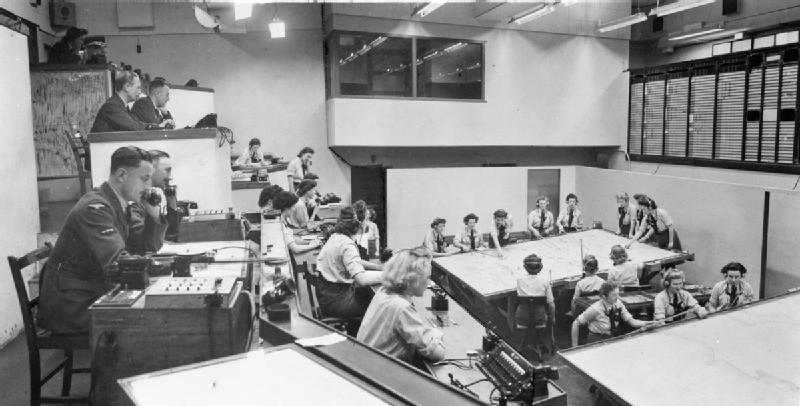
In this episode of the Explaining History Podcast, we dive into military history—a departure from our usual focus on social and diplomatic history—to explore Richard Overy’s magisterial work, The Bombing War, and the crucial role of Air Chief Marshal Hugh Dowding in Britain’s survival during the summer and autumn of 1940. I’ll be honest: I’ve often shied away from military history, partly because of how it’s been popularised. The “our lads what won it” approach has never appealed to me. But there are exceptions—Harper and Baylis’s Forgotten Armies and Forgotten Wars come to mind as social histories of war in…
-

From Restraint to Ruin – The Birth of the Bombing WarAt the dawn of World War II in 1939, a fragile consensus existed among the warring powers. Spurred by an appeal from President Roosevelt, leaders like Neville Chamberlain and even Hitler gave public undertakings to abstain from the horror of aerial attacks on civilians. There was a genuine, if naïve, belief that the looming conflict could be “humanised,” and that the bomber would be restricted to purely military targets.But how did this initia
-
In the mid-1930s, with the shadow of one great war still looming and the threat of another growing darker, Britain faced a vexing national crisis: should it rearm? This episode delves into the complex political, economic, and social debates that defined this critical period.We explore the profound public anxiety shaped by the memory of World War I and the terrifying new prospect of aerial warfare, as seen in newsreels from Guernica and Nanjing. Drawing on Daniel Todman’s Britain’s War, we unpack
-
In the post war decades huge strides were made across the world to address the worst aspects of social deprivation using the coordinated power of the state. Often the resulted showed working class communities that those deciding their fate were indifferent as to the actual results. In Tony Judt’s penultimate book Ill Fares The Land, he explores the crises of social provision and the fragmentation of the old and the new left of the 1960s on the issues of collectivism and individualism.Go Deeper:
-
What can the Roman legions of Constantine, the Ottoman forces of Mehmet the Conqueror, and the US Army of World War II teach us about modern military power?In this timely episode of the Explaining History Podcast, I speak with former senior British officer and acclaimed military historian Barney White-Spunner about his forthcoming book Nation In Arms (out 14 August). Drawing from five pivotal armies that helped shape the European continent—the Roman, Ottoman, New Model, Prussian, and American—Wh
-
Warfare had to be re-propagandised in the 20th Century, particularly in the western world, as a moral crusade. Mass democracy determined that leaders needed to present war as a manichean struggle between freedom and tyranny. The end of the Tsarist regime and the intervention of a liberal American president in the First World War was an ideal opportunity to re-invent conflict as moral crusade in the defence of freedom. The arguments that British, American and other NATO leaders present in the 21s
-
Join us on The Explaining History Podcast as we welcome Dame Vikki Heywood, former Executive Director of the Royal Shakespeare Company and the Royal Court Theatre, to discuss her dazzling debut novel Miss Veal and Miss Ham. Set against the sleepy veneer of a 1951 Buckinghamshire village post office, this intimate tale reveals the hidden passions and unspoken resilience of two women whose lives span from the suffragette movement to the aftermath of World War II.In this episode, we explore:A Day o
-
During the Second World War the immense needs for labour and military manpower transformed American society and gave Black Americans an historic opportunity to advance themselves. This podcast explores the barriers they faced and the racial discrimination of segregated armies and workplaces, and the ironies of a military power based on racial discrimination conducting a moral crusade against Nazism. *****STOP PRESS*****I only ever talk about history on this podcast but I also have another life,
-
What was it like to experience the end of the Second World War in London, 80 years ago today? We read David Kynaston’s Austerity Britain to find out how housewives, politicians, writers and diarists experienced the end of six years of terrible conflict and what this meant to them.*****STOP PRESS*****I only ever talk about history on this podcast but I also have another life, yes, that of aspirant fantasy author and if that’s your thing you can get a copy of my debut novel The Blood of Tharta, r
-
The period of the last 25 years in Britain has been one of continual crisis and disaster, from the Iraq War to the financial crisis to Brexit and covid. Britain has been transformed by these disasters and now is a smaller, poorer and more isolated country, perhaps permanently so. In his book Britain Alone, Liam Stanley explores the causes of this diminution, you can get a copy here.*****STOP PRESS*****I only ever talk about history on this podcast but I also have another life, yes, that of aspir