-
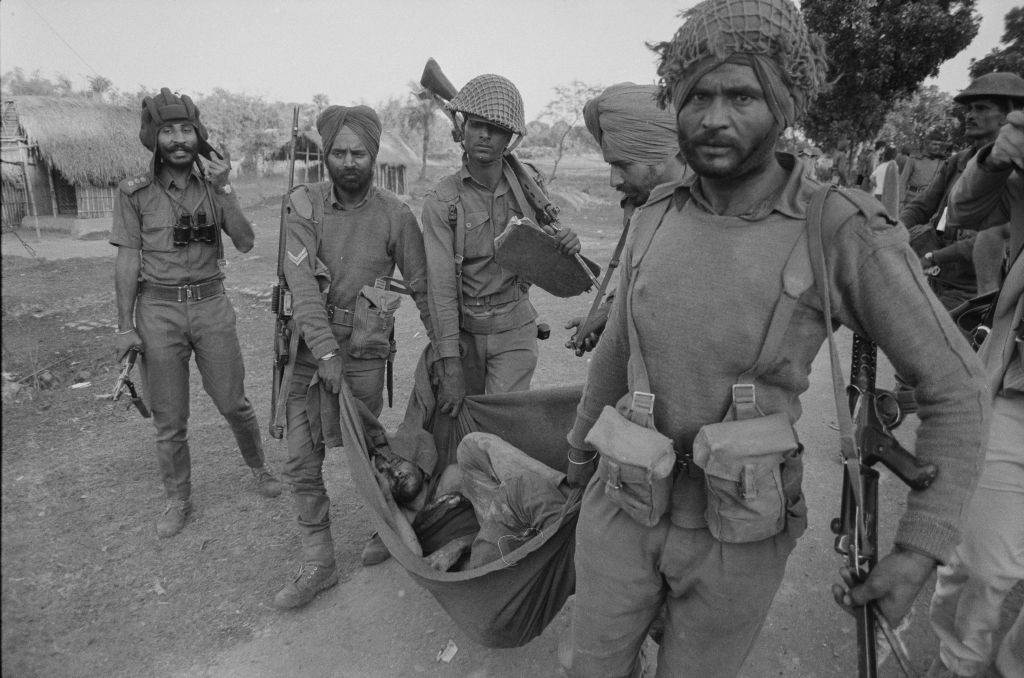
On the evening of 10 December 1971, as Indian forces crossed the Meghna River and closed in on Dhaka, the White House Situation Room sent a message to the Commander in Chief, Pacific (CINCPAC). It began a sequence of orders that culminated, four days later, in the movement of a U.S. carrier task group toward the Bay of Bengal. Although widely labelled “Task Force 74” in later accounts, contemporaneous records vary: some U.S. documents simply describe it as a carrier group detached from the Seventh Fleet, while Indian and Soviet-era sources apply labels inconsistently. What is undisputed is the political…
-

Introduction: The Funeral of Equidistance On the morning of August 9, 1971, in the gilded halls of New Delhi’s Rashtrapati Bhavan, the Indian Minister of External Affairs, Swaran Singh, and the Soviet Foreign Minister, Andrei Gromyko, affixed their signatures to a document titled the Treaty of Peace, Friendship, and Cooperation. To the casual observer of international law, the text might have appeared as a standard diplomatic instrument—a framework for cultural exchange, trade normalization, and scientific collaboration. However, in the chancelleries of Washington, Beijing, and Islamabad, the signing was recognized for what it truly was: a seismic shift in the geopolitical architecture…
-
Introduction: The Velocity of Liberation On December 3, 1971, the Pakistani Air Force launched Operation Chengiz Khan, a series of preemptive airstrikes against Indian airbases in the western sector. This act formally initiated the third war between India and Pakistan. Thirteen days later, on December 16, Lieutenant General A.A.K. Niazi, the commander of the Pakistani Eastern Command, signed an unconditional instrument of surrender in Dhaka. In the historiography of post-World War II conflicts, the liberation of East Pakistan is frequently cited as a textbook example of a “Lightning Campaign.” Retrospective analyses often utilize the term Blitzkrieg to describe the Indian offensive. However,…
-

Introduction On April 6, 1971, a confidential telegram arrived at the State Department in Washington, D.C., transmitted from the U.S. Consulate General in Dhaka, East Pakistan. Most dispatches from foreign posts are measured, bureaucratic, and focused on specific policy recommendations or intelligence updates. This cable, designated “Dissent Channel,” was different. It did not merely report facts; it issued a searing indictment of American foreign policy. Drafted by Archer K. Blood, the Consul General, and signed by twenty members of his staff, the message accused the Nixon administration of “moral bankruptcy” in the face of the Pakistani military’s crackdown on the…
-

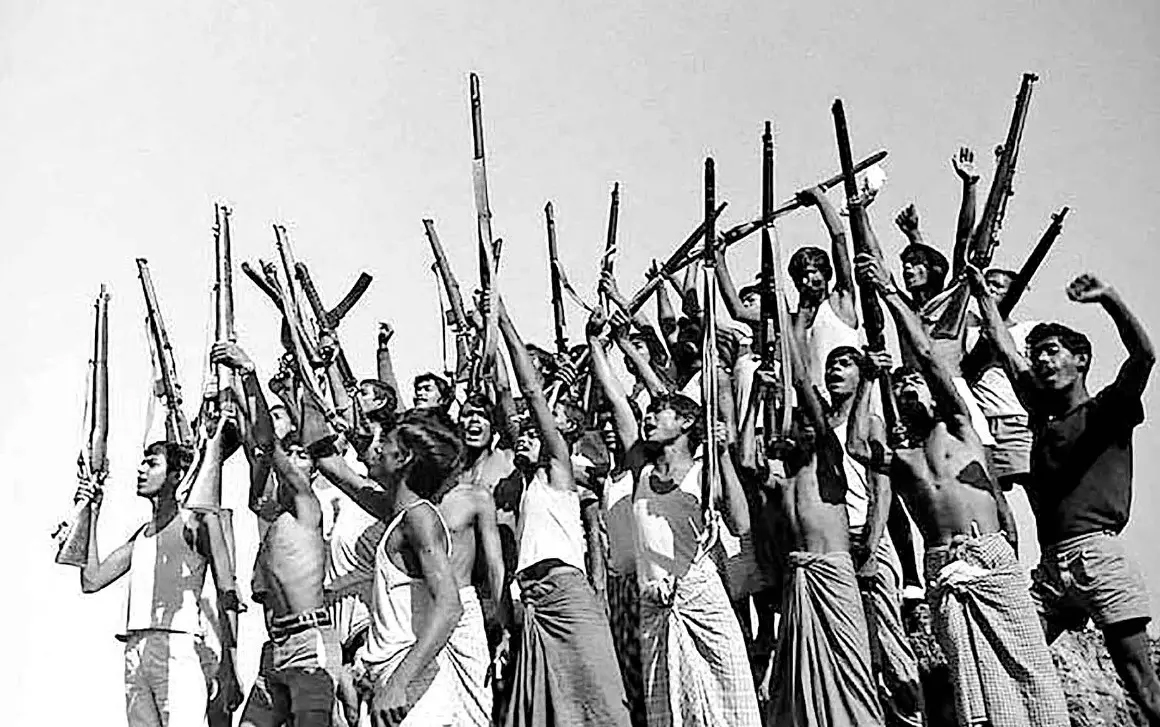
The power imbalance between occupying Pakistani forces and the Bengali resistance in 1971 was overwhelmingly in Pakistan’s favour. On one side stood the Pakistan Army: a professional, highly disciplined military force, steeped in the British martial tradition, and equipped with modern American weaponry—Patton tanks, F-86 Sabre jets, and heavy artillery. They possessed a rigid chain of command and the ruthless efficiency of a force that had ruled the country under martial law for over a decade. On the other side was a spectral army. Its soldiers often wore lungis (traditional sarongs) instead of fatigues; they went barefoot through the mud; they carried…
-
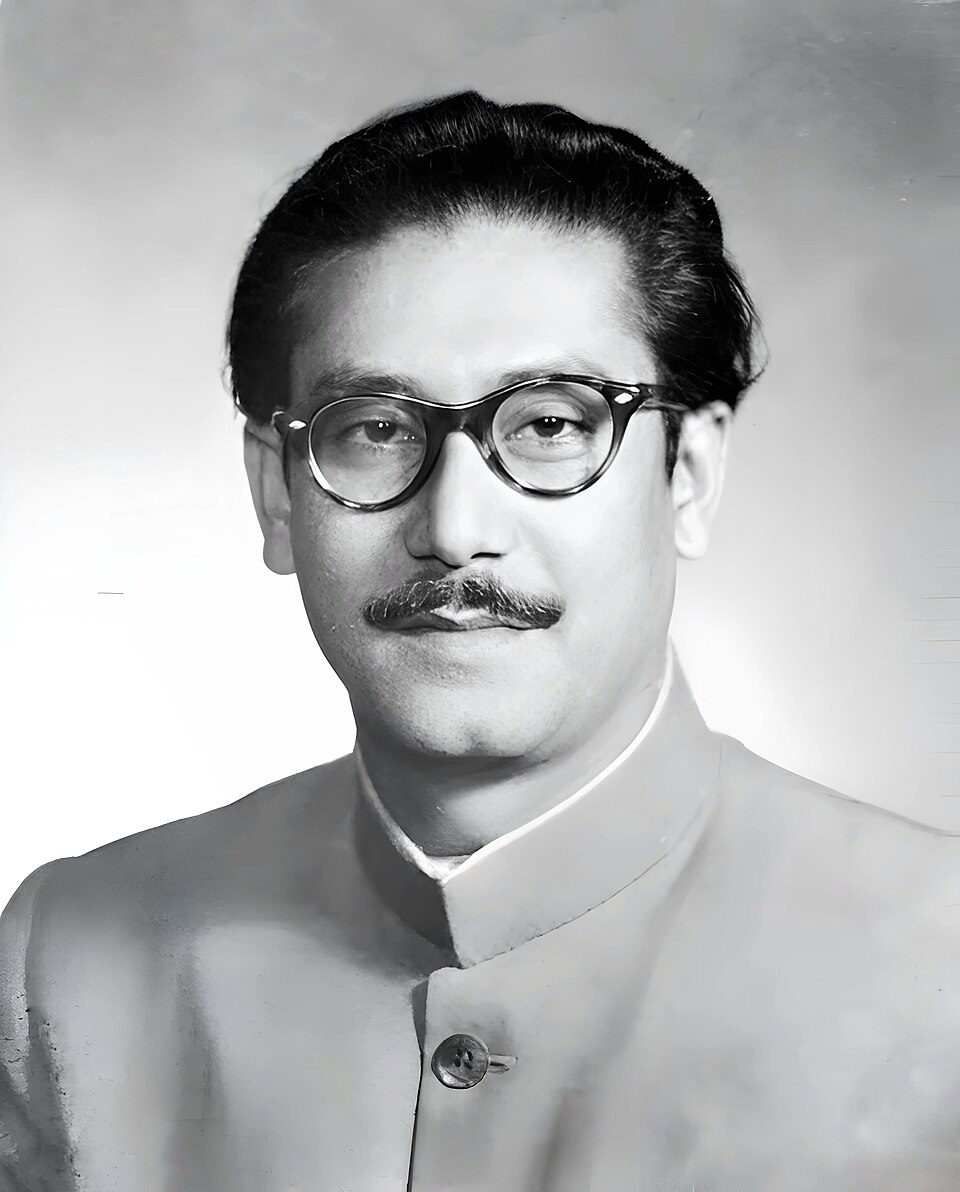
Introduction To view 1971 merely as a secessionist movement is to misunderstand the structural crisis of Pakistan. The birth of Bangladesh was less a traditional insurgency than the violent collapse of an internal colonial experiment. While the fighting eventually took the form of guerrilla warfare, the conflict originated in a constitutional crisis: the refusal of a military junta to transfer power to a democratically elected majority. Bangladesh was not forged solely in the heat of battle, but in the antecedent political failure of the unified Pakistani state. While the guerrilla warfare of the Mukti Bahini (Freedom Fighters) provided the physical…
-

If the 1970 election was the moment a nation voted almost unanimously for autonomy if not independence, then the military operation that began on the night of March 25, 1971, was the moment that aspiration was met with unimaginable violence. Codenamed Operation Searchlight, this was not a spontaneous outburst of conflict but a meticulously planned and brutally executed military crackdown designed to systematically dismantle the Bengali nationalist movement. Its aim was simple, chilling, and ultimately catastrophic: to terrorize the population, eliminate the political and intellectual leadership of East Pakistan, and crush the spirit of independence in a single, decisive blow.…
-

The Bangladesh Liberation War of 1971, a nine-month saga of immense violence and resistance, was the product of long term crises and ruthless exploitation, triggered by a single, pivotal event: the first-ever general election in Pakistan held on December 7, 1970. This was not just an election; it was a national referendum on the very idea of Pakistan. It was the moment when two decades of political, linguistic, and economic grievance were channeled into a democratic process, only to have the results rejected by the ruling power. The election did not merely precede the war; it created the precise conditions…
-

The ceremony of surrender of Pakistan’s army in Dhaka on December 16, 1971, marked one of the most decisive and humiliating moments in modern military history. As Lieutenant General A. A. K. Niazi of the Pakistan Army signed the instrument of surrender before the Indian General Jagjit Singh Aurora, the world’s then most populous Muslim nation was formally dismembered. East Pakistan became the independent People’s Republic of Bangladesh, and what remained was a geographically truncated, psychologically shattered Pakistan. The 1971 war was not merely a military defeat; it was a catastrophic national trauma that shattered the foundational ideology on which…