-

Introduction In 1947, the Partition of British India into India and Pakistan marked one of the most traumatic political events of the 20th century. It was not merely a line drawn on a map—it was a moment of mass displacement, communal violence, and geopolitical upheaval that continues to shape South Asia’s identity today. This guide brings together a series of in-depth historical essays that go beyond textbook accounts. Each article explores a different dimension of Partition: from the colonial state’s role in shaping religious identity to the trauma etched into generational memory. Whether you are a student, educator, or curious…
-
Introduction The 1947 Partition of British India – which cleaved the subcontinent into independent India and Pakistan (and later Bangladesh) – was not only a geopolitical event but also a profound human tragedy. It triggered the largest mass migration in recorded history, displacing an estimated 12–20 million people amid sectarian violence . In the span of just a few months, formerly harmonious towns and villages were ripped apart along religious lines; neighbors became enemies, and up to one million people were killed, with some 75,000 women abducted and raped in the communal carnage . Families fled ancestral homes that had…
-
Introduction In the late 19th and early 20th centuries, the British colonial state in India undertook an unprecedented project of counting and classifying its subjects. Decennial census operations from 1871 to 1941 attempted to enumerate a vast population of many millions, recording details like religion, caste, tribe, and occupation. This seemingly bureaucratic exercise had profound social and political consequences. By creating official categories and population statistics for religious and caste communities, the colonial census institutionalised rigid social divisions that had previously been more fluid or locally defined . Identities that were once overlapping or ambiguous were transformed into distinct, enumerated…
-
Introduction The 1947 Partition of India was accompanied by an unprecedented eruption of communal violence, with the provinces of Punjab and Bengal emerging as its bloodiest epicentres. When British colonial rule abruptly ended in August 1947, these two sprawling provinces – each religiously mixed and slated for division – descended into chaos. Across Punjab and Bengal, an estimated 12–14 million people fled their homes amid carnage and terror, producing the largest forced migration in modern history . Contemporary observers and historians have described the violence in these regions as ethnic cleansing in nature rather than “traditional” rioting . In Punjab…
-
Partition-era India saw an explosion of partisan newspapers and intense censorship as the colonial state and emerging political parties battled for hearts and minds. In the decade before 1947, daily dailies and journals in English, Urdu, Hindi and other languages became key platforms to define us vs them. Nationalist leaders like Gandhi, Nehru and Jinnah each nurtured their own press organs (for example Nehru’s National Herald launched in 1938 ), while communal organizations and the British colonial government used print to sway opinion. The resulting media environment was starkly polarized. The British press (including papers like The Times of India…
-
Introduction The Partition of India in 1947 is often narrated as a binary conflict between Hindus and Muslims, represented by the Indian National Congress and the Muslim League. However, this framing omits a vast spectrum of other voices—religious minorities, regional actors, leftist groups, women, and caste-based movements—that were either marginalized in decision-making or actively opposed the dominant narratives. This article brings those perspectives to the fore, arguing that Partition was not only a communal and political rupture but also a moment of erasure for multiple identities and aspirations that refused to fit the two-nation mould. 1. Sikhs: Between Two Nations, Without…
-
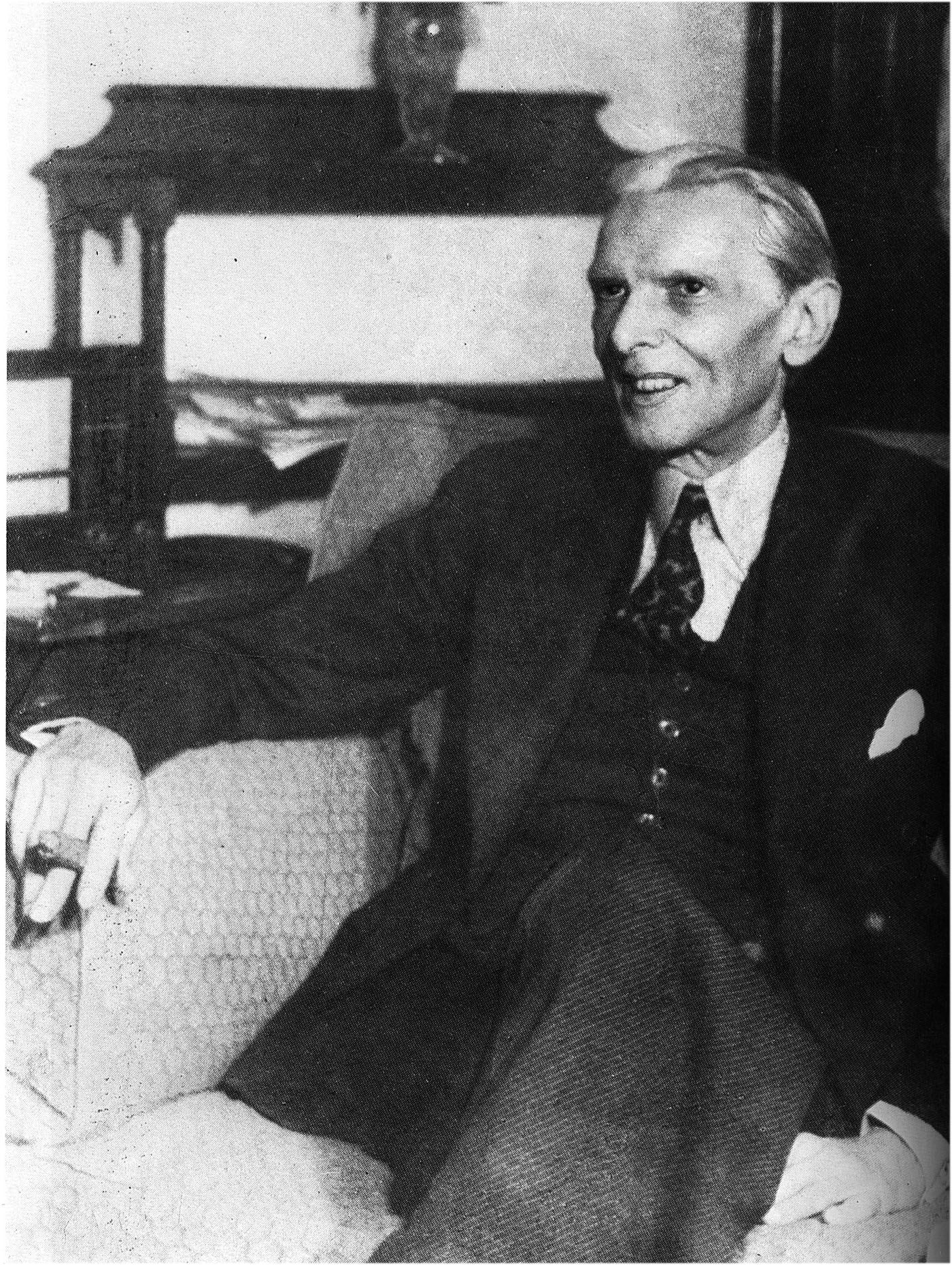
By the 1930s–40s, the All-India Muslim League (AIML) under Muhammad Ali Jinnah claimed to represent all of British India’s Muslims, even demanding a separate state (Pakistan) at its 1940 Lahore session. League leaders pointed to electoral successes – for example, winning 87% of all Muslim seats in the 1946 provincial elections – as proof that they were “the sole representative of Muslim India” . The League’s spectacular rallies (such as the August 1946 “Direct Action Day” meeting in Calcutta, shown below) underscored its mass appeal. Yet this picture was incomplete: many Muslims and Muslim organizations disagreed that the League spoke…
-
The question of whether the 1947 Partition of India was inevitable or contingent on particular choices remains hotly debated. By mid-1946 the British Empire was intent on leaving India, but could still have guided the transition. Congress leaders had overwhelmingly won the 1946 elections outside Muslim constituencies, and the Cabinet Mission to India (May 1946) had offered a federal plan to keep India united. The Muslim League, however, insisted on a separate Muslim homeland. Widespread communal violence followed, and by early 1947 both Congress and the League saw Partition as the only way forward . In the face of mounting…
-
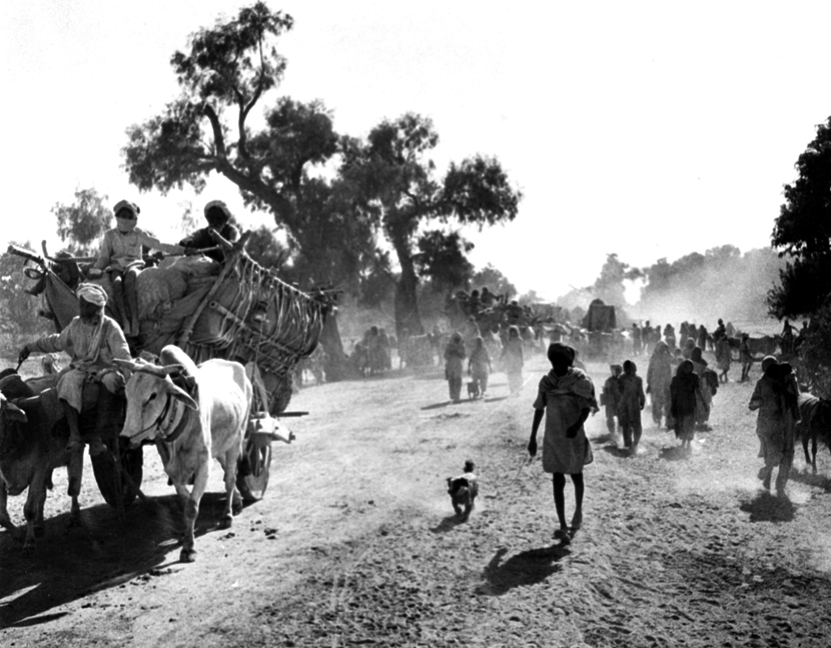
The partition of British India in 1947 divided the subcontinent into two new states, India and Pakistan, along mainly religious lines. This violent break-up followed nearly a century of direct rule following the defeat of the 1857 uprising and rising communal tensions. Scholars stress that multiple, interlocking factors – political, religious, economic and social – drove Partition. None of these alone suffices, and historians continue to debate their relative importance. As Pandey and others note, we must “move beyond explanations of partition rooted simply in… long-standing Hindu-Muslim cultural difference or in images of a modernity that fixed borders and identities…
-
Two partitions at the end of the British Empire that have created the longest running conflicts of the 20th and 21st Centuries are discussed here: The Partition of Palestine and India Watch this video on YouTube.