-

The 1930s Great Depression was a cataclysmic economic crisis. By 1932–33 industrial output and trade had collapsed worldwide, unemployment soared (over 20% in the US at its peak) and thousands of banks failed. Traditional “classical” economics – with its faith in self-correcting markets and the gold standard – had offered no relief. In fact, economists like Barry Eichengreen argue that adherence to gold constrained policy response: central banks could not expand the money supply freely because they were bound by fixed exchange rates . Only when Britain finally abandoned gold in September 1931 did policy-makers feel freed. As Keynes himself…
-
Introduction The Great Depression of the 1930s was an economic cataclysm that struck virtually every industrialized nation. At its core was an unprecedented surge in unemployment, which not only devastated livelihoods but also shook the political and social foundations of countries around the world. This article provides a comparative analysis of unemployment during the Depression in the United States, United Kingdom, and Germany – three nations with vastly different experiences and responses. We will outline the scale and trajectory of joblessness from the 1929 crash through the mid-1930s, examine the social consequences (poverty, homelessness, migration, discontent) wrought by mass unemployment,…
-
The Smoot-Hawley Tariff Act of 1930 remains one of the most infamous trade policies in United States history. Enacted at the start of the Great Depression, this sweeping tariff hike raised U.S. import duties to record levels, aiming to shield American farmers and factories from foreign competition . Instead, it provoked a global trade war and is widely regarded as a grave policy misstep that exacerbated the worldwide economic collapse . In the decades since, Smoot-Hawley has become a byword for the perils of protectionism – a cautionary tale of how well-intended economic nationalism can spiral into retaliatory tariffs, collapsing…
-
The collapse of the world economy in the early 1930s was deeply intertwined with the monetary system of the time: the gold standard. In the interwar period, most major currencies were tied to gold at fixed rates. This system, meant to provide stability, ultimately acted as “golden fetters” (to use economist Barry Eichengreen’s phrase) that constrained policymakers and transmitted economic distress globally . In this article, we explore how the gold standard operated in the 1920s, how it contributed to the onset and deepening of the Great Depression, why countries clung to it even as economies collapsed, and how abandoning…
-
Question:What would have happened to Europe in the past two and a half centuries if it hadn’t plundered the global south? What would have happened if Europeans had paid for the labour of Africans instead of stealing it? What would have happened if they had purchased cotton, tea, spices and other commodities at a price that reflected the labour used to produce it? Answer: Europe would be one of the poorer regions of the worldThomas Piketty, the world renowned economist and author of Capital in th
-
The post war neoliberals were divided over the European Economic Community, some viewing it as a protected enclave of the world economy that would hold back the global economic integration they hoped for. Others saw it as the beginnings of a borderless economic zone that would spread around the world, eventually subsuming all questions of politics and ideology to the logic of the market. It turned out to be neither of those things completely and instead became the target of those inheritors of T
-
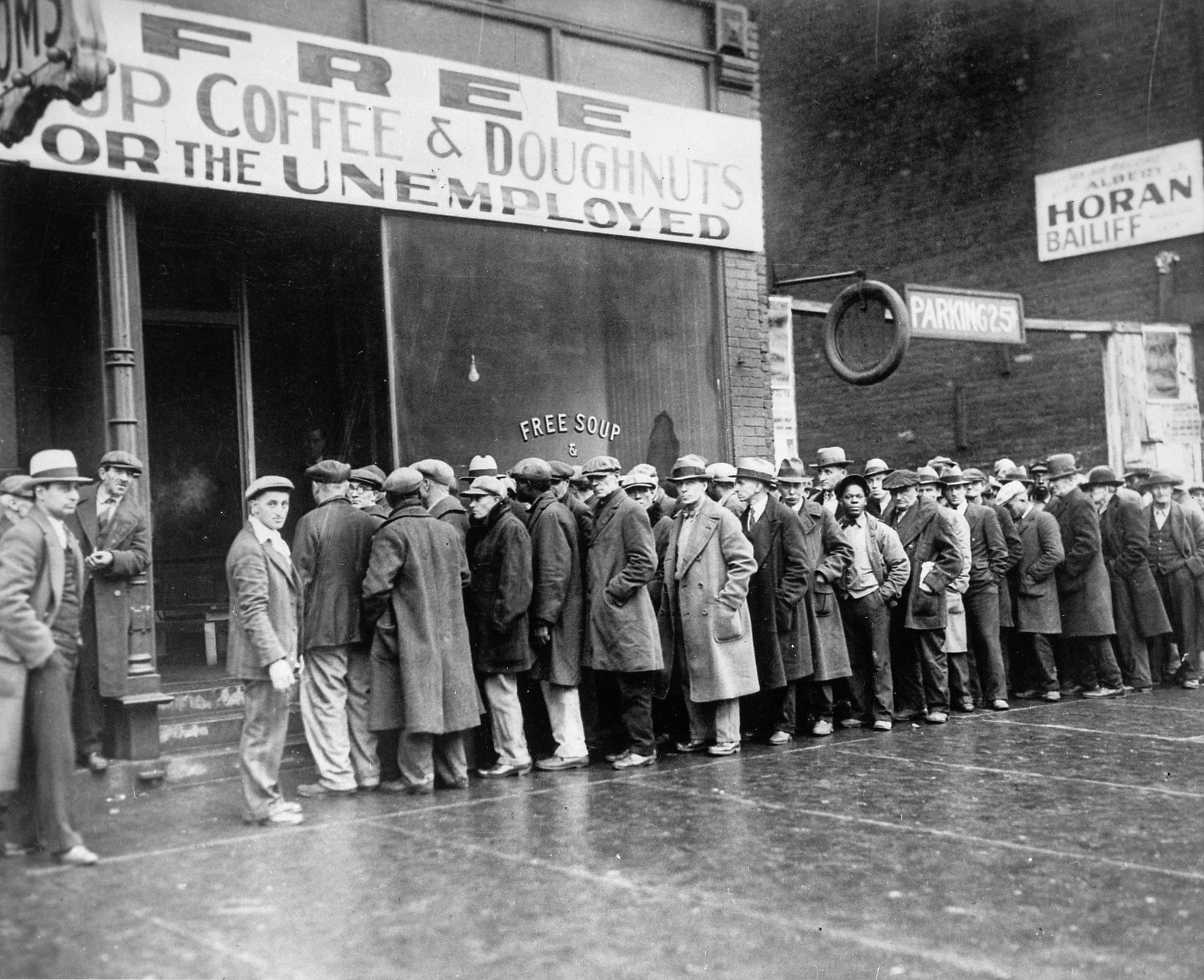
Introduction The Great Depression was the most severe and prolonged economic crisis of the 20th century, lasting from 1929 through the late 1930s. It originated in the United States but quickly spread worldwide, leading to collapsing industrial output, mass unemployment, and social misery on an unprecedented scale . In the U.S., industrial production fell by over one-third and unemployment reached around 25% at its peak . Globally, no region was spared: what began as an American downturn soon “engulfed virtually every manufacturing country and all food and raw materials producers” as John Maynard Keynes observed in 1931 . Understanding why…
-
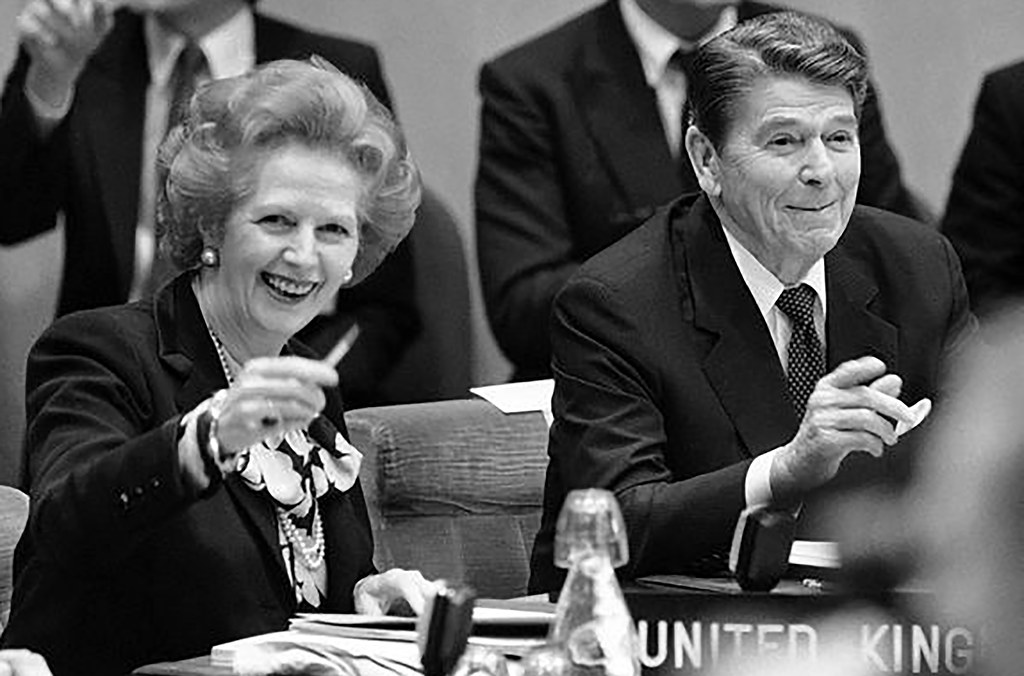
From the 1970s onwards, a wave of free-market ideology reshaped economies, governments, and societies around the world. Known as neoliberalism, this framework prioritized deregulation, privatization, austerity, and the retreat of the welfare state. This guide brings together a series of essays exploring how neoliberalism emerged, how it shaped the modern world, and why it is increasingly challenged today. From Thatcher and Reagan to the IMF and populist backlash, this collection examines both the rise and the unraveling of neoliberal orthodoxy. Origins and Global Adoption What Is Neoliberalism? A Primer on Market Rule Neoliberalism is a political and economic ideology that…
-
All American presidents since 1945 have been managers of the USA’s global economic empire, Trump notionally fulfils the same role but has little or no understanding of the complexities, challenges and limitations that his predecessors have had to navigate. As with all narcissists, he sees America’s crises through the prism of his own personal experience. The last 24 hours of White House reality TV shows us once again that the economic and ideological factors that have propelled Trump to the Oval
-
Introduction The term neoliberalism emerged in the mid-20th century as an effort to revive and revise classical liberalism in the face of economic crises and totalitarian regimes. Early neoliberals sought a “third way” between laissez-faire capitalism and state socialism, combining belief in free markets with a framework of legal and social institutions. A seminal moment came at the 1938 Walter Lippmann Colloquium in Paris, where German economist Alexander Rüstow and others coined “neoliberalism” to signify an active, rule-based market economy (rather than the old laissez-faire model) . In practice this meant free trade and private enterprise, but with a role…