-

In this episode, we tear away the euphemisms and expose a grim reality: sanctions kill. Drawing on a 2025 study from The Lancet Global Health, we show how economic sanctions imposed by the U.S. and other powers are responsible for up to 777,000 deaths each year, with children and the elderly most at risk.We trace the history of sanctions from the League of Nations to Iraq, Venezuela, Iran, and beyond. We compare sanctions to siege warfare—and ask why a practice this deadly continues to be framed
-
Britain’s Austerity TrapWhy is one of the world’s richest countries still behaving like it’s broke?In this episode of Explaining History, we dive into Yanis Varoufakis’s searing critique of Britain’s ongoing austerity dilemma under the new Labour government. Despite hopes for change, Chancellor Rachel Reeves faces the same iron cage of fiscal rules, banker subsidies, and Treasury orthodoxy that has strangled public spending for decades.We unpack the hidden costs of so-called “zombie austerity,”
-
The project to permanently shrink the British state and to inflict mass hardship on the most vulnerable which was commenced after 2010 has cost untold numbers of lives. The last calculations put the dead at around 338,000 people but it is likely now to be far higher and Britain has exchanged one austerity government for another. Now the Labour Party continues the brutal economic assault on the poor, the unwell and the disabled that the previous Conservative administrations had commenced. Today I
-
In this episode, we dive into the turbulent decade of the 1970s, exploring how the oil shocks and economic crises of the era shattered the postwar order in America. Drawing from historian Gary Gerstle’s influential work The Rise and Fall of the Neoliberal Era, we examine how stagflation, energy insecurity, and geopolitical tensions fueled public disillusionment with Keynesian economics and paved the way for a neoliberal revolution.In This Episode:The 1973 and 1979 oil shocks and their devastati
-
Liverpool’s modern history is one of struggle, adversity and community and today we hear from David Swift, author of Scouse Republic: An alternative history of Liverpool. In the 1980s the city was in deep economic decline from its Victorian heyday as one of the world’s busiest ports. Liverpool’s radical identity was forged by the ideological battles of the decade and from the predations of Margaret Thatcher’s Tory government and its supporters in the press, namely the Sun Newspaper. *****STOP PR
-
Here’s a polished episode description based on Michael Hudson’s blog post:🎙️ Episode Description: In this compelling episode, we dive into Michael Hudson’s incisive analysis of the escalating U.S.–Iran confrontation. Drawing from Hudson’s recent essay on Naked Capitalism, we uncover how America’s strategic confrontation with Iran is deeply tied to control over oil-rich regions and global financial dynamics (nakedcapitalism.com).In this episode, we explore:📈 The Resource-Imperial Link: Hudson arg
-
The economic realities of a failing war in the east accelerated the timetable for genocide at the highest levels of the Third Reich, but in July 1942 Heinrich Himmler also intended Auschwitz Birkenau to be a site for extracting slave labour from prisoners. He intended this because of the impeding economic and production crises that would engulf the Third Reich as it faced an alliance of America, the USSR and the British Empire. This podcast episode explores the intentions of the SS leader and o
-
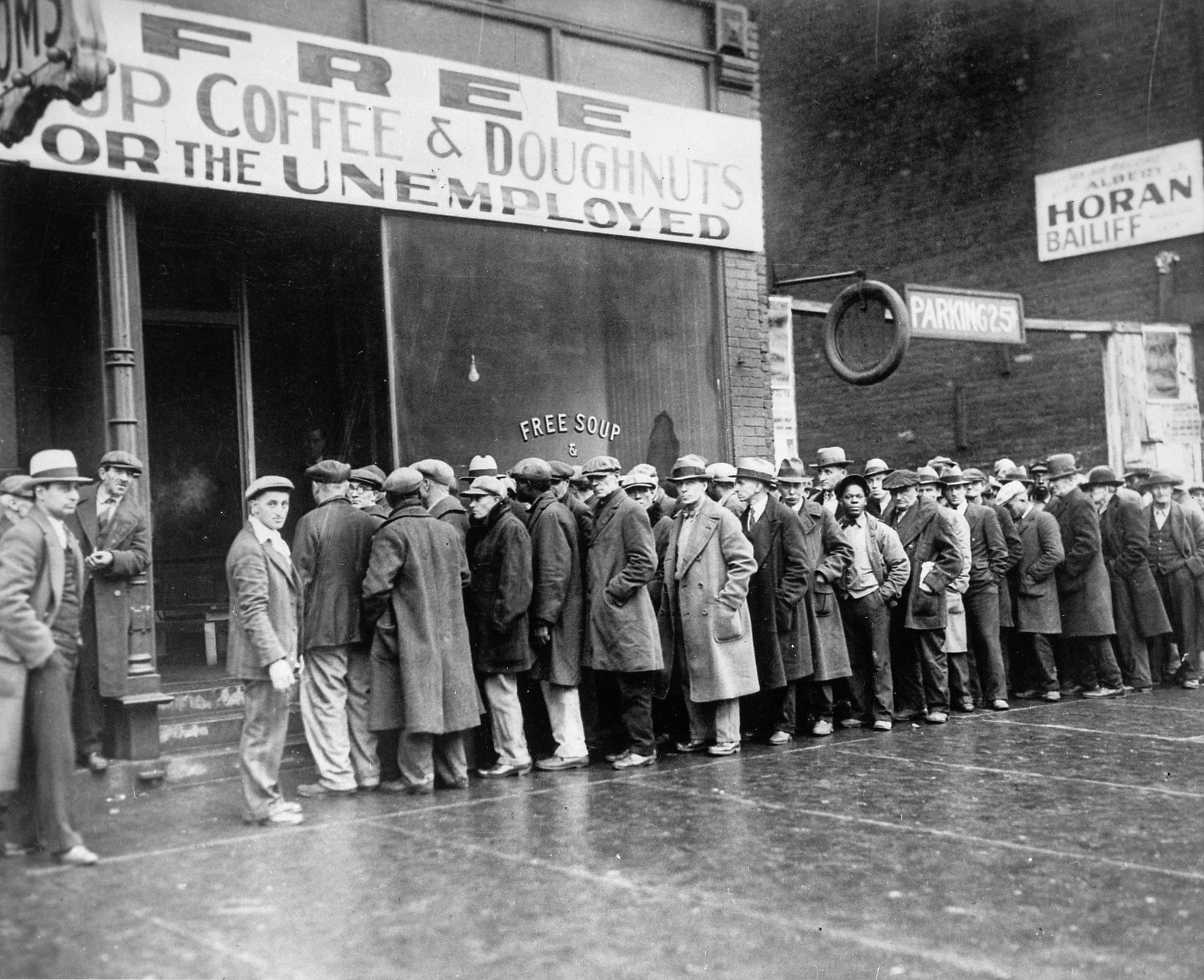
The Great Depression (1929–41) was the longest and deepest economic downturn in U.S. history. Franklin D. Roosevelt’s New Deal (1933–39) introduced sweeping relief, recovery, and reform programs, but historians and economists still debate whether these reforms ended the Depression, merely eased its worst effects, or even prolonged it. This article examines the evidence on key New Deal policies. We review relief programs for the unemployed (CCC, WPA, PWA), financial reforms (Glass–Steagall, FDIC, SEC), and massive federal spending, and we engage with historiographical and economic debates (Keynesian vs. monetarist). Finally, we consider the New Deal’s long-term structural legacy (labor rights, infrastructure,…
-
The Great Depression (1929–39) affected nations differently. By 1933, industrial output had plunged 30–50% in many countries, and unemployment soared into double-digits (Romer 2003). Yet the timing and strength of recovery varied dramatically. For example, Sweden and the United Kingdom were largely back to or above 1929 output levels by the mid‑1930s, whereas the United States and France lagged, and Germany’s rebound was tied to its rearmament policies. This article examines case studies of the United States, the United Kingdom, Germany, France, and Sweden, analyzing how policy choices – abandoning the gold standard, fiscal and monetary stimulus, and political upheavals…
-
The Federal Reserve was founded in 1913 with the primary goal of stabilizing the banking system and providing an elastic currency. Under the Federal Reserve Act, the system comprised a Board in Washington and 12 regional Reserve Banks, each with its own president and directors. National banks were required to become members (purchasing stock in their Reserve Bank) and hold reserves there; state banks could join voluntarily . Member banks could obtain additional funds by borrowing at the “discount window” of their local Reserve Bank, pledging short-term commercial paper as collateral. This mechanism was intended to let the money supply…