-
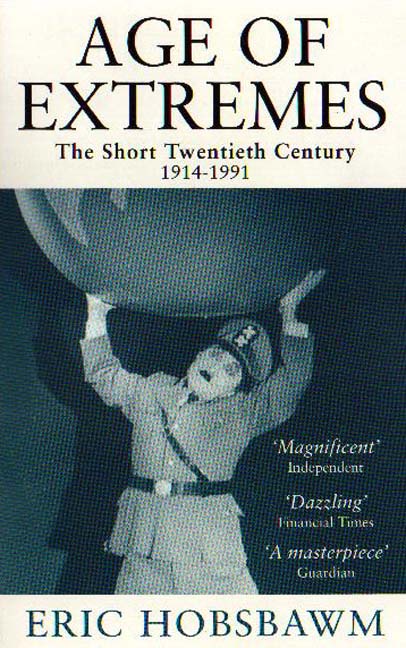
As we begin a new year, it seems fitting to return to one of the most significant historical works of the modern era: Eric Hobsbawm’s The Age of Extremes. Published in 1994, it defines the “Short Twentieth Century” as the period between the outbreak of World War I in 1914 and the collapse of the Soviet Union in 1991. In this week’s podcast, I started what will be a year-long journey through this text. Hobsbawm’s work is masterful not just for its scope, but for its diagnosis of a peculiar malady that afflicts our time: historical amnesia. The Destruction of the…
-

Author Mark Beatty joins to explore three Victorians who shaped their era in very different ways yet rarely get the spotlight. We trace Grace Darling’s 1838 sea rescue and the birth of tabloid celebrity; Josephine Butler’s fearless campaign against the Contagious Diseases Acts and for raising the age of consent; and George Biddell Airy’s half-century as Astronomer Royal, standardising Greenwich Mean Time for a world on the move. It’s a conversation about media, morality, science, empire—and how
-
Who was John Dee—the Tudor polymath who advised Elizabeth I, mapped the heavens, spoke (he believed) with angels, and penned a landmark preface to Euclid? Historian and writer Rachel Morris joins to unpack Dee’s strange, brilliant world at the fault line between Renaissance “natural magic” and the birth of modern science. We explore why astrology was respectable, what “as above, so below” meant to learned magi, how printing turned libraries into engines of ideas, the hazards of practicing magic
-
If you’re new to Explaining History, this short trailer is the perfect introduction to the show.For over a decade, we’ve been helping listeners understand the 20th Century. Host Nick Shepley and expert guests break down the critical events, ideologies, and conflicts that shaped our modern world. This isn’t a dry lecture; it’s an engaging, critical conversation that connects the past to the present in concise, 25-minute episodes.Like what you hear? Hit ‘Subscribe’ or ‘Follow’ in your podcast app
-
What Plato Can Teach Us About the Crises of the 21st Century — with Professor Angie HobbsIn this special episode of Explaining History, I’m joined by Professor Angie Hobbs to discuss her new book Why Plato Matters Now. Together we explore Plato’s life and thought, and the urgent relevance of his ideas in today’s world. From the dangers of oligarchy and the corruption of language, to the decline of truth, the rise of the demagogue, and the path to tyranny, we trace Plato’s insights into politics,
-
In this episode I speak with writer and cultural critic Stewart Home about his new book Fascist Yoga. Our conversation traces the modern origins of yoga and the surprising, often disturbing ways it has intersected with the history of ideas—from early twentieth-century Aryanist fantasies and far-right esotericism to today’s conspiracy-laden online subcultures.We explore how yoga, once reframed and globalised, became entangled in Western intellectual and political currents: the 1920s European far
-
Is modern capitalism beginning to resemble a feudal system? This episode of Explaining History explores the provocative argument, drawn from the work of the late anthropologist David Graeber, that contemporary capitalism has evolved into a new form of feudalism.This episode delves into a lecture by David Graeber, where he contended that modern “rentier capitalism” shares many characteristics with historical feudalism. We’ll unpack the distinction he makes between a system based on the extraction
-
At the end of the 20th Century, the Cold War which had defined the struggle between various different iterations of capitalism in the western world and the USSR in the east was replaced by a slow oligarchic coup. An equivalent class has come to power in both countries and has similar imperatives, to occupy the state and cannibalise society. This podcast explores the material and ideological conditions that led to this takeover. *****STOP PRESS*****I only ever talk about history on this podcast b
-
In the first decades of the 20th Century, a growth in literacy and the availability of paperback and hardback books created a culture of mass participation on literary reading that was unprecedented. Nicola Wilson’s new book Recommended, a history of the Book Society, tells the story of Hugh Walpole, JB Priestley and Cecil Day Lewis amongst others and how they created the first mass book club which sent monthly recommendations to lower middle class and working class readers. Here we hear from Ni
-
Liverpool’s modern history is one of struggle, adversity and community and today we hear from David Swift, author of Scouse Republic: An alternative history of Liverpool. In the 1980s the city was in deep economic decline from its Victorian heyday as one of the world’s busiest ports. Liverpool’s radical identity was forged by the ideological battles of the decade and from the predations of Margaret Thatcher’s Tory government and its supporters in the press, namely the Sun Newspaper. *****STOP PR