-

In the mid-1930s, with the shadow of one great war still looming and the threat of another growing darker, Britain faced a vexing national crisis: should it rearm? This episode delves into the complex political, economic, and social debates that defined this critical period.We explore the profound public anxiety shaped by the memory of World War I and the terrifying new prospect of aerial warfare, as seen in newsreels from Guernica and Nanjing. Drawing on Daniel Todman’s Britain’s War, we unpack
-
Background: IBM, Dehomag, and the Hollerith Punch Card System In the early 20th century, International Business Machines (IBM) emerged as a leader in data processing technology thanks to a revolutionary invention: the Hollerith punched-card system. Originally devised by Herman Hollerith for the 1890 U.S. Census, this electromechanical system encoded information as holes punched in cards and could sort and tabulate thousands of records with unprecedented speed. By the 1930s, IBM’s punch card machines – consisting of keypunches to input data, tabulators to aggregate it, and sorters to organize the cards – were the state-of-the-art method for handling large data sets.…
-
The Bureaucrat’s Holocaust: How the German Civil Service Enabled Genocide Introduction: The Desk and the Death Camp When we picture the Holocaust, we often see SS guards in jackboots, emaciated prisoners behind barbed wire, and the smokestacks of Auschwitz. Yet behind the scenes of overt violence lay a vast bureaucracy of ordinary-looking offices and paper-pushers. Men in suits – not blood-stained uniforms – sat at desks stacked with files and forms. They drafted laws, typed memos, filed reports, calculated statistics, and diligently stamped paperwork. This was the world of the German civil service, and its role was not peripheral; it…
-
Table of Contents Introduction: The Birth of a “Rainbow Nation” In 1994, South Africa held its first democratic election, a moment of almost unimaginable triumph. Nelson Mandela, once branded a terrorist and imprisoned for 27 years, became president. The world watched in awe as millions of Black South Africans voted for the first time, their dignity restored in a single, powerful act. Archbishop Desmond Tutu famously christened the new nation the “Rainbow Nation,” a vibrant tapestry of peoples united in their diversity. This political miracle—a peaceful transition from brutal minority rule to a non-racial democracy—was a testament to the power…
-
Table of Contents Introduction: An Alliance of Convenience and Ideology In the stark binary of the Cold War, the struggle against apartheidApartheid Full Description: An Afrikaans word meaning “apartness.” It refers to the system of institutionalized racial segregation and discrimination that governed South Africa. It was a totalizing legal framework that dictated where people could live, work, and travel based on their racial classification. Apartheid was not merely social prejudice; it was a sophisticated economic and legal machine designed to maintain white minority rule. It involved the complete spatial separation of the races, the banning of mixed marriages, and the denial…
-
Table of Contents Introduction: The Unbreakable Spirit While the struggle against apartheidApartheid Full Description: An Afrikaans word meaning “apartness.” It refers to the system of institutionalized racial segregation and discrimination that governed South Africa. It was a totalizing legal framework that dictated where people could live, work, and travel based on their racial classification. Apartheid was not merely social prejudice; it was a sophisticated economic and legal machine designed to maintain white minority rule. It involved the complete spatial separation of the races, the banning of mixed marriages, and the denial of voting rights to the black majority. Critical Perspective:Critically, Apartheid…
-
Table of Contents Introduction: The Rhetoric-Reality Gap Publicly, the governments of the United States and Great Britain often expressed a measured disapproval of apartheidApartheid Full Description: An Afrikaans word meaning “apartness.” It refers to the system of institutionalized racial segregation and discrimination that governed South Africa. It was a totalizing legal framework that dictated where people could live, work, and travel based on their racial classification. Apartheid was not merely social prejudice; it was a sophisticated economic and legal machine designed to maintain white minority rule. It involved the complete spatial separation of the races, the banning of mixed marriages, and…
-
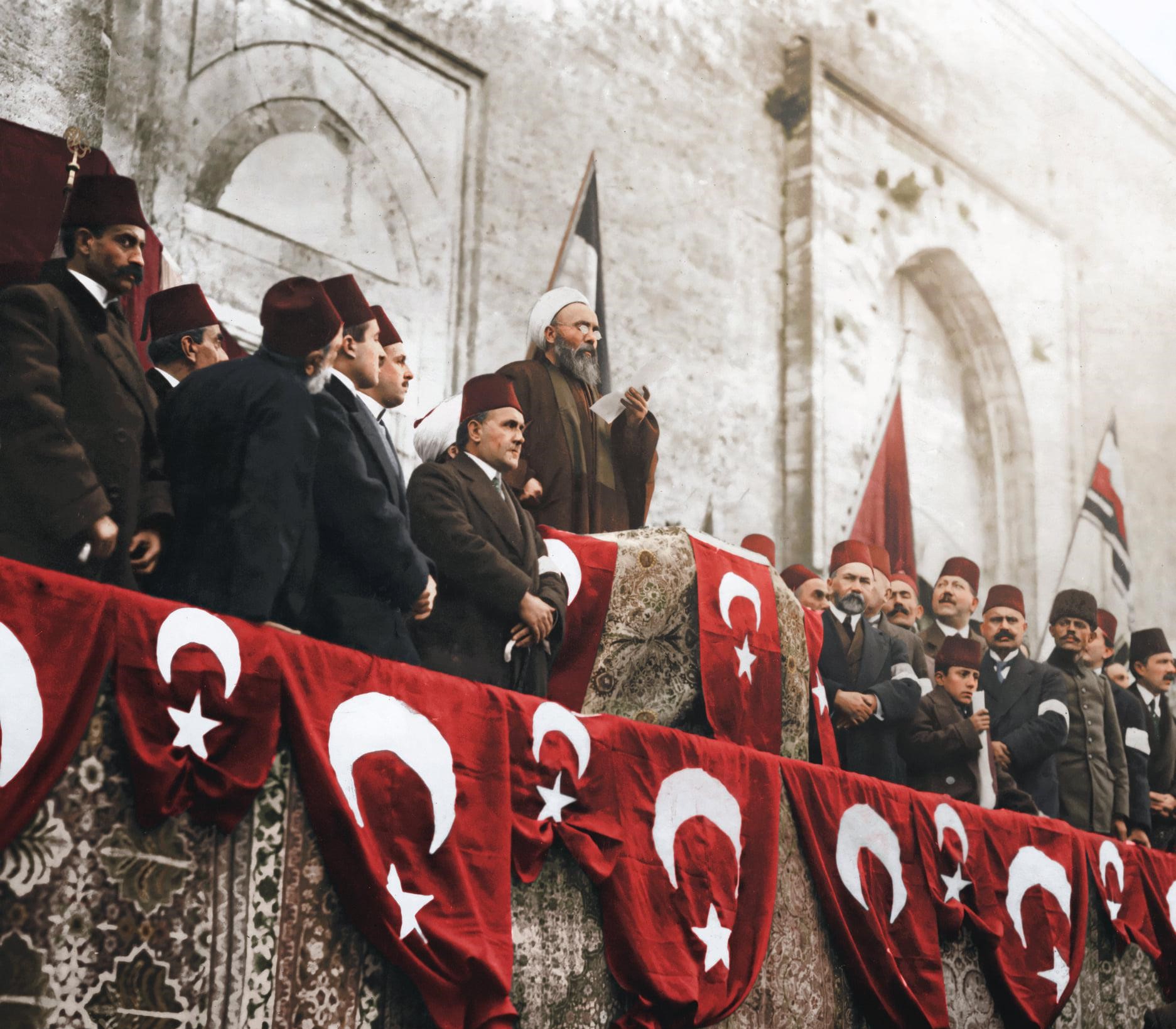
The Ottoman Empire, the so-called “Sick Man of Europe,” entered the cataclysm of the First World War on the side of Germany after signing a secret treaty on August 2nd 1914. This was not the simple act of a German puppet, but a desperate, calculated gamble by a proud empire caught in the crosshairs of European rivalries. For decades, the great powers had circled the dwindling Ottoman Empire, pondering the “Eastern Question”—what to do with its territories once it inevitably collapsed. The Empire had been dealt a series of staggering blows: humiliating defeats in the Balkan Wars of 1912-13 stripped…
-
In this episode of Explaining History, we delve into the intricate web of diplomacy, ambition, and betrayal that led the Ottoman Empire into the Great War. Drawing from Eugene Rogan’s “The Fall of the Ottomans,” we explore the Empire’s precarious position in the years before 1914, caught between the competing interests of Europe’s great powers.Discover Germany’s strategic “Weltpolitik,” which saw the Ottomans as a key partner to challenge British and Russian dominance, leading to ambitious proje
-
As an international aid flotilla approaches the shores of Gaza, sailing directly towards an Israeli naval blockade, strikers in Italy have forced the government there to send warships to escort them (much against the official policy of the far right Meloni government). This shows us the power of solidarity and strike action. Go Deeper: Visit our website at www.explaininghistory.org for articles and detailed explorations of the topics discussed.▸ Join the Conversation: Our community of history en