-

Behind the pomp of the royal carriages and the forced smiles of the state banquet, Donald Trump’s visit to the United Kingdom is not a diplomatic courtesy; it is a business trip. And like any deal Trump pursues, it is a negotiation he intends to win decisively. While the public debate around a future US-UK trade deal has been cleverly focused on jarring but relatively simple issues, the real prize for Trump and the powerful American corporate interests he represents is far greater. The fight over chlorinated chicken is a distraction. The real price on the negotiating table is the…
-
There is no political phrase in the British lexicon more durable, more cherished, and more damaging than the “Special Relationship.” Invoked by Prime Ministers of all stripes, it is presented as the bedrock of our foreign policy—a unique bond of history, culture, and mutual interest shared with the United States. As Keir Starmer’s government now prepares to host Donald Trump for an unprecedented second state visit, this phrase will be uttered with renewed, desperate hope. But it is a lie. The “Special Relationship” is Britain’s most comforting and destructive political myth. It is not a partnership of equals; it is…
-
In the coming days, Britain will host Donald Trump for his second state visit, an honour without precedent for any American president in history. The red carpets, royal carriages, and trappings of state will be polished to a brilliant shine, but this pomp cannot disguise a grim reality. This visit is not a celebration of a “Special Relationship”; it is a momentous low for Great Britain, a public performance of weakness on the world stage. This event is not happening in a vacuum. It follows a weekend where London saw 100,000 far-right protestors march on the capital, a demonstration bolstered…
-
This week, two seemingly separate events tell a single, troubling story about Britain’s place in the modern world. First, a massive, 100,000-strong far-right rally, supported by American funding, took to the streets of London. Now, Keir Starmer’s government is preparing to roll out the red carpet for an unprecedented second state visit for Donald Trump.These are not separate events. They are two acts in the same play.In this episode, Nick Shepley argues that Britain is preparing to advertise its
-
In the aftermath of World War I, hope for a new world order led to the founding of the League of Nations. Delegates from the victorious Allied and other nations met in Geneva in late 1920 to begin what President Woodrow Wilson had famously termed “a general association of nations…affording mutual guarantees of political independence and territorial integrity” . Indeed, Wilson’s 14th Point, attached as the League’s Covenant in the Treaty of Versailles, called for exactly such an association. The League’s structure mirrored those ideals: an Assembly of all member states (initially 42 nations) and a smaller Executive Council (with…
-
Nazism sought to bypass legal norms where it couldn’t just sweep them aside. The German Weimar constitution took time to dismantle and new institutions, practices and laws needed to be created in order to subvert it. A similar process is underway in America at the moment and Trump’s recent allocation of over $200 billion to ICE is a huge step towards cementing a police state that is answerable directly to him. Today we explore the comparisons between Trumpism and Nazism where they are most evide
-
*****STOP PRESS*****I only ever talk about history on this podcast but I also have another life, yes, that of aspirant fantasy author and if that’s your thing you can get a copy of my debut novel The Blood of Tharta, right here:What did the 2008 world financial crisis teach America’s elite classes about the future of American capitalism? The collapse of American financial institutions under the weight of accounting fraud, unserviceable private debts combined with a deindustrialised America and a
-
Introduction The Great Depression of the 1930s was an economic cataclysm that struck virtually every industrialized nation. At its core was an unprecedented surge in unemployment, which not only devastated livelihoods but also shook the political and social foundations of countries around the world. This article provides a comparative analysis of unemployment during the Depression in the United States, United Kingdom, and Germany – three nations with vastly different experiences and responses. We will outline the scale and trajectory of joblessness from the 1929 crash through the mid-1930s, examine the social consequences (poverty, homelessness, migration, discontent) wrought by mass unemployment,…
-
Introduction The European Union (EU) has often been seen as a vehicle for promoting a particular brand of economic policy across the continent – one grounded in market orthodoxy or neoliberal principles. From the early 1990s to the present, EU institutions and treaties have increasingly emphasized fiscal discipline, market liberalization, and monetary stability as foundational tenets of economic governance. This shift became especially pronounced with the Maastricht Treaty of 1992, which many observers view as a turning point marking the EU’s embrace of neoliberal economic doctrine . Maastricht embodied a transition away from the post-war social democratic model – which…
-
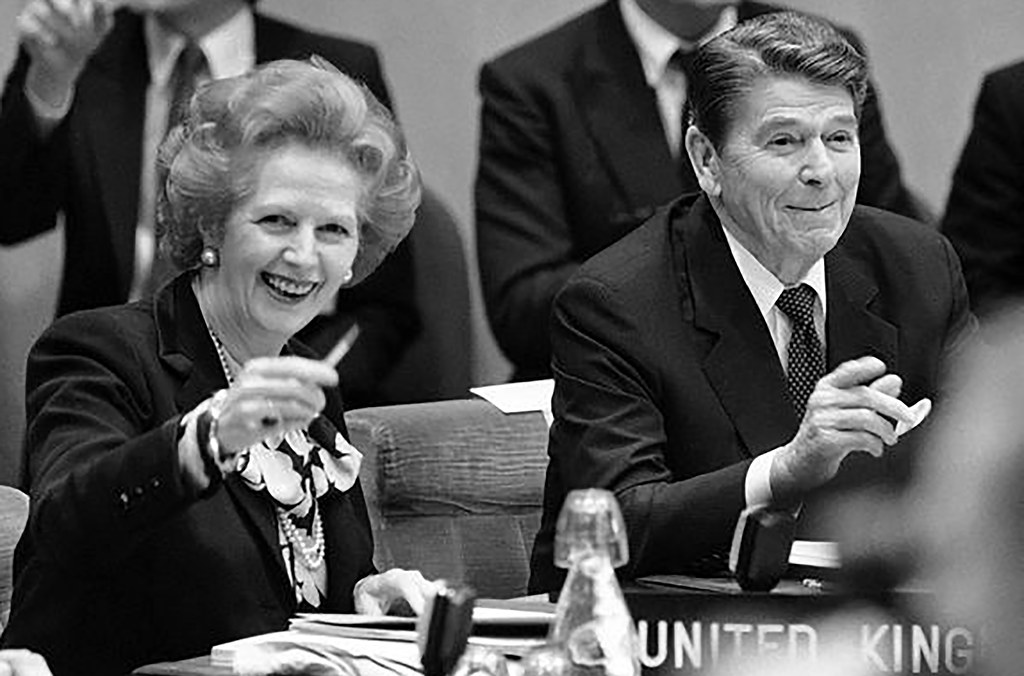
From the 1970s onwards, a wave of free-market ideology reshaped economies, governments, and societies around the world. Known as neoliberalism, this framework prioritized deregulation, privatization, austerity, and the retreat of the welfare state. This guide brings together a series of essays exploring how neoliberalism emerged, how it shaped the modern world, and why it is increasingly challenged today. From Thatcher and Reagan to the IMF and populist backlash, this collection examines both the rise and the unraveling of neoliberal orthodoxy. Origins and Global Adoption What Is Neoliberalism? A Primer on Market Rule Neoliberalism is a political and economic ideology that…