-

Introduction: Two Koreas, Two Identities The 1953 armistice halted the Korean War’s open conflict but cemented the peninsula’s division into two rival states. In the decades since, North Korea (the Democratic People’s Republic of Korea) and South Korea (the Republic of Korea) have each pursued aggressive nation-building projects to shore up their legitimacy. These efforts were rooted in starkly different political ideologies – the North’s doctrine of Juche (self-reliance) versus the South’s early ethos of anti-communist nationalism – and were carried out through comprehensive propaganda, education programs, media control, monument-building, and state rituals. This article explores how each regime constructed…
-
Introduction: A victory of survival When the guns fell silent along the Imjin and the Yalu in July 1953, the Democratic People’s Republic of Korea (DPRK) had survived—but only just. The Korean War had levelled cities, annihilated industrial plant, uprooted millions, and killed perhaps a tenth of the peninsula’s population. From that near-ruin, Kim Il-sung and the Workers’ Party of Korea (WPK) set out to rebuild a socialist state that would be more centralized, more militarized, and more ideologically disciplined than before the war. Between the armistice and the end of the 1970s, North Korea constructed an all-encompassing party-security apparatus;…
-
Introduction The armistice signed on July 27, 1953 halted the Korean War’s open hostilities but cemented a division of the peninsula that persists to this day . In the aftermath, North and South Korea embarked on starkly divergent trajectories – politically, economically, and socially – yet their fates remained deeply intertwined. Over the ensuing decades, the Democratic People’s Republic of Korea (North Korea) and the Republic of Korea (South Korea) pursued parallel paths shaped by Cold War rivalry, internal transformations, intermittent diplomatic engagement, and recurring military tensions. This article explores the post-1953 history of the two Koreas, tracing how each…
-
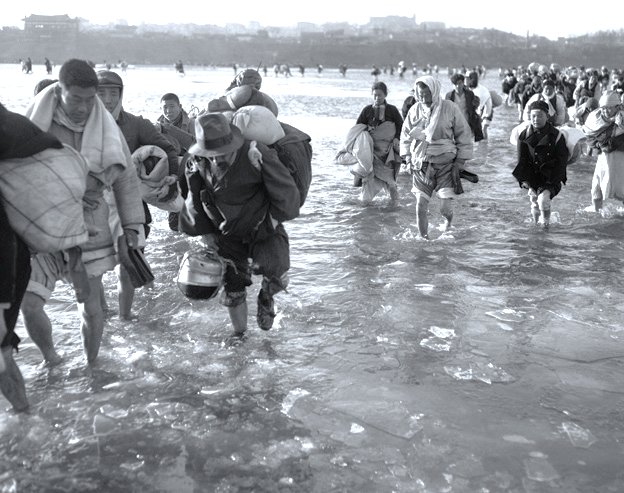
On October 19, 1950, units of the Chinese People’s Volunteer Army (PVA) quietly crossed the Yalu (Amnok) River into North Korea, dramatically altering the course of the Korean War. Only a year after its founding in 1949, the People’s Republic of China (PRC) plunged into a major conflict against the United States and United Nations forces. Why did China intervene in Korea, risking a confrontation with a far superior U.S. military? This question has fueled extensive historical debate. The Chinese leadership’s decision was shaped by a complex mix of political, military, and ideological motivations amid the early Cold War climate.…
-
Table of Contents Introduction: The Unbreakable Spirit While the struggle against apartheid was fought with protests, strikes, and armed resistance, another, equally vital battle was being waged in concert halls, theatres, and notebooks. The apartheid regime sought not only to control Black South Africans’ bodies and movements but also to crush their spirit and erase their culture. In response, artists, musicians, and writers turned culture into a weapon of mass consciousness. They used their craft to document the brutality of the system, to sustain the morale of the oppressed, to imagine a future beyond racism, and to project the reality…
-
Table of Contents Introduction: The Rhetoric-Reality Gap Publicly, the governments of the United States and Great Britain often expressed a measured disapproval of apartheid. They voted for mild condemnatory resolutions at the United Nations and their diplomats spoke of the need for peaceful change. Yet, for decades, their actions behind the scenes told a very different story. The struggle against apartheid was not just a moral drama played out on the world stage; it was a key front in the Cold War. For Western policymakers, the white-minority regime in Pretoria was a problematic but strategically valuable ally in the global…
-
The Nazi view of the perfect German woman was summed up in a simple, powerful slogan: Kinder, Küche, Kirche (Children, Kitchen, Church). In the eyes of the regime, a woman’s primary role was to be a wife and a mother, producing racially pure Aryan children for the Reich. This was a clear, traditionalist, and deeply controlling vision. But was it the full story? As the Nazis geared up for war, did their ideological vision for women clash with the harsh reality of economic necessity? To write a top-grade essay on this topic, you need to be a critical analyst. You must go beyond…
-
For millions around the globe, yoga is the embodiment of peace, wellness, and mindful living. It’s a multi-billion dollar industry built on an image of spiritual serenity and physical health. But what if the origins of the modern yoga we practice in gyms and studios are not as pure as we believe? What if its history is entangled with Western occultism, British fascism, and a racial ideology that would feel right at home in the Third Reich? In a fascinating episode of the Explaining History podcast, author and cultural historian Stuart Holm delves into the “murkier origins” of the global yoga phenomenon,…
-
A New Defense Strategy Signals the End of Containment and the Dawn of a Chinese Century From the Explaining History Podcast This article is a detailed companion piece to our recent podcast episode analyzing the seismic shifts in US-China strategy. It expands on the key themes and historical forces discussed in the show. You can listen to the full episode here to dive deeper into the discussion: Listen on Spotify | Listen on Apple Podcasts | Listen on our Website A tectonic shift is occurring in global geopolitics, one that signals the end of an era. For decades, American foreign policy in Asia has…
-
The sight of 100,000 protestors marching through London under the banner of the far-right was a jarring spectacle. The rhetoric, the tactics, and the sheer organizational slickness felt alien to many, an importation of a distinctly American style of political grievance. When the protest was amplified by a broadcast message from Elon Musk, an American oligarch, calling for the overthrow of the British government, the source of this new energy became impossible to ignore. This was not a spontaneous, grassroots uprising. The demonstration on British streets was the product of a well-funded, highly organized, and long-standing transatlantic project to export…