-
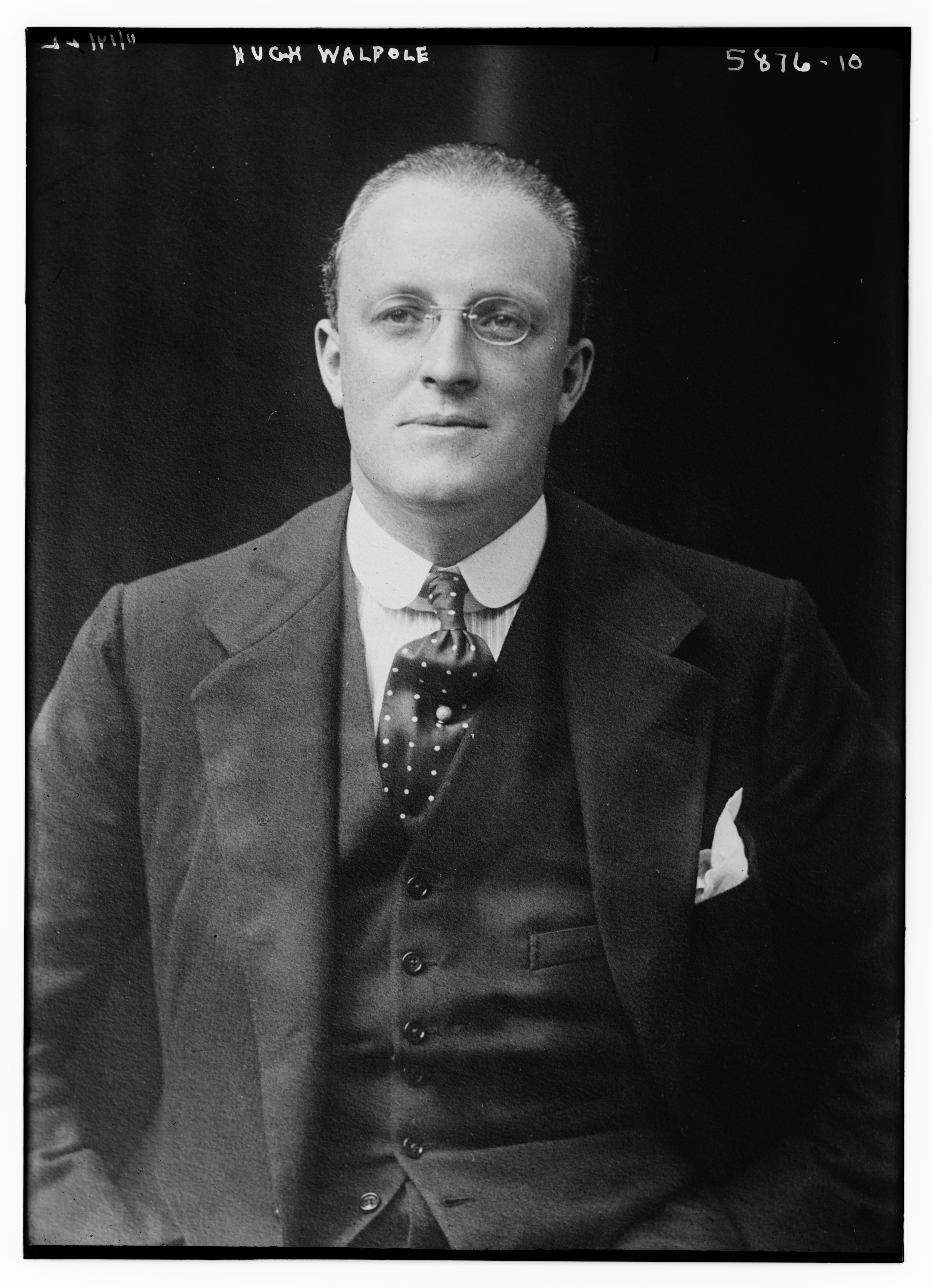
In an age of Amazon recommendations and #BookTok, it is hard to imagine a time when discovering a new book was a curated, communal experience guided by a panel of experts. Yet, for much of the mid-20th century, that is exactly what the Book Society provided for thousands of readers across Britain and its empire.
-

Introduction In the historiography of interwar Britain, the narrative is often dominated by the shadow of the two world wars or the economic misery of the Great Depression. Yet, beneath the surface of high politics and economic statistics, a fierce cultural struggle was being waged for the soul of the nation. It was a “civil war” fought not with munitions, but with information. The combatants were two emerging superpowers of the twentieth century: the popular press, headquartered in the chaotic, ink-stained bustle of Fleet Street, and the British Broadcasting Corporation, enshrined in the cool, white stone fortress of Broadcasting House.…
-
Introduction In January 1929, a new periodical appeared on the British newsstands, inserting itself quietly but firmly between the dense columns of The Times Literary Supplement and the sensationalist headlines of the Daily Mail. It was titled The Listener. Its cover was austere, its typography modern, and its provenance formidable: it was the publishing arm of the British Broadcasting Corporation. For the next sixty years, The Listener would serve as one of the most significant cultural barometers in British history. However, in the historiography of the twentieth century, it has often been relegated to a footnote, viewed merely as a transcript service for the radio. This…
-
Introduction On the morning of May 4, 1896, the landscape of British society shifted, though few realized the magnitude of the tremor at the time. That morning saw the debut of the Daily Mail. It was sold on the streets of London for a halfpenny, undercutting the standard price of established newspapers by half. But the revolution was not merely economic; it was cognitive. Before the Mail, British journalism was a staid, dense, and often impenetrable affair, dominated by verbatim reports of Parliamentary debates, court circulars, and foreign correspondence written in the dry, passive voice of the Victorian establishment. The Daily Mail was different.…
-
Introduction In the early 1920s, the airwaves of the world were a contested frontier. In the United States, radio was developing as a commercial wild west, a cacophony of competing stations driven by advertising revenue and populist appeal. In the Soviet Union, the technology was immediately seized as an instrument of state propaganda, a centralized voice of the party. Between these two extremes—the chaos of the market and the rigidity of the state—Britain carved out a third way. It was an experiment that would become the gold standardGold Standard Full Description:The Gold Standard was the prevailing international financial architecture prior to the…
-
Introduction In the cultural imagination of the twentieth century, few entities loom as large, or as ambiguously, as the Bloomsbury Group. Often reduced in popular caricature to a collection of “couples who lived in squares and loved in triangles,” the group was, in reality, a complex intellectual powerhouse that fundamentally altered the trajectory of British modernism. They were a loose collective of friends, lovers, artists, and writers who congregated in the Bloomsbury district of London during the first half of the twentieth century, united not by a manifesto or a formal constitution, but by a shared rejection of Victorian distinctiveness…
-
We often imagine history with a false sense of linearity—a steady march from a repressive past to an enlightened present. There’s a mistaken belief that before certain landmark dates, like the 1967 decriminalization of homosexuality for men, queer lives simply didn’t exist. Of course, the reality is far more complex. People have always had secret inner lives, passions, and relationships, often hidden in plain sight, existing in the quiet spaces between the lines of official history. On a recent episode of the “Explaining History” podcast, novelist Vicki Haywood joined the show to discuss her debut novel, a story that delves…
-
In the newspapers of today, it’s not uncommon to see retired generals and security experts calling for increased defense spending and a renewed focus on military readiness, often citing rising global tensions. These debates, echoing through the halls of power, are not new. In fact, they are hauntingly similar to the vexed conversations that dominated British politics in the mid-to-late 1930s, a period when a nation, still scarred by one war, had to confront the terrifying possibility of another. As we explored in our latest podcast episode, the story of British rearmament is far more complex than a simple narrative…
-
Date: September 17, 2025 Author: The Explaining History Podcast Table of Contents Introduction: A Treatise for Our Times In the final years of his life, the esteemed historian Tony Judt penned a powerful and moving lament. His book, Ill Fares the Land, is more than a historical analysis; it is a poignant treatise on the perceived death of social democracy and the subsequent ruination wrought by neoliberalismSupply Side Economics Full Description:Supply-Side Economics posits that production (supply) is the key to economic prosperity. Proponents argue that by reducing the “burden” of taxes on the wealthy and removing regulatory barriers for corporations, investment…
-
There is no political phrase in the British lexicon more durable, more cherished, and more damaging than the “Special Relationship.” Invoked by Prime Ministers of all stripes, it is presented as the bedrock of our foreign policy—a unique bond of history, culture, and mutual interest shared with the United States. As Keir Starmer’s government now prepares to host Donald Trump for an unprecedented second state visit, this phrase will be uttered with renewed, desperate hope. But it is a lie. The “Special Relationship” is Britain’s most comforting and destructive political myth. It is not a partnership of equals; it is…