-
The BBC Empire Service emerged as Britain’s audacious attempt to unify its vast empire via radio waves. This technological marvel aimed to create an imperial consciousness, but reality was far more complex.
-

Introduction In the historiography of interwar Britain, the narrative is often dominated by the shadow of the two world wars or the economic misery of the Great Depression. Yet, beneath the surface of high politics and economic statistics, a fierce cultural struggle was being waged for the soul of the nation. It was a “civil war” fought not with munitions, but with information. The combatants were two emerging superpowers of the twentieth century: the popular press, headquartered in the chaotic, ink-stained bustle of Fleet Street, and the British Broadcasting Corporation, enshrined in the cool, white stone fortress of Broadcasting House.…
-
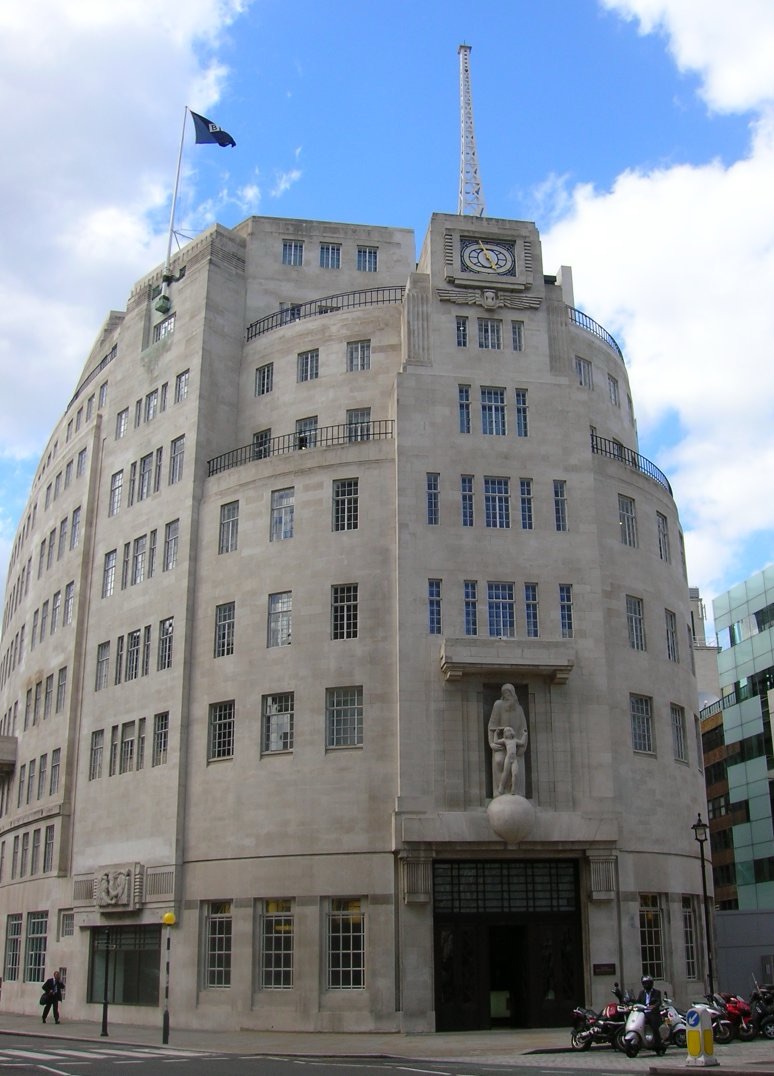
Introduction In May 1932, the British Broadcasting Corporation moved its headquarters from the cramped, makeshift studios of Savoy Hill to a gleaming new purpose-built fortress on Portland Place: Broadcasting House. Above the entrance, a sculpture by Eric Gill depicted Shakespeare’s Prospero sending the spirit Ariel out into the world. The symbolism was deliberate and profound. Prospero, the magician of intellect and control, represented the BBC’s Director-General, John Reith. Ariel, the invisible spirit of the air, represented the medium of radio itself. This stone facade hid a radical experiment. While historians have exhaustively chronicled the BBC’s political and institutional history, less…
-
Introduction On December 25, 1932, a gravelly, hesitant voice crackled across the ionosphere, reaching into the drawing rooms of Toronto, the sheep stations of the Australian outback, the verandas of colonial India, and the ships navigating the Atlantic. It was the voice of King George V, speaking from a small room at Sandringham House. “I speak now from my home and from my heart to you all,” he intoned. This, the first Royal Christmas Message, was the inaugural moment of a new kind of empire. It was no longer an empire held together solely by naval tonnage, trade tariffs, or…
-
Introduction In January 1929, a new periodical appeared on the British newsstands, inserting itself quietly but firmly between the dense columns of The Times Literary Supplement and the sensationalist headlines of the Daily Mail. It was titled The Listener. Its cover was austere, its typography modern, and its provenance formidable: it was the publishing arm of the British Broadcasting Corporation. For the next sixty years, The Listener would serve as one of the most significant cultural barometers in British history. However, in the historiography of the twentieth century, it has often been relegated to a footnote, viewed merely as a transcript service for the radio. This…
-
Introduction In the early 1920s, the airwaves of the world were a contested frontier. In the United States, radio was developing as a commercial wild west, a cacophony of competing stations driven by advertising revenue and populist appeal. In the Soviet Union, the technology was immediately seized as an instrument of state propaganda, a centralized voice of the party. Between these two extremes—the chaos of the market and the rigidity of the state—Britain carved out a third way. It was an experiment that would become the gold standard for media organizations globally: Public Service Broadcasting. This invention was not inevitable.…