-
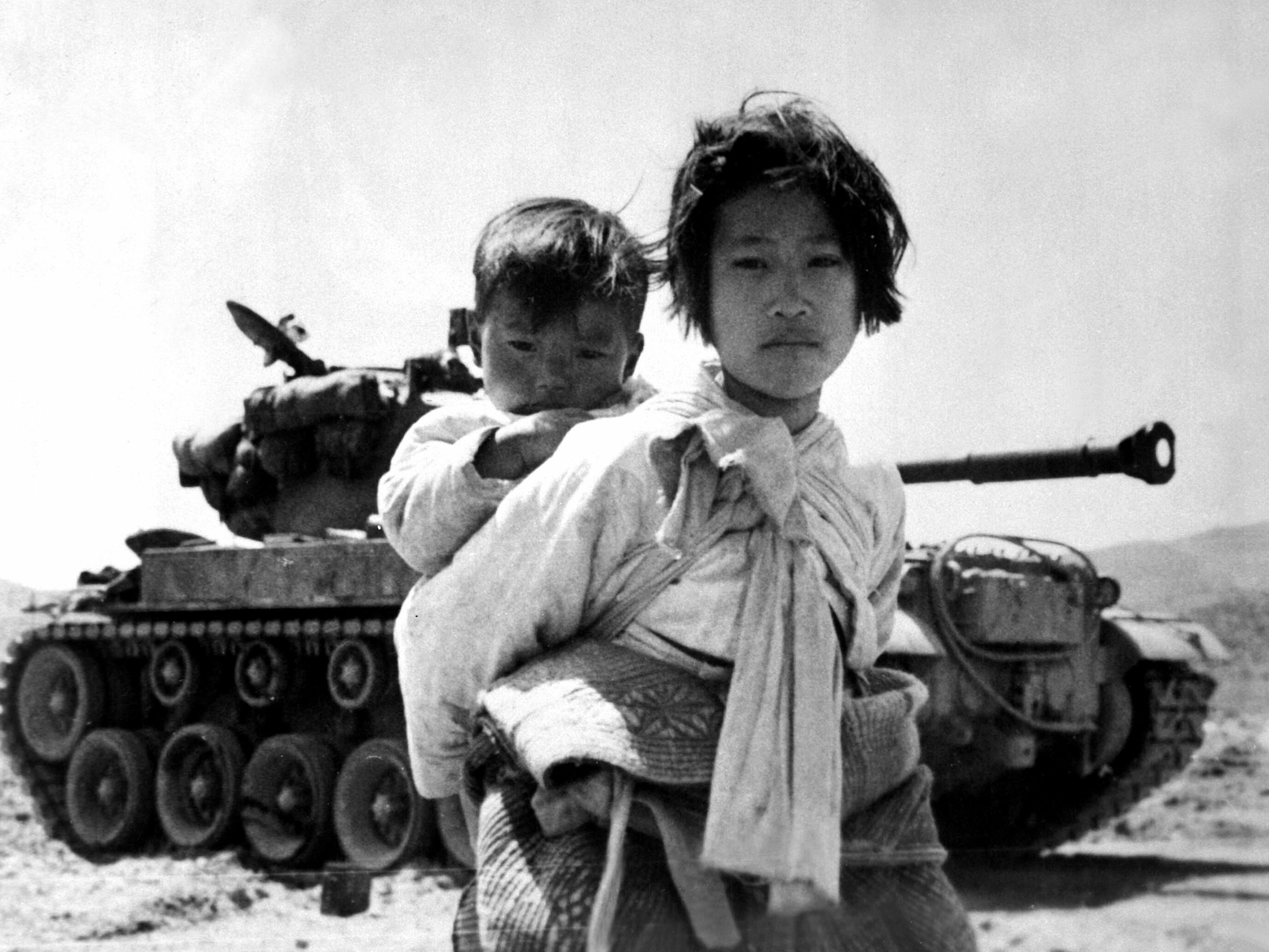
In the latest episode of the Explaining History Podcast, Paige Towers unpacks the painful history of Korean intercountry adoption – a story of good intentions, colonial attitudes, reckless systems, and the voices of adoptees finally being heard.
-

Explore the transformative power of refugee testimonies. From the Armenian Genocide to the Syrian Civil War, witness how personal stories preserve memory and forge empathy in a fractured world
-

Rwanda’s rapid recovery under Paul Kagame combines growth and repression. This essay examines the “Kagame model” of authoritarian development.
-
Introduction In April 1994, Rwanda became the scene of one of the most intense episodes of mass killing in modern history. In roughly one hundred days, between 500,000 and 800,000 people—mainly Tutsis and moderate Hutus—were slaughtered. What distinguished this genocide from others was not merely its speed, but the precision and coordination of the violence in a largely rural society with few telephones or newspapers. That coordination was achieved, to a chilling degree, through the radio. The privately-owned station Radio Télévision Libre des Mille Collines (RTLM) played a decisive role. It became the voice of the extremist “Hutu Power” movement,…
-
Rwanda today is a nation fiercely grappling with its own identity. The official narrative, championed by the government, is one of unity: Rwandanness over ethnicity. The words “Hutu” and “Tutsi” are absent from identity cards, their public discussion often discouraged in an effort to forge a single, cohesive national community out of the ashes of the 1994 genocide. This project of national reconciliation is a direct and understandable response to an atrocity that was justified through a rigid, Manichean ethnic ideology. Yet, to understand the genocide, one must first understand the deep, poisonous roots of that ideology. And those roots…
-
Operation Condor was one of the bloodiest chapters in the history of the Cold War, a transnational terrorist consortium where South American military regimes collaborated to hunt, torture, and disappear their political opponents across borders. The image is one of a distinctly Latin American horror, orchestrated by generals in Santiago, Buenos Aires, and Montevideo. Yet, hovering over this entire apparatus is a persistent, haunting question: what did the United States, the hemispheric superpower and self-proclaimed beacon of democracy, know and do? The story of U.S. involvement is not one of simple, direct command but of a complex and damning complicity.…
-
The history of Operation Condor, the clandestine terrorist network of 1970s South American dictatorships, is often told through a lexicon of male-dominated power: juntas, generals, comandantes, and militants. The canonical images are of men in uniform, men in suits, and men holding rifles. Yet, to confine the narrative to this sphere is to miss its beating, brutal heart. The full story of Condor—its mechanisms, its impact, and its ultimate undoing—is inextricably linked to the experiences of women. They were not peripheral actors but central figures, cast in roles that reveal the deepest pathologies of the state terror apparatus and the…
-
When one thinks of the Cold War dictatorships that scarred Latin America in the 1970s, the imagery of Argentina’s desaparecidos (the disappeared) or Chile’s violent coup under Pinochet often comes to the fore. Yet, nestled between its larger neighbors, Uruguay cultivated a regime of such methodical and pervasive control that it earned a chillingly clinical nickname: “the torture chamber of Latin America.” This moniker, however, only tells part of the story. Uruguay was more than a chamber; it was a laboratory—a testing ground for sophisticated techniques of surveillance, psychological repression, and transnational terror that would be exported and refined across…
-
Prelude to Repression: From Democracy to Dictatorship In March 1976, Argentina’s armed forces overthrew President Isabel Perón in a coup that inaugurated one of the darkest chapters in Latin American history. The new regime, calling itself the Proceso de Reorganización Nacional (National Reorganization Process), promised to restore “order” and “Western Christian civilization.” In practice, it unleashed a campaign of terror against its own citizens—a Dirty War that killed or disappeared as many as 30,000 people. Argentina’s descent into authoritarianism had deep roots. By the mid-1970s, the country was wracked by economic crisis, political polarization, and escalating violence between leftist guerrillas—such…
-
Table of Contents Introduction: The Bureaucrat’s Trap The Nazi state was a paperocracy. It was a regime that believed in the power of the document—the form, the report, the memo, the stamped order. This obsession with meticulous record-keeping, which had been the very engine of the Holocaust, became, in its aftermath, its greatest vulnerability. As Allied forces advanced into the heart of the Third Reich in the spring of 1945, they did not just liberate camps and capture soldiers; they seized mountains of paper. Hidden in salt mines, buried in castle cellars, and stacked in government offices were the detailed…