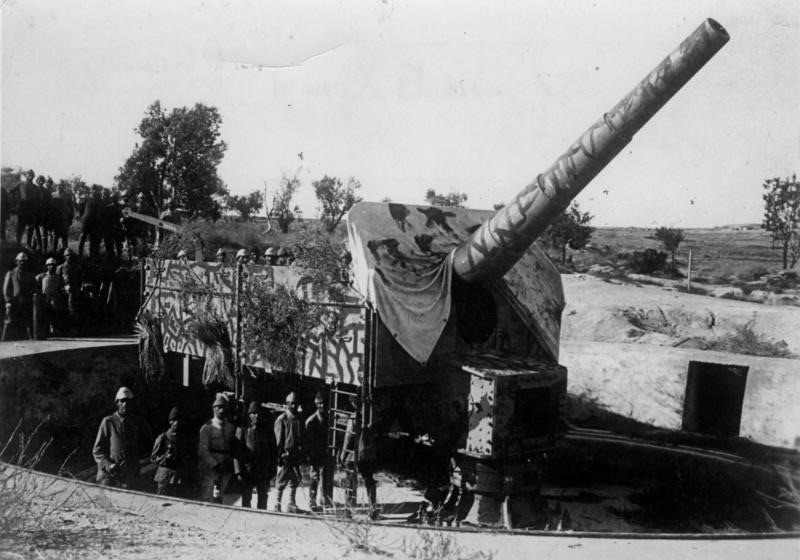

On April 25, 1915, soldiers from the Australian and New Zealand Army Corps waded ashore at a small cove on the Gallipoli Peninsula, on the European side of the Dardanelles. They were met by a hail of Ottoman gunfire. By the time the campaign ended eight months later, over 130,000 men were dead—Ottoman, British, French, Australian, New Zealand, Indian, and Newfoundland. The Allies had failed to capture the peninsula, and the Ottoman defenders had secured one of their greatest victories of the war.
That bare sequence of events is agreed upon by all historians. But what it means—what Gallipoli signifies—depends entirely on who is telling the story. For Australians and New Zealanders, Gallipoli is the birthplace of national consciousness, a heroic tragedy where young nations came of age through sacrifice. For Turks, Gallipoli (Çanakkale) is the founding myth of the republic, the moment when the Ottoman Empire, against all odds, repelled a foreign invasion and gave birth to the nation’s savior, Mustafa Kemal. For the British, Gallipoli is a painful memory of imperial overreach, a botched campaign that destroyed the career of Winston Churchill. For the French, it is a forgotten front. For the Indians, a footnote.
Gallipoli is not unique. Across the former battlefields of the Ottoman Empire—from the Suez Canal to Mesopotamia, from the Caucasus to the Hejaz—the same battles have been remembered in radically different ways. The Arab Revolt of 1916, celebrated in the West through the romanticized figure of T. E. Lawrence (“Lawrence of Arabia”), is remembered in the Arab world as a betrayal, a British-orchestrated rebellion that promised independence but delivered colonialism. The Mesopotamian campaign, culminating in the siege of Kut, is a humiliation in British memory but a triumph in Turkish memory. The Armenian genocide, which occurred on the same battlefields, is commemorated by Armenians as a foundational trauma and denied by the Turkish state.
How do we make sense of these competing memories? This article explores the historiography of the Ottoman theater—the study of how history has been written and remembered—to understand how the same events can produce such different national narratives. It argues that the First World War in the Middle East was not only a military conflict but a struggle over meaning, and that the battlefields of the Ottoman Empire continue to be contested ground, long after the guns fell silent.
Gallipoli: Many Nations, One Peninsula
The Gallipoli campaign (February 1915–January 1916) was an Allied attempt to capture the Dardanelles strait, knock the Ottoman Empire out of the war, and open a supply route to Russia. It failed catastrophically. The naval attack in March was repulsed with heavy losses; the land invasion in April was contained by Ottoman defenders; and by December, the Allies had evacuated in what was, ironically, the most successful operation of the campaign.
In Australian and New Zealand memory, Gallipoli is the central event of the First World War. The date of the landings—April 25—is commemorated as ANZAC Day, a national holiday that draws larger crowds than Christmas in some communities. The myth of Gallipoli has several components: that Australian and New Zealand soldiers (“diggers”) displayed unique qualities of courage, endurance, and mateship; that they were betrayed by British commanders who treated them as cannon fodder; that the campaign forged a distinct national identity separate from Britain; and that the soldiers’ sacrifice gave meaning to young nations still finding their place in the world.
Historians have complicated this narrative. The idea that Gallipoli was uniquely costly for Australia and New Zealand is statistically dubious; Australian and New Zealand casualties were significant, but British and French losses were larger, and Ottoman losses dwarfed them all. The notion of British betrayal, while emotionally powerful, oversimplifies the complex command structures of the campaign. And the claim that Gallipoli marked the birth of Australian nationhood ignores the fact that Australia had already been a federated nation since 1901, with its own institutions and growing sense of identity. Yet the myth endures because it serves a psychological and cultural function: it provides a story of sacrifice and meaning that helps Australians and New Zealanders understand their place in the world.
In Turkish memory, Gallipoli is equally central—but for different reasons. The campaign is known as Çanakkale Savaşı (the Battle of Çanakkale), named after the town on the Asian side of the strait. It is remembered as a defensive victory that saved the Ottoman state from collapse. Mustafa Kemal, then a lieutenant colonel commanding the 19th Division, emerged as the hero of the campaign. His famous order—”I do not order you to attack; I order you to die”—became a foundational text of Turkish nationalism. The campaign is commemorated annually on March 18, the date of the naval victory, with ceremonies at the Gallipoli peninsula, now a national park and war memorial.
The Turkish memory of Gallipoli has undergone its own transformations. In the early republican period, the campaign was remembered primarily as a military victory that demonstrated the fighting spirit of the Turkish soldier. In later decades, particularly after the 1980 military coup, the memory became more explicitly nationalist, emphasizing the unity of the Turkish nation in the face of foreign invasion. In recent years, there has been a shift toward a more inclusive memory, with Turkish officials emphasizing the shared sacrifice of all the nations that fought at Gallipoli, including the ANZACs. This shift reflects Turkey’s growing engagement with international tourism and its desire to present itself as a bridge between East and West.
British memory of Gallipoli is quite different. For Britain, the campaign was a sideshow—one of many failed operations in a war full of them. It is remembered primarily as a political and military disaster, the brainchild of Winston Churchill (then First Lord of the Admiralty), whose reputation was nearly destroyed by its failure. The campaign is studied in military academies as a case study in flawed planning, inadequate intelligence, and the dangers of naval overconfidence. But it does not occupy the same emotional space in British culture that it does in Turkish or ANZAC memory. The British dead of Gallipoli are commemorated alongside the dead of the Somme, Passchendaele, and other battles, without special distinction.
French memory of Gallipoli is even more marginal. The French contribution to the campaign—a corps of colonial troops, mostly Senegalese and North African—is largely forgotten in France, where the Western Front dominates national memory. The French cemetery at Gallipoli receives few visitors, and the campaign is rarely mentioned in French school curricula. This erasure reflects a broader pattern: the First World War in the Middle East has been systematically neglected in Western memory, overshadowed by the trenches of the Western Front.
The Arab Revolt: Lawrence, Betrayal, and Competing Narratives
The Arab Revolt of 1916–1918, in which Sharif Hussein of Mecca led Arab forces against their Ottoman rulers with British support, has generated some of the most romanticized and contested memories of the Ottoman theater. In Western popular culture, the revolt is remembered through the figure of T. E. Lawrence—”Lawrence of Arabia”—the eccentric British archaeologist-turned-officer who fought alongside Arab irregulars, blew up railways, and became a legend. The 1962 film Lawrence of Arabia cemented this image, presenting the revolt as a heroic adventure and Lawrence as a tragic figure caught between his loyalty to Britain and his sympathy for Arab nationalism.
But this Western memory bears little resemblance to how the Arab Revolt is remembered in the Arab world. For many Arabs, the revolt is a story of betrayal, not heroism. The British had promised Sharif Hussein that if he rebelled against the Ottomans, they would support the creation of a unified Arab state stretching from Aleppo to Aden. At the same time, however, the British had secretly negotiated the Sykes-Picot Agreement (1916) with France, which partitioned the Arab provinces of the Ottoman Empire into British and French spheres of influence. After the war, the Arab lands were divided into mandates—Iraq, Palestine, Transjordan, Syria, and Lebanon—under British and French control. The unified Arab state never materialized.
The memory of this betrayal has shaped Arab nationalism ever since. The Arab Revolt is remembered as a moment when Arab leaders trusted Western promises and were deceived. The figure of Lawrence is viewed with deep ambivalence: some Arab nationalists admire his sympathy for their cause, while others see him as a British agent who manipulated the Arabs for imperial purposes. The Hashemite family, descendants of Sharif Hussein, have cultivated their own memory of the revolt as a legitimizing foundation for their rule in Jordan and, historically, in Iraq. But for many ordinary Arabs, the revolt is less a source of pride than a reminder of the broken promises that set the stage for decades of Western domination.
The historiography of the Arab Revolt has undergone significant revision in recent decades. Scholars have moved away from the romanticized Lawrence-centered narrative, focusing instead on the social and economic dynamics of the revolt, the role of tribal politics, and the diversity of Arab responses to Ottoman rule. They have also highlighted the importance of other figures, such as Sharif Hussein’s sons—Faisal, Abdullah, and Ali—who played crucial roles in the revolt and in the subsequent creation of the mandate states. This revisionist scholarship has not displaced the Lawrence myth in popular culture, but it has transformed academic understanding of the revolt and its place in Middle Eastern history.
The Mesopotamian Front: Triumph and Humiliation
The Mesopotamian campaign, culminating in the siege of Kut, is remembered very differently in British and Turkish national memory. For Britain, Kut is a humiliation—the largest surrender of British-led forces in the First World War, a scandal that led to a parliamentary inquiry and the reorganization of the Indian Army. The suffering of the prisoners, particularly the Indian soldiers who died in large numbers, became a subject of controversy and, for a time, of official suppression. The campaign as a whole is often presented as a cautionary tale of imperial overreach: a limited operation that expanded without strategic clarity, outran its logistics, and ended in disaster.
For Turkey, by contrast, Kut is a triumph—one of the few unalloyed Ottoman victories of the war. The commander, Halil Pasha (later Halil Kut), is remembered as a national hero who defeated a British army and captured a British general. The victory is commemorated in Turkish military history as a model of defensive warfare and the exploitation of enemy overreach. In recent years, the Turkish government has invested in commemorating Kut, with ceremonies, publications, and the restoration of battle sites. The 100th anniversary of the siege in 2016 was marked by high-level Turkish officials and extensive media coverage.
These competing memories are not simply two sides of the same coin; they reflect different relationships to the same events. For Britain, the Mesopotamian campaign was a colonial war fought by Indian troops under British command, far from home, in a theater that was always secondary to the Western Front. Its memory is tinged with embarrassment and a desire to forget. For Turkey, the same campaign was a defensive war fought on home territory, against an invading imperial power, and its memory is tinged with pride and a sense of national resilience. These different perspectives are not mutually exclusive; both are true to the experiences of the people who fought and died in Mesopotamia. But they are rarely held in the same mind.
The Armenian Genocide: Memory as a Battlefield
No event in the Ottoman theater is more contested in memory than the Armenian genocide. For Armenians, the genocide of 1915–1916 is a foundational trauma—the event that defines modern Armenian identity. April 24, the date on which Ottoman authorities arrested Armenian intellectuals in Istanbul in 1915, is commemorated as Genocide Remembrance Day. Armenian diaspora communities around the world hold vigils, lay wreaths, and demand international recognition of the genocide. The memory of the genocide is preserved in survivor testimonies, memorials, museums, and a rich body of literature and art.
For the Turkish state, by contrast, the events of 1915 are not recognized as genocide. Official Turkish historiography maintains that the deaths of Armenians occurred in the context of a civil war and a forced relocation necessitated by military necessity, and that the number of dead has been exaggerated. For decades, the Turkish government has campaigned against international recognition of the genocide, threatening diplomatic and economic sanctions against countries that use the term. This official denial has been a major obstacle to Turkish-Armenian reconciliation and a source of tension in Turkey’s relations with the West.
The historiographical battle over the Armenian genocide is one of the most intense in modern history. Scholars who use the term “genocide” point to the systematic nature of the killings, the intent of the Ottoman leadership to destroy the Armenian population, and the testimony of survivors and foreign observers. Scholars who deny the genocide—a much smaller group, many of whom are affiliated with Turkish state institutions—argue that the deaths were a tragic byproduct of war, not a planned extermination. The consensus of mainstream historiography, including the work of non-Armenian scholars such as Ronald Suny, Donald Bloxham, and Taner Akçam, supports the genocide designation.
The memory of the genocide is not only a matter of historical debate; it is a living political issue. Armenian diaspora groups continue to lobby for recognition, and several countries—including France, Germany, and the United States—have officially recognized the genocide. Turkey continues to deny, though the terms of the denial have shifted over time, and there is a growing civil society movement in Turkey that acknowledges the genocide and calls for reconciliation. The battle over memory shows no sign of ending, and the battlefields of eastern Anatolia—where most of the killing occurred—remain contested ground.
The Battlefield as National Shrine
One of the most striking features of memory in the Ottoman theater is the transformation of battlefields into national shrines. Gallipoli is the most famous example. The Gallipoli peninsula is now a national park, with cemeteries, memorials, and visitor centers maintained by the Turkish government and the Commonwealth War Graves Commission. Every year, thousands of Australians and New Zealanders make the pilgrimage to Gallipoli for the ANZAC Day dawn service at Anzac Cove. For many, this pilgrimage is a rite of passage, a way of connecting with national history and honoring the sacrifice of previous generations.
The Turkish government has also invested heavily in the Gallipoli memorials, which present the campaign as a moment of national unity and a testament to the Turkish soldier’s courage. The site includes the Turkish Şehitler Abidesi (Martyrs’ Memorial), the statue of Mustafa Kemal, and numerous smaller monuments. The Turkish memorials emphasize the religious dimension of the sacrifice, using Islamic imagery and language to frame the dead as şehit (martyrs) who died defending their homeland.
Similar transformations have occurred at other sites. The battlefield of Kut al-Amara, in modern Iraq, is less accessible to international visitors, but it remains a site of pilgrimage for Turkish nationalists. The British cemetery at Kut, maintained by the Commonwealth War Graves Commission, is a quiet reminder of the British dead. The Armenian memorial at Deir ez-Zor, in Syria, was destroyed by the Islamic State in 2014, a reminder that the memory of the genocide remains vulnerable to destruction.
The transformation of battlefields into shrines is not unique to the Ottoman theater; similar processes have occurred at the Somme, Verdun, and other sites of the First World War. But the Ottoman theater presents a distinctive pattern: because the same battlefields are claimed by multiple nations, the shrines often compete with one another. At Gallipoli, the Australian, New Zealand, Turkish, British, and French memorials coexist within a small area, but they are separated by language, by design, and by the narratives they embody. The battlefield does not produce a single memory; it produces a polyphony of memories, sometimes harmonious, often dissonant.
The Silences of Memory
The memory of the Ottoman theater is marked not only by what is remembered but by what is forgotten. The Indian soldiers who fought and died in Mesopotamia, Palestine, and Gallipoli are largely absent from British memory, despite the fact that the Indian Army provided the majority of the British Empire’s forces in the Middle East. The Senegalese and North African soldiers who fought for France are similarly forgotten. The Ottoman soldiers who were not Turkish—Arabs, Kurds, Armenians, Greeks—are often excluded from Turkish national memory, which tends to present the Ottoman army as a Turkish army.
These silences are not accidental; they reflect the politics of memory in post-war nation-states. The Indian soldiers who died for the British Empire were inconvenient to the Indian nationalist movement, which sought to distance itself from colonialism, and to the British establishment, which preferred to forget the extent of its reliance on colonial troops. The Arab and Kurdish soldiers who fought for the Ottoman Empire were inconvenient to the Turkish nationalist project, which sought to create a homogeneous Turkish nation-state. The memory of the Armenian genocide is actively suppressed by the Turkish state, which has criminalized public discussion of the event.
The work of recovering these forgotten voices is a central task of contemporary historiography. Scholars have increasingly focused on the experiences of colonial troops, of Ottoman non-Turkish soldiers, and of civilians who were caught in the crossfire. This scholarship has complicated the national narratives that have dominated memory for the past century, revealing the diversity of experiences and allegiances that characterized the Ottoman theater. It has also raised difficult questions about how to commemorate suffering that does not fit neatly into national stories.
Conclusion
The battlefields of the Ottoman Empire are not only places where men fought and died; they are places where nations have been imagined and contested. Gallipoli is at once an Australian coming-of-age story, a Turkish national epic, a British cautionary tale, and a French footnote. The Arab Revolt is simultaneously a romantic adventure, a story of betrayal, and a foundational moment for Arab nationalism. The Mesopotamian campaign is a humiliation in London and a triumph in Ankara. The Armenian genocide is a foundational trauma in Yerevan and a denial in Istanbul.
These competing memories are not simply errors to be corrected by objective history. They are expressions of different experiences, different values, and different relationships to the past. The historian’s task is not to choose among them but to understand them—to trace how they emerged, how they have been used, and how they continue to shape the present. The battlefields of the Ottoman Empire are quiet now, but the battles over their meaning continue. In that sense, the First World War in the Middle East has never really ended; it has simply moved from the trenches to the archives, the monuments, and the textbooks.
For those who visit Gallipoli today, standing at Anzac Cove or the Turkish memorial at Chunuk Bair, the landscape is peaceful. The guns are silent, the trenches have been filled in, and the only sounds are the wind and the sea. But the voices of the past are still audible to those who listen carefully—Australian, New Zealand, Turkish, British, French, Indian, Arab, Armenian. Each voice tells a different story, and each story is true to the experience that produced it. The challenge of memory is to hold all of these stories together, without letting any one of them drown out the others.
Further Reading & Sources
· Akçam, Taner. A Shameful Act: The Armenian Genocide and the Question of Turkish Responsibility. Metropolitan Books, 2006.
· Ekins, Ashley, ed. Gallipoli: A Ridge Too Far. Exisle Publishing, 2013.
· Fromkin, David. A Peace to End All Peace: The Fall of the Ottoman Empire and the Creation of the Modern Middle East. Henry Holt, 1989.
· Macleod, Jenny. Gallipoli: Making History. Routledge, 2004.
· Rogan, Eugene. The Fall of the Ottomans: The Great War in the Middle East. Basic Books, 2015.
· Satia, Priya. Empire of Guns: The Violent Making of the Industrial Revolution. Penguin, 2018. (Includes analysis of the arms trade and memory in the Middle East.)
· Suny, Ronald Grigor. “They Can Live in the Desert but Nowhere Else”: A History of the Armenian Genocide. Princeton University Press, 2015.
· Wilson, Jeremy. Lawrence of Arabia: The Authorised Biography of T. E. Lawrence. Heinemann, 1989.

Leave a Reply