-
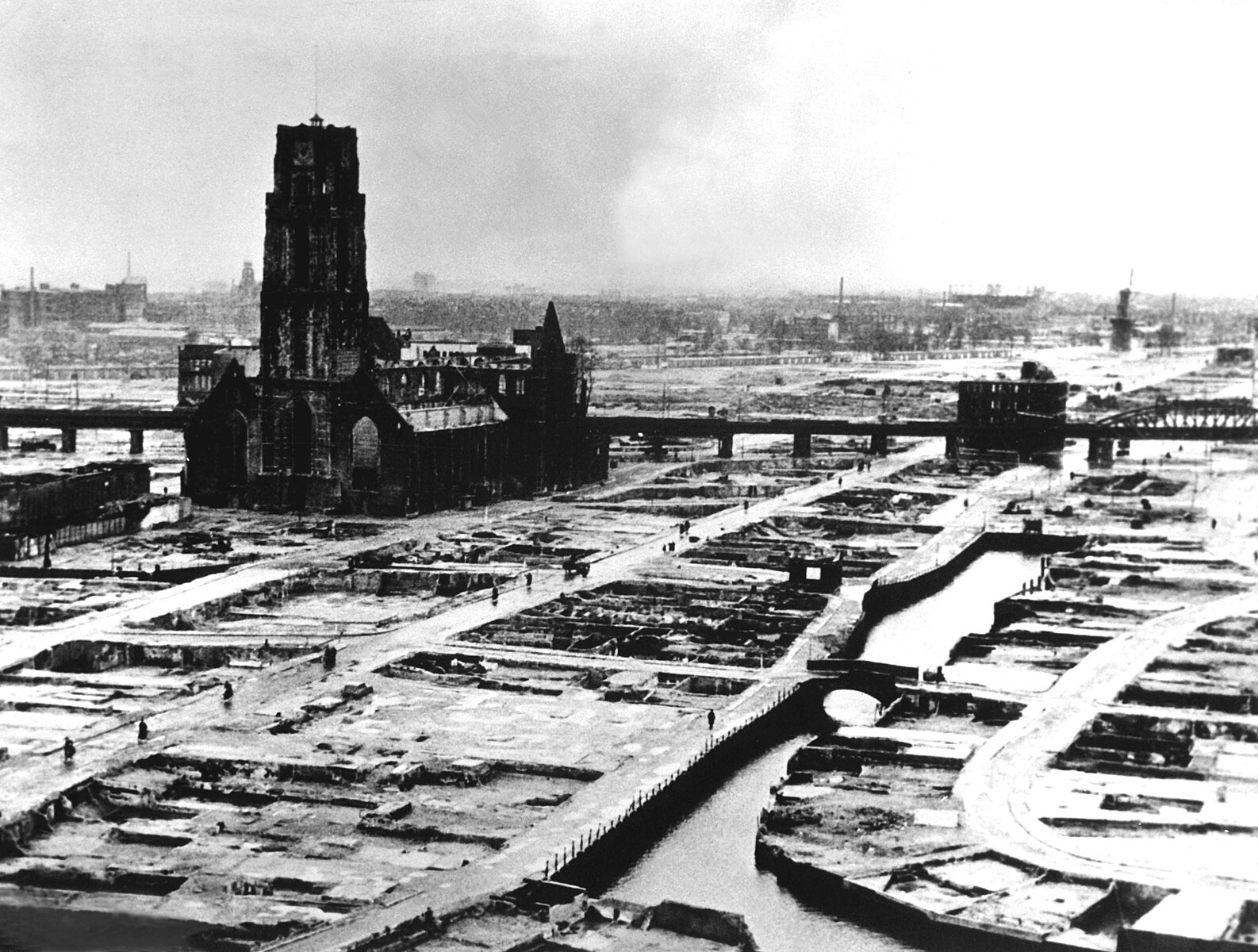
The collapse of the Low Countries in May 1940 was precipitated by a catastrophic failure of diplomatic strategy. Following the remilitarization of the Rhineland, Belgium and the Netherlands retreated into a strict, armed neutrality, severing military coordination with France and Britain. This “Policy of Independence” created a strategic vacuum on France’s northern flank, preventing the Allies from preparing defensive lines in Belgium. Consequently, Allied forces were forced to execute the risky “Dyle Plan,” rushing into unprepared positions at the moment of invasion. The lack of interoperability, the delusion of the “Oslo States” bloc, and the swift capitulation of King Leopold…
-

Table of Contents Introduction: The Myth of Uniform Resistance The popular narrative of World War II in Europe often simplifies a complex moral landscape into a stark, tripartite story of German perpetrators, innocent victims, and heroic national resistance movements. This comforting fiction, cultivated assiduously in the decades following 1945, obscures a far more disturbing and widespread reality: the indispensable role played by the state bureaucracies, local institutions, and civilian populations of occupied and allied nations in the Holocaust. The SS and the Nazi apparatus, for all their monstrous efficiency, lacked the manpower, the local knowledge, and the administrative reach to…
-
Introduction The Marshall Plan occupies a hallowed place in twentieth-century economic history, widely celebrated as the catalyst that transformed war-shattered Europe into an economic powerhouse. This triumphant narrative, however, rests on surprisingly fragile empirical foundations when subjected to rigorous quantitative scrutiny. While political leaders and popular histories have perpetuated the image of American dollars single-handedly rescuing Europe from collapse, economic historians have increasingly questioned the actual macroeconomic significance of the $13.3 billion assistance program. This article examines the Marshall Plan through the lens of empirical economic analysis, separating measurable impacts from mythological attributions to develop a more nuanced understanding of…
-
Introduction The standard narrative of the Marshall Plan as an uncontested blessing for postwar Europe requires significant qualification when examined through the lens of its contemporary critics. While political leaders and economic beneficiaries celebrated American generosity, substantial intellectual and political movements across Europe developed sophisticated critiques that questioned the Plan’s motives, methods, and consequences. These criticisms emerged from multiple positions on the left—from communist parties taking direct orders from Moscow to independent socialist intellectuals concerned with preserving European autonomy to social democrats wary of American capitalism—and collectively represented a significant counter-discourse to the enthusiastic official reception of American aid. This…
-
Introduction The Marshall Plan remains celebrated for its economic achievements, but its success depended equally on a less examined dimension: a comprehensive information campaign that sold the program to multiple constituencies with often conflicting interests. This publicity effort represented one of the most ambitious peacetime propaganda initiatives in American history, requiring simultaneous persuasion of American taxpayers, European recipients, and global audiences watching the emerging Cold War struggle. The Economic Cooperation Administration understood that congressional approval of massive appropriations required demonstrating tangible benefits to American interests, while European cooperation necessitated overcoming skepticism about American motives and methods. This article argues that…
-
a unique fusion of technocratic optimism and cultural diplomacy that complemented the financial aspects of the Marshall Plan Introduction Conventional narratives of the Marshall Plan understandably focus on its monumental financial scale—the $13.3 billion in aid that provided the essential capital for European reconstructionReconstruction Full Description:The period immediately following the Civil War (1865–1877) when the federal government attempted to integrate formerly enslaved people into society. Its premature end and the subsequent rollback of rights necessitated the Civil Rights Movement a century later. Reconstruction saw the passage of the 13th, 14th, and 15th Amendments and the election of Black politicians across the…
-
Introduction The European Recovery Program fundamentally transformed Western Europe, yet its impacts varied significantly across recipient nations according to their distinctive institutional frameworks, economic priorities, and political circumstances. Nowhere is this variation more instructive than in the contrasting experiences of France and West Germany—two neighboring economies that shared the experience of devastating wartime destruction but approached reconstructionReconstruction Full Description:The period immediately following the Civil War (1865–1877) when the federal government attempted to integrate formerly enslaved people into society. Its premature end and the subsequent rollback of rights necessitated the Civil Rights Movement a century later. Reconstruction saw the passage of the…
-
Introduction The announcement of the Marshall Plan in June 1947 contained a revolutionary stipulation: American aid would be contingent upon European nations themselves jointly formulating a program for their own recovery. This condition was the strategic masterstroke of the entire endeavor. It forced the shattered nations of Western Europe to move beyond mere pleas for assistance and engage in a collective exercise in economic planning, a process that would itself become a powerful agent of political change. The vehicle for this process was the Organisation for European Economic Co-operation (OEEC), established in April 1948 by the Convention for European Economic…
-
Introduction The announcement of the Marshall Plan in June 1947 presented the Soviet Union with a profound strategic dilemma. The offer of American economic aid to all of Europe, including the USSR and its nascent Eastern European sphere of influence, was a masterstroke of Western diplomacy that placed the Kremlin in a precarious position. To participate would mean opening the Soviet economy to Western scrutiny, potentially loosening control over Eastern Europe, and legitimizing a U.S.-led vision for the continent. To reject it risked appearing obstructive, confirming Western accusations of Soviet hostility, and allowing the consolidation of a Western bloc from…
-
Introduction: The Strategic Imperative of Recovery The spring of 1947 marked a pivotal inflection point in the early Cold War, a moment where American foreign policy transitioned from reactive posture to proactive strategy. The Truman DoctrineTruman Doctrine Full Description:The Truman Doctrine established the ideological framework for the Cold War. It articulated a binary worldview, dividing the globe into two alternative ways of life: one based on the will of the majority (the West) and one based on the will of a minority forcibly imposed upon the majority (Communism). This doctrine justified US intervention in conflicts far from its own borders, arguing that…