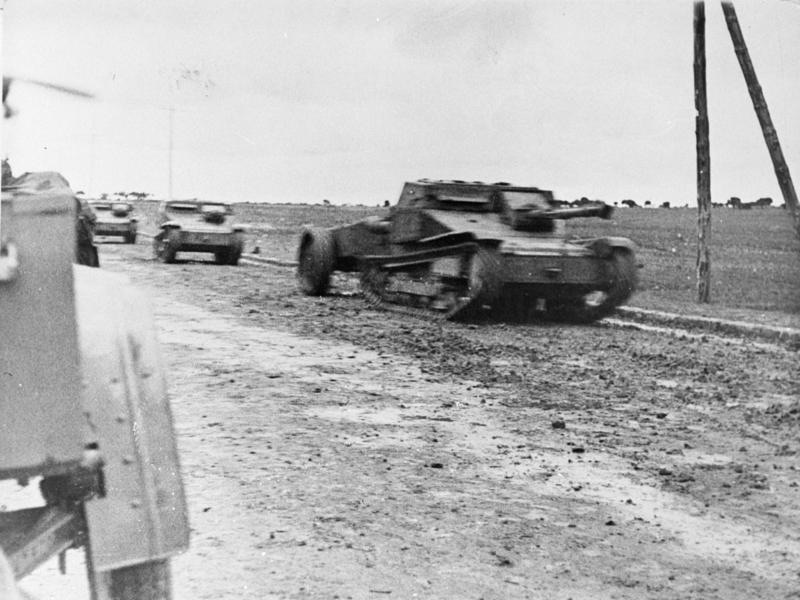

Of the various foreign interventions in the Spanish Civil War, that of Fascist Italy under Benito Mussolini occupies a singular and paradoxical position. It was, by any objective measure, an invasion: a massive, state-directed deployment of military personnel and matériel exceeding in sheer numbers the contribution of Nazi Germany, yet it has often been relegated to a secondary status in historical memory, overshadowed by the more technologically formative German intervention and the ideologically potent Soviet one. Italy’s involvement was characterized not by the covert experimentation of the Legion Condor but by a blatant, triumphalist projection of national power, intended to cement a Mediterranean alliance, expand fascist prestige, and secure strategic imperial advantages. However, this grandiose ambition collided with military inadequacy, diplomatic isolation, and the complex realities of Spanish politics. This essay argues that Fascist Italy’s intervention was a reckless and overextended imperial venture, driven by Mussolini’s desire for strategic parity with Hitler and domestic propaganda needs, which ultimately resulted in a costly and humiliating entanglement. The Italian experience in Spain—marked by the disastrous defeat at Guadalajara, a fraught and subordinate relationship with Francisco Franco, and a staggering expenditure of resources for limited geopolitical gain—serves as a critical prelude to the failures of the Italian war machine in the Second World War and exposes the fundamental weaknesses of the fascist alliance.
• Image courtesy of : Bundesarchiv, Bild 183-P0214-516 / CC-BY-SA 3.0
Listen next: fascism goes to war in Spain
This article examines Mussolini’s intervention in the Spanish Civil War. Continue with the Fascism collection to hear the conflict through Franco’s advance on Madrid, the Battle of the Ebro and the experiences of anti-fascist volunteers.
The Motives for Intervention: Prestige, Empire, and the Dynamics of the Axis
Italy’s intervention in July 1936, beginning with air transport for Franco’s Army of Africa and escalating rapidly into a full-scale military commitment, was driven by a more complex set of motives than mere ideological solidarity. While the anti-communist, anti-democratic ethos of fascism provided a natural affinity, Mussolini’s decision was fundamentally rooted in realpolitik and the internal dynamics of his regime.
First and foremost was the pursuit of strategic depth and imperial ambition in the Mediterranean, which Italian fascism termed Mare Nostrum. A friendly, politically aligned Spain under Franco would flank France, threaten British Gibraltar, and grant Italy naval and air bases, significantly enhancing its position in the western Mediterranean. As historian John F. Coverdale argues, Mussolini saw Spain as a potential client state, a junior partner in a fascist bloc that could challenge Anglo-French hegemony. This was not merely defensive; it was an offensive bid for great-power status.
Second, the dynamics of the nascent Rome-Berlin Axis played a crucial role. Hitler’s rapid decision to aid Franco placed Mussolini in a competitive position. To avoid being upstaged by his German rival and to maintain the appearance of fascist leadership, Mussolini felt compelled to match and then exceed German support. The intervention became a test of fascist virility and commitment, a way to demonstrate Italy’s value as an ally. This competitive dynamic led to a continual escalation of commitments without clear strategic endpoints.
Third, domestic propaganda and regime consolidation were significant factors. A victorious foreign war, even a proxy one, could bolster Mussolini’s prestige, unify the populace, and distract from economic shortcomings. The regime’s propaganda apparatus, directed by Mussolini’s son-in-law, Galeazzo Ciano (who became Foreign Minister in June 1936), portrayed the war as a crusade against Bolshevism and a demonstration of fascist Italy’s renewed martial prowess.
Finally, there was a genuine, if cynical, ideological desire to reshape the European order. Defeating the Spanish Republic would represent a monumental victory for the fascist international, striking a blow against the Popular Front governments in Paris and, symbolically, against the Soviet Union. By October 1936, these motives coalesced into a formal commitment that would see Italy become the Nationalists’ most prolific foreign patron in terms of manpower.
The Corpo Truppe Volontarie (CTV): Scale, Structure, and the Fiction of Voluntarism
The instrument of Italian intervention was the Corpo Truppe Volontarie (CTV), a title that, like the German Legion Condor, belied its official nature. The “volunteers” were predominantly regular soldiers and Blackshirt militiamen, recruited with inducements and pressure, forming a professional expeditionary corps. At its peak in 1937, the CTV numbered over 50,000 men, supported by a vast air component, the Aviazione Legionaria, and significant naval forces. The scale was unprecedented for a peacetime foreign deployment and constituted a de facto invasion force.
The CTV’s structure reflected its mixed political-military purpose. It included regular army units (the Raggruppamento Truppe Regolari) and militia formations from the Milizia Volontaria per la Sicurezza Nazionale (MVSN), the latter often more fervently fascist but less professionally competent. Command was initially given to General Mario Roatta, a regular army officer, but the presence of politically influential Blackshirt commanders created a bifurcated chain of command, fostering friction and operational confusion.
The material commitment was enormous. Italy supplied Franco with approximately 1,800 artillery pieces, 7,500 motor vehicles, 1,400 tanks and tankettes (primarily the light L3/35, of limited value), and over 750 aircraft (including the Fiat CR.32 biplane fighter and the Savoia-Marchetti SM.79 bomber). This dwarfed the initial German contribution in several categories. The logistics of sustaining this force across the Mediterranean—a vulnerability the Republic and its Soviet advisors failed to exploit effectively—represented a massive strain on the Italian economy and military. The fiction of voluntarism was thin; as documents later revealed, the Italian state paid for everything, from soldiers’ salaries to family benefits, and suffered casualties reported not as combat losses but as “training accidents” or disappearances.
Military Performance and the Debacle of Guadalajara
The CTV’s military performance exposed the deep flaws within the fascist military system: poor inter-service coordination, inadequate equipment for modern warfare, tactical rigidity, and an overreliance on political zeal over professional skill. Early successes in Málaga in February 1937, where Italian forces played a leading role in a rapid advance against limited opposition, fueled dangerous overconfidence in Rome and within the CTV command.
This hubris led directly to the catastrophic defeat at the Battle of Guadalajara (March 8-23, 1937), the most significant and revealing Italian engagement of the war. Designed as a lightning offensive (Operazione Fede) to encircle Madrid from the northeast, the operation highlighted systemic failures. The Italian plan, reliant on mobile columns of motorized infantry and light tanks, disregarded the challenging terrain of the Alto Jalón plateau and the onset of spring rains, which turned roads to mud. The CTV advanced with little reconnaissance, expecting a demoralized enemy.
Instead, they encountered a determined Republican defense, heavily reinforced with International Brigades (including the Garibaldi Battalion of Italian anti-fascists) and for the first time effectively employing Soviet-supplied T-26 tanks, which outgunned the Italian L3 tankettes. The Republican air force, including Soviet Polikarpov fighters, achieved local air superiority. The Italian advance stalled, and a well-executed Republican counterattack, exploiting the CTV’s exposed flanks, turned a stalled offensive into a rout. Panic spread through some Italian units, notably the Blackshirt divisions, leading to a humiliating retreat that abandoned large quantities of equipment.
Guadalajara was a propaganda disaster of the first order. The Republic hailed it as a victory against fascism, and the spectacle of Italians fighting Italians (anti-fascist exiles against fascist troops) was a profound ideological blow. Militarily, it revealed that the Italian army, despite its numbers, was not a modern, effective fighting force. Its tactics were outdated, its junior leadership poor, and its equipment, particularly in armor and anti-tank capabilities, was deficient. The battle forced a complete reorganization of the CTV, which was thereafter used more cautiously, often integrated piecemeal with Nationalist units rather than operating as an independent striking force. As historian Brian R. Sullivan notes, Guadalajara offered a clear preview of the Italian military deficiencies that would be exposed on a larger scale in Greece and North Africa in 1940-41.
The Uneasy Alliance: Italian Relations with Franco and the Nationalists
Contrary to Mussolini’s vision of a pliant client, the relationship between the Italian expeditionary force and the Spanish Nationalists was fraught with tension and mutual suspicion. Franco, a supremely cautious and politically astute figure, was determined not to become a puppet of any foreign power. He skillfully played his German and Italian patrons against each other to maximize aid while minimizing their political influence.
Franco resented the Italians’ initial arrogance and their attempts to operate independently of his command, as evidenced by the poorly coordinated Málaga and Guadalajara offensives. He viewed the CTV as militarily unreliable and politically awkward; its presence in such large numbers underscored his dependency and complicated his efforts to portray the war as a purely Spanish “Crusade.” Franco consistently refused Italian demands for formal bases or territorial concessions in the Balearic Islands (though Italy did establish a significant presence in Majorca) or mainland Spain after a victory. He also resisted pressure for a more aggressive, Italian-style strategy, preferring his own methodical, attritional approach.
For their part, Italian commanders and diplomats grew increasingly frustrated with Franco’s ingratitude, his strategic caution, and his evident preference for German military technology and advisors. Ciano’s diaries are replete with scornful remarks about Spanish incompetence and duplicity. The alliance was one of necessity, not affection. Italy was trapped: having invested so much, it could not withdraw without admitting failure, yet it could not control the beneficiary of its largesse. This dynamic prefigured the broader frustrations of the Axis partnership, where Hitler would similarly come to view Mussolini’s ambitions as a drain on German resources.
Costs, Consequences, and the Prelude to a Larger War
The Italian intervention proved astronomically costly for relatively meager returns. Financially, it drained an estimated 8.5 billion lire (roughly equivalent to half of Italy’s annual state revenue), exacerbating the country’s economic woes. The human cost was over 4,000 dead and 12,000 wounded. Material losses, particularly in aircraft and vehicles, were severe and not easily replaced.
Politically, the intervention isolated Italy. It alienated Britain and France, closing off any possibility of a revived Stresa Front against Germany. It deepened Italy’s dependency on Nazi Germany, as both became international pariahs over Spain. While it did secure a nominally friendly regime in Madrid, Franco’s Spain would prove neutral during the critical early years of World War II, denying Mussolini the active Mediterranean ally he had sought. The much-vaunted “fascist brotherhood” yielded minimal strategic dividends.
Militarily, Spain was a devastatingly instructive experience, but the lessons were largely ignored. Conservative army bureaucracies dismissed the failures at Guadalajara as anomalies or blamed them on the Blackshirts, rather than undertaking the profound reforms in training, equipment, and combined arms doctrine that were desperately needed. The war fostered a dangerous illusion of competence in some quarters of the regime, while simultaneously revealing profound weaknesses to foreign observers. As MacGregor Knox has argued, the war demonstrated the “predatory but brittle” nature of Italian fascist power—aggressive in ambition but lacking the industrial, military, and political substance to sustain it.
Conclusion
Fascist Italy’s intervention in the Spanish Civil War was not a sideshow but a central, defining folly of Mussolini’s regime. It was an invasion in all but name, motivated by imperial fantasy, ideological rivalry, and a desperate bid for prestige. The endeavor exposed the fatal disconnect between the regime’s grandiose rhetoric and its institutional capabilities. The CTV, for all its size, became an emblem of fascist military inefficacy, its defeat at Guadalajara a symbolic and practical repudiation of Mussolini’s claims to martial vigor.
The intervention locked Italy into a destructive alliance with Nazi Germany and bankrupted its treasury for a client who refused to be controlled. Rather than proving Italy’s might, the Spanish adventure revealed its profound weaknesses, setting the stage for the even greater disasters of the Second World War. In the narrative of the global proxy war, Italy’s role is therefore one of tragic overreach. It highlights how the Spanish conflict acted as a vortex, drawing in foreign powers not only to shape Spain’s destiny but to test and reveal their own latent capacities and fatal flaws. For Italy, the test was failed, and the flaws it revealed would prove catastrophic.

Leave a Reply