-

a unique fusion of technocratic optimism and cultural diplomacy that complemented the financial aspects of the Marshall Plan Introduction Conventional narratives of the Marshall Plan understandably focus on its monumental financial scale—the $13.3 billion in aid that provided the essential capital for European reconstructionReconstruction Full Description:The period immediately following the Civil War (1865–1877) when the federal government attempted to integrate formerly enslaved people into society. Its premature end and the subsequent rollback of rights necessitated the Civil Rights Movement a century later. Reconstruction saw the passage of the 13th, 14th, and 15th Amendments and the election of Black politicians across the…
-
Introduction The European Recovery Program fundamentally transformed Western Europe, yet its impacts varied significantly across recipient nations according to their distinctive institutional frameworks, economic priorities, and political circumstances. Nowhere is this variation more instructive than in the contrasting experiences of France and West Germany—two neighboring economies that shared the experience of devastating wartime destruction but approached reconstructionReconstruction Full Description:The period immediately following the Civil War (1865–1877) when the federal government attempted to integrate formerly enslaved people into society. Its premature end and the subsequent rollback of rights necessitated the Civil Rights Movement a century later. Reconstruction saw the passage of the…
-
Introduction The announcement of the Marshall Plan in June 1947 contained a revolutionary stipulation: American aid would be contingent upon European nations themselves jointly formulating a program for their own recovery. This condition was the strategic masterstroke of the entire endeavor. It forced the shattered nations of Western Europe to move beyond mere pleas for assistance and engage in a collective exercise in economic planning, a process that would itself become a powerful agent of political change. The vehicle for this process was the Organisation for European Economic Co-operation (OEEC), established in April 1948 by the Convention for European Economic…
-
Introduction The announcement of the Marshall Plan in June 1947 presented the Soviet Union with a profound strategic dilemma. The offer of American economic aid to all of Europe, including the USSR and its nascent Eastern European sphere of influence, was a masterstroke of Western diplomacy that placed the Kremlin in a precarious position. To participate would mean opening the Soviet economy to Western scrutiny, potentially loosening control over Eastern Europe, and legitimizing a U.S.-led vision for the continent. To reject it risked appearing obstructive, confirming Western accusations of Soviet hostility, and allowing the consolidation of a Western bloc from…
-
By the late summer of 1944, World War II’s momentum had decisively shifted in favor of the Allies. In Europe, Allied armies had landed in Normandy, liberated Paris, and were pressing toward Germany’s borders, while Soviet forces swept westward across Eastern Europe . The “halcyon days” of mid-1944, as historian Michael Howard called them, saw the looming defeat of Nazi Germany and Imperial Japan, prompting Allied leaders to turn their focus from winning the war to securing the peace . Amid the optimism, serious questions arose: How would a shattered world be rebuilt, and what kind of international order could…
-
Ongoing and invisible crimes against humanity What comes to mind when you hear the term “economic sanctions”? For many, it sounds like a clean, non-violent, and measured response to a rogue nation’s behaviour. It’s often presented by news outlets and politicians as a firm but fair disciplinary tool—the global community taking away a misbehaving country’s toys. It’s the civilized alternative to bombs and bullets. But what if this perception is completely wrong? What if the sanitized language of foreign policy masks a brutal reality of unimaginable structural violence? A landmark study from the world-renowned medical journal, The Lancet, has pulled back…
-
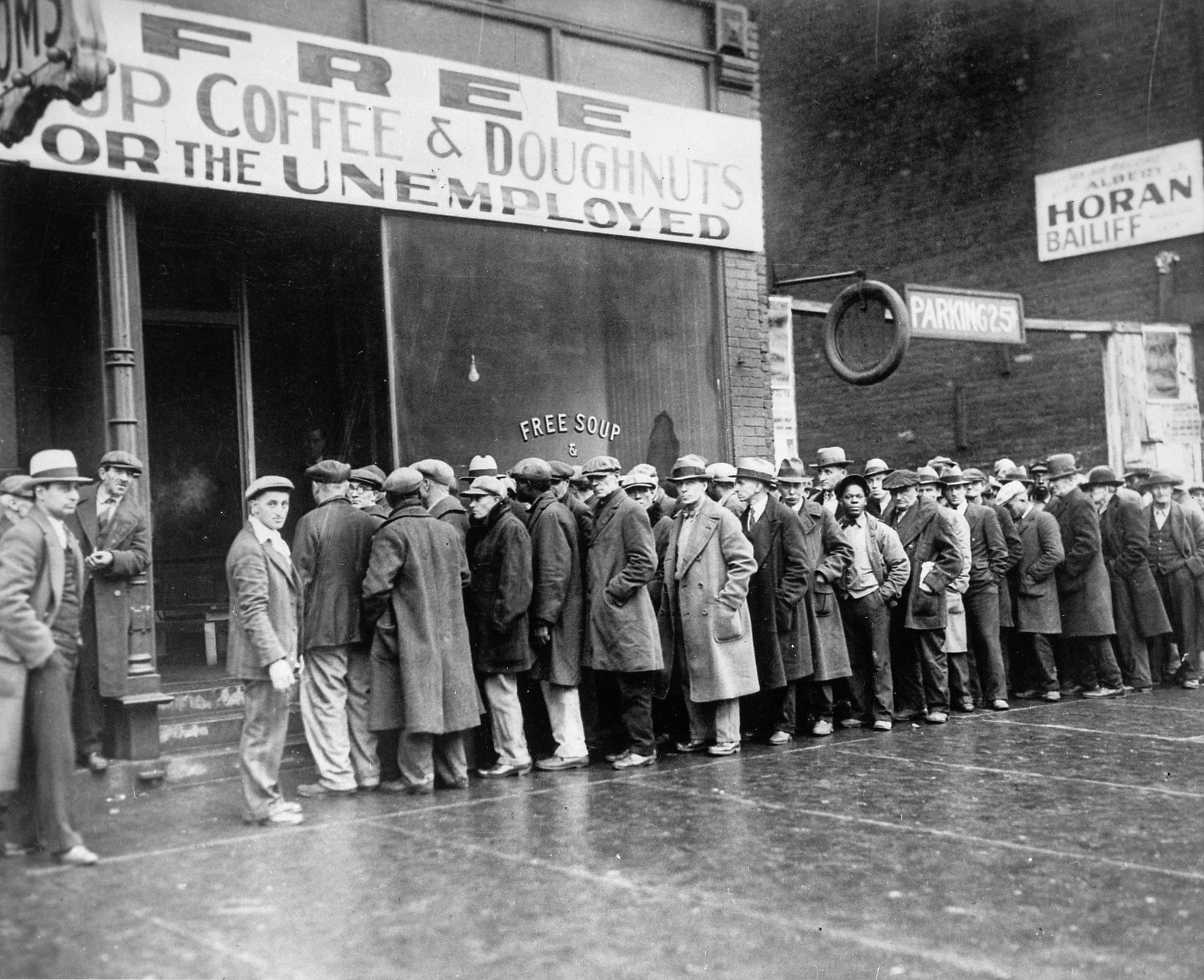
The Great Depression (1929–41) was the longest and deepest economic downturn in U.S. history. Franklin D. Roosevelt’s New DealNew Deal Full Description The series of economic programmes, public works projects, financial reforms, and regulations introduced by President Franklin D. Roosevelt between 1933 and 1939 in response to the Great Depression. The New Deal created the Social Security system, regulated banks and securities markets through the Glass-Steagall Act, built rural infrastructure through the Tennessee Valley Authority, and employed millions through agencies like the Civilian Conservation Corps and the Works Progress Administration. It represented the most significant expansion of the federal government…
-
The Great Depression (1929–39) affected nations differently. By 1933, industrial output had plunged 30–50% in many countries, and unemployment soared into double-digits (Romer 2003). Yet the timing and strength of recovery varied dramatically. For example, Sweden and the United Kingdom were largely back to or above 1929 output levels by the mid‑1930s, whereas the United States and France lagged, and Germany’s rebound was tied to its rearmament policies. This article examines case studies of the United States, the United Kingdom, Germany, France, and Sweden, analyzing how policy choices – abandoning the gold standardGold Standard Full Description:The Gold Standard was the prevailing international…
-
The Federal Reserve was founded in 1913 with the primary goal of stabilizing the banking system and providing an elastic currency. Under the Federal Reserve Act, the system comprised a Board in Washington and 12 regional Reserve Banks, each with its own president and directors. National banks were required to become members (purchasing stock in their Reserve Bank) and hold reserves there; state banks could join voluntarily . Member banks could obtain additional funds by borrowing at the “discount window” of their local Reserve Bank, pledging short-term commercial paper as collateral. This mechanism was intended to let the money supply…
-
The 1930s Great Depression was a cataclysmic economic crisis. By 1932–33 industrial output and trade had collapsed worldwide, unemployment soared (over 20% in the US at its peak) and thousands of banks failed. Traditional “classical” economics – with its faith in self-correcting markets and the gold standardGold Standard Full Description:The Gold Standard was the prevailing international financial architecture prior to the crisis. It required nations to hold gold reserves equivalent to the currency in circulation. While intended to provide stability and trust in trade, it acted as a “golden fetter” during the downturn. Critical Perspective:By tying the hands of policymakers, the Gold…