-

When a British housewife bought a bar of soap in 1905, the label on the box might have shown a tanned African child smiling beside a mound of white suds. When a Frenchman poured a cup of coffee, the poster above his café table might have displayed exotic figures from Africa or Indochina bringing the beans to Europe’s ports. Such images were everywhere, and their message was clear: empire was not only a political system—it was a way of consuming the world. In the early twentieth century, advertising became one of the key cultural technologies of empire. It taught Europeans…
-
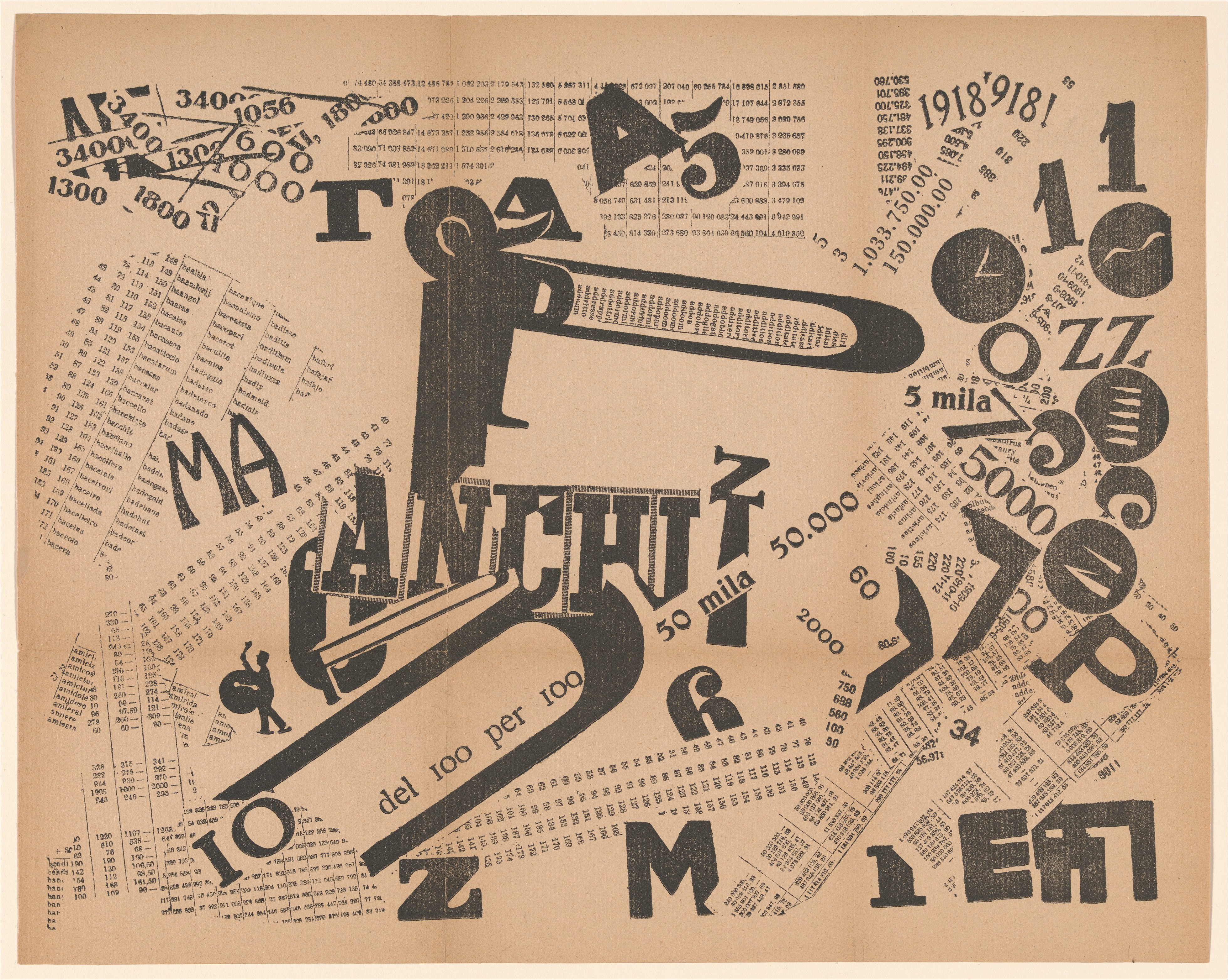
When Filippo Tommaso Marinetti’s Futurist Manifesto exploded across the front page of Le Figaro in February 1909, readers encountered not just new ideas but a new rhythm of language. Words shouted, lines fragmented, punctuation vanished. The manifesto didn’t simply describe modernity—it performed it. In the early twentieth century, artists and writers across Europe discovered that the printed page itself could be a weapon of revolution. Typography, layout, and design became expressions of speed, shock, and rebellion. From the Futurists in Italy to the Dadaists in Zurich, from the Constructivists in Russia to the Bauhaus in Germany, a generation of radicals…
-
When people in the early twentieth century first heard their own voices played back or saw themselves captured on film, it must have felt like magic. For the first time in history, sound and sight could be detached from the human body and replayed at will. Music no longer needed a performer; memory no longer relied on recollection. These new technologies—the phonograph, the camera, and eventually the cinema—did more than record experience; they changed what experience was. They created a culture of mechanical reproduction that reshaped how people felt, remembered, and imagined the world. The Invention of Mechanical Memory Edison…
-
At the dawn of the twentieth century, a new kind of journalism was born—one less interested in Parliament or policy than in people. Its headlines shouted rather than spoke, its photographs peered rather than illustrated, and its purpose was not to inform so much as to fascinate. The tabloid press changed the relationship between the public and the private. It invited readers to look inside other people’s lives and, in doing so, helped create one of the defining features of modern society: celebrity. This is the story of how gossip became news, how fame became a profession, and how mass…
-
In the modern age, no group has been more closely watched, analysed, and marketed to than women. From the moment department stores opened their doors and glossy magazines landed on parlour tables, women became both the chief subjects and targets of a new consumer culture. They were encouraged to see shopping as liberation, appearance as self-expression, and consumption as participation in modern life. But behind this glittering promise lay a complicated reality. The same culture that invited women into the marketplace also confined them within its images. This is the story of how women, fashion, and media reshaped one another—from…
-
In the newspapers of today, it’s not uncommon to see retired generals and security experts calling for increased defense spending and a renewed focus on military readiness, often citing rising global tensions. These debates, echoing through the halls of power, are not new. In fact, they are hauntingly similar to the vexed conversations that dominated British politics in the mid-to-late 1930s, a period when a nation, still scarred by one war, had to confront the terrifying possibility of another. As we explored in our latest podcast episode, the story of British rearmament is far more complex than a simple narrative…
-
To understand the complex dynamics that shaped the modern Middle East, few guides are as insightful as the British historian and author, James Barr. His books, including A Line in the Sand and the one we’ll focus on now, Lords of the Desert, are essential reading for anyone wanting to look behind the curtain of 20th-century geopolitics. Barr, much like the legendary journalist Robert Fisk, has a talent for cutting through official narratives to reveal the raw, often cynical, power struggles that truly drove events. Lords of the Desert picks up this story, charting the fierce, often hidden, rivalry between…
-
Introduction: The Moment That Changed the Subcontinent? On 23 March 1940, the All-India Muslim League adopted a resolution in Lahore that is now widely seen as the foundation stone of Pakistan. Yet the Lahore Resolution itself was marked by careful ambiguity. It did not use the word “Pakistan,” nor did it explicitly call for partition. Instead, it demanded “independent states” in the Muslim-majority areas of British India. This article interrogates whether the Lahore Resolution was a definitive blueprint for sovereign statehood or a strategic bargaining chip in a rapidly polarising colonial context. It traces the evolution of Muhammad Ali Jinnah’s…
-
Introduction The Partition of India in 1947 is often narrated as a binary conflict between Hindus and Muslims, represented by the Indian National Congress and the Muslim League. However, this framing omits a vast spectrum of other voices—religious minorities, regional actors, leftist groups, women, and caste-based movements—that were either marginalized in decision-making or actively opposed the dominant narratives. This article brings those perspectives to the fore, arguing that Partition was not only a communal and political rupture but also a moment of erasure for multiple identities and aspirations that refused to fit the two-nation mould. 1. Sikhs: Between Two Nations, Without…
-
The question of whether the 1947 Partition of India was inevitable or contingent on particular choices remains hotly debated. By mid-1946 the British Empire was intent on leaving India, but could still have guided the transition. Congress leaders had overwhelmingly won the 1946 elections outside Muslim constituencies, and the Cabinet Mission to India (May 1946) had offered a federal plan to keep India united. The Muslim League, however, insisted on a separate Muslim homeland. Widespread communal violence followed, and by early 1947 both Congress and the League saw Partition as the only way forward . In the face of mounting…