
Introduction
On June 25, 1946, just twenty-three days after Italians had voted to abolish the monarchy, the newly elected Constituent Assembly met for the first time in Rome. The venue was the Palazzo Montecitorio, the former Chamber of Deputies that had also housed the fascist parliament. But the mood was different. Among the 556 delegates were 21 women—the first female legislators in Italian history. There were former partisans who had fought against fascism in the mountains; there were former fascists who had switched sides; there were Catholics, Communists, Socialists, Liberals, and Republicans. They had been elected on June 2–3, 1946, on the same days as the referendum, and their task was monumental: to write a constitution for a new republic, from scratch, in the aftermath of a devastating war, a civil war, and a dictatorship that had lasted two decades.
The Constituent Assembly sat for nearly eighteen months, from June 25, 1946, to January 31, 1948. It held 375 public sessions and countless committee meetings. The debates were passionate, often bitter, but ultimately collaborative. The delegates knew that the future of Italian democracy depended on their ability to compromise. The result was the Constitution of the Italian Republic—approved on December 22, 1947, promulgated on December 27, 1947, and effective from January 1, 1948. It is one of the most progressive constitutions in European history, balancing individual rights with social solidarity, central authority with regional autonomy, and parliamentary democracy with popular sovereignty.
This article traces the origins, work, and legacy of the Italian Constituent Assembly. It examines the election of the delegates, the major political forces at play, the key debates (the role of the Church, the rights of workers, the structure of the state, and the limits of executive power), and the final text that emerged. It argues that the Constituent Assembly was a remarkable act of democratic constitution-making, rooted in the anti-fascist consensus, and that the constitution it produced remains the foundation of the Italian Republic.
The Road to the Constituent Assembly
The idea of a Constituent Assembly had been central to the anti-fascist resistance. As early as 1944, the National Liberation Committee (CLN) had called for a new constitutional order that would replace the fascist state and the monarchy. The armistice of 1943, the flight of the king, and the civil war had discredited the old regime. The monarchy, compromised by its association with Mussolini, was on borrowed time. The question was not whether to write a new constitution, but when and by whom.
The decision to hold elections for a Constituent Assembly was made in 1946, as part of the agreement to hold the referendum on the monarchy. On the same days that Italians voted on the monarchy—June 2–3, 1946—they also voted for the 556 members of the Constituent Assembly. The electoral system was proportional representation, with multi-member constituencies. The franchise was extended to all citizens aged 21 and over, including women for the first time.
The election results reflected the balance of power among the anti-fascist parties:
Party/Coalition Seats
Christian Democracy (DC) 207
Italian Socialist Party (PSI) 115
Italian Communist Party (PCI) 104
Italian Republican Party (PRI) 23
National Bloc (Liberals, etc.) 16
Action Party (PdA) 7
Others 84
The Christian Democrats were the largest party, but they did not have a majority. The Socialists and Communists together had 219 seats—slightly more than the DC. This meant that no single party could dictate the constitution. The drafting process would have to be a negotiation among equals.
The assembly included 21 women, a historic first. The most prominent female delegates were Teresa Noce (Communist), Angelina Merlin (Socialist), Lina Merlin (Socialist, no relation), Maria Federici (Christian Democrat), and Laura Lombardo Radice (Communist). These women would play a crucial role in drafting provisions on gender equality, family law, and labor rights.
The First Acts: Electing a Provisional Head of State
The Constituent Assembly’s first task was to elect a provisional head of state. On June 28, 1946, the assembly chose Enrico De Nicola, a liberal jurist from Naples. De Nicola had been a deputy before the fascist era and had served as president of the Chamber of Deputies. He was a moderate, respected by all parties. He served as provisional president until the constitution came into force, at which point he became the first President of the Italian Republic (elected by parliament).
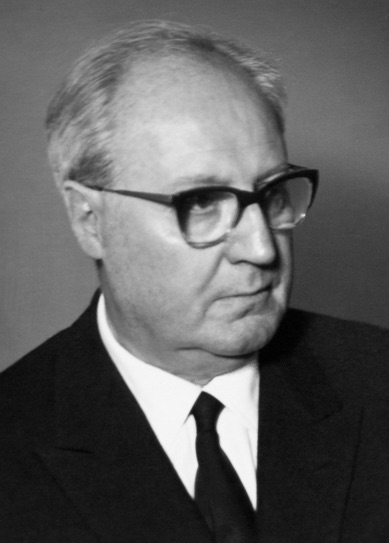
The assembly also elected a president of the assembly: Giuseppe Saragat (pictured above), a Social Democrat who would later become President of the Republic (1964–1971). Saragat’s role was to moderate the debates and ensure that the drafting process stayed on track.
The Drafting Process: The “Committee of 75”
The assembly appointed a special committee, known as the “Committee of 75” (Commissione dei 75), to draft the constitution. The committee was composed of 75 delegates, proportionally representing the political forces in the assembly. Its president was Meuccio Ruini, a liberal jurist and anti-fascist who had been a senator before the war.
The Committee of 75 worked from July 1946 to January 1947. It held hundreds of meetings and heard testimony from experts in constitutional law, economics, and social policy. The committee produced a draft constitution of 152 articles, organized into four parts: Fundamental Principles; Rights and Duties of Citizens; Organization of the Republic; and Constitutional Guarantees.
The draft was then debated in the full assembly from March to December 1947. The debates were intense. The Communists and Socialists wanted a strong emphasis on social rights, economic planning, and the role of labor. The Christian Democrats wanted protections for the Catholic Church, for the family, and for private property. The Liberals wanted a weak state, strong regional autonomy, and minimal economic intervention.
The Key Debates: Compromise and Conflict
The Role of the Catholic Church
The most contentious issue was the relationship between the state and the Catholic Church. The Lateran Treaty of 1929, signed by Mussolini and the Vatican, had made Catholicism the state religion, granted the Church extensive privileges, and established the Vatican as a sovereign state. The anti-fascist parties were divided: the Communists and Socialists wanted to abolish the Lateran Treaty, while the Christian Democrats wanted to preserve it.
The compromise, negotiated by Alcide De Gasperi (DC) and Palmiro Togliatti (PCI), was enshrined in Article 7 of the constitution: the State and the Catholic Church are “independent and sovereign, each within its own sphere,” and their relations are governed by the Lateran Pacts. This was a victory for the Christian Democrats, but it was not a total victory: the constitution also declared that all religious confessions are equally free before the law (Article 8). Catholicism was not explicitly made the state religion in the constitutional text, though the Lateran framework still gave it a privileged position in 1948.
The Rights of Workers
The Communists and Socialists pushed for a strong commitment to labor rights. The constitution, as finally adopted, includes a remarkable Article 1: “Italy is a democratic republic, founded on labor.” This was a compromise: the Communists wanted “founded on the working class”; the Christian Democrats wanted “founded on the family and on labor.” The final wording satisfied neither side fully, but it was a clear break with the fascist past.
Other articles guaranteed the right to work (Article 4), the right to fair wages and annual paid leave (Article 36), the right to social security (Article 38), and the right to strike, exercised “in compliance with the law” (Article 40). The constitution also recognized the right of workers to participate in the management of enterprises, “within the limits established by law” (Article 46)—a provision that was never fully implemented but remained a symbolic commitment.
The Structure of Government
The assembly debated several models of government: a presidential system (like the United States), a parliamentary system (like the United Kingdom), or a semi-presidential system (like France later adopted). The choice fell on a parliamentary system, with a prime minister responsible to parliament, and a president as head of state with largely ceremonial and guarantor powers.
The president, elected by parliament in a joint session, serves a seven-year term. The president can dissolve parliament (after consulting the presiding officers of both chambers), appoint the prime minister, and send laws back to parliament for reconsideration (a suspensive veto that can be overridden by a simple majority). The president is also the commander-in-chief of the armed forces and chairs the Supreme Council of the Judiciary. However, the president’s powers are limited; the real executive power lies with the prime minister and the cabinet, who must maintain the confidence of parliament.
Bicameralism
The parliament is bicameral: the Chamber of Deputies and the Senate have equal powers. This “perfect bicameralism” was a compromise between those who wanted a strong lower house (like the Communists) and those who wanted a conservative upper house (like the Christian Democrats). The result is a system in which both chambers must approve laws, leading to frequent gridlock. (The number of members has changed over time: the Chamber originally had 574 deputies, later reduced; the Senate originally had 237 senators.)
Regionalism and Centralism
Italy had a long history of centralization, dating back to the unification of 1861. The fascist regime had intensified centralization, suppressing regional differences. The Constituent Assembly debated whether to create a federal system, a regional system, or to maintain a unitary state.
The compromise was a “regionalist” system: the constitution created 15 ordinary regions with elected councils and significant powers over local matters (urban planning, agriculture, tourism, and social services). Five regions—Sicily, Sardinia, Friuli-Venezia Giulia, Trentino-Alto Adige, and Valle d’Aosta—were granted “special autonomy” to protect linguistic and cultural minorities. (Trentino-Alto Adige’s special regime was later shaped through implementation and constitutional evolution.) This regional system was not fully implemented until the 1970s, but it was a significant departure from Italy’s centralist past.
The Role of Women: The 21 Constituent Mothers
The 21 women of the Constituent Assembly left an indelible mark on the constitution. They were not a unified bloc—they came from different parties and had different ideologies—but they worked together on issues affecting women and families.
Angela Gotelli (Christian Democrat) and Teresa Noce (Communist) collaborated on provisions protecting working mothers, including the right to maternity leave and job security during pregnancy. Maria Federici (Christian Democrat) and Lina Merlin (Socialist) worked together on provisions for the protection of children and the family. Angelina Merlin (Socialist) later became the lead sponsor of the law closing state-regulated brothels (the Merlin Law of 1958).
The constitution guaranteed equality between men and women in civil and political rights (Article 3), and it declared that women had the same voting rights as men (already established). It also stated that “the law shall establish conditions that make the right to work effective” and that “working women shall have the same rights as workers and, for the same work, the same wages” (Article 37).
The presence of women in the assembly was a symbolic breakthrough. Italy had been a patriarchal society, and the fascist regime had glorified motherhood and domesticity. The Constituent Mothers demonstrated that women could participate in the highest levels of politics. Their example paved the way for future generations of female politicians.
The Final Text: Approval and Promulgation
The final draft of the constitution was approved by the Constituent Assembly on December 22, 1947, by a vote of 453 in favor, 62 against (mostly monarchists and neo-fascists), and 41 abstentions. The text was then promulgated by the provisional head of state, Enrico De Nicola, on December 27, 1947. The constitution came into force on January 1, 1948.
The constitution consists of 139 articles, plus 18 transitional and final provisions. It is divided into three parts: Fundamental Principles (Articles 1–12); Rights and Duties of Citizens (Articles 13–54); and Organization of the Republic (Articles 55–139). The Fundamental Principles include the declaration that Italy is a republic founded on labor, that the state protects the rights of the individual and the community, and that all citizens have equal social dignity without distinction of sex, race, language, religion, or political opinion.
The constitution also includes a remarkable provision (Article 11) that Italy “repudiates war as an instrument of aggression against the freedom of other peoples and as a means for the settlement of international disputes.” This anti-war clause was a direct response to the fascist regime’s militarism and to the devastation of the Second World War.
The Implementation: A Slow Start
The constitution did not immediately transform Italy. Many of its provisions were not implemented for years or even decades. The regional system was not activated until the 1970s. The Constitutional Court, which was created to review the constitutionality of laws, did not begin operating until 1956. The right to work remained aspirational, as unemployment persisted. The guarantee of gender equality was not fully enforced until the 1970s, when laws on divorce, abortion, and family law were reformed.
Nevertheless, the constitution provided a framework for political struggle. It gave the left a legal basis to demand social reforms. It gave the right a legal basis to protect private property and religious freedom. It gave citizens the right to challenge laws in court. The constitution became a living document, interpreted and reinterpreted by the Constitutional Court and by generations of jurists.
The Constituent Assembly in Memory
The Constituent Assembly is remembered as a high point of Italian democracy. For the anti-fascist left, it represents the moment when the resistance movement translated its ideals into law. For the Christian Democrats, it represents the triumph of Catholic social teaching in a pluralist society. For liberals, it represents the restoration of constitutional government after the fascist aberration.
The assembly’s members are remembered as “the founding fathers” (and mothers) of the republic. Their names are inscribed on plaques in the Palazzo Montecitorio. Their debates are studied in law schools and political science departments. Their constitution, though amended several times, remains in force.
But the Constituent Assembly was also a product of its time. It was created by the anti-fascist parties that had fought the resistance. It operated in the shadow of the Cold War, which was already hardening. The exclusion of the neo-fascists and monarchists from the drafting process (they were in the assembly but had little influence) meant that the constitution was not fully consensual. The compromise between the DC and the PCI on the Lateran Treaty, on labor rights, and on regionalism was fragile; it would break down in the 1950s and 1960s, as the Cold War polarized Italian politics.
Nevertheless, the Constituent Assembly’s achievement is remarkable. In less than two years, a group of 556 delegates, many of whom had been enemies during the civil war, produced a constitution that has lasted for more than 75 years. It is a testament to the power of democratic deliberation, to the resilience of Italian institutions, and to the commitment of the anti-fascist generation to a new, democratic Italy.
Conclusion
The Italian Constituent Assembly was a historic act of democratic constitution-making. It brought together Catholics, Communists, Socialists, Liberals, and Republicans in a common project: to write a constitution for a republic that would never again descend into dictatorship. The assembly worked for eighteen months, held 375 public sessions, debated every article, and produced a text that balanced competing principles: liberty and equality, individual rights and social solidarity, central authority and regional autonomy, secularism and religious freedom.
The constitution that emerged is not perfect. Some of its provisions remain aspirational. But it has provided stability and legitimacy to the Italian Republic for more than seven decades. It is the foundation upon which post-war Italy was built.
The Constituent Assembly is also a model of political collaboration. In an era of polarization and populism, the example of the 556 delegates—who set aside their differences to build a common future—is worth remembering. They knew that the future of Italian democracy depended on their ability to compromise. They did not always succeed, but they succeeded enough. The Italian Republic is their legacy.
Further Reading & Sources
· Barile, Paolo. La Costituzione italiana: Storia e commento. Il Mulino, 1995. (Italian language.)
· Bobbio, Norberto. The Future of Democracy: A Defence of the Rules of the Game. Polity Press, 1987.
· Cheli, Enzo. La Costituzione italiana: Guida allo studio. Cedam, 2008. (Italian language.)
· Ginsborg, Paul. A History of Contemporary Italy: Society and Politics, 1943–1988. Penguin, 1990.
· Mammarella, Giuseppe. Italy Since 1945: A Political and Social History. Palgrave Macmillan, 1989.
· Paladin, Livio. Diritto costituzionale. Cedam, 2010. (Italian language.)

Leave a Reply