
Introduction
In the chaos following the Allied invasion of Sicily in July 1943, as the fascist regime collapsed and the Italian state struggled to reassert control, a different kind of rebellion emerged on the island. For nearly eight years, from 1943 to 1951, a diverse coalition of Sicilian landowners, intellectuals, peasants, bandits, and even some Mafiosi sought to break Sicily away from Italy and establish an independent republic. At its peak, the separatist movement controlled large swaths of the island’s interior, staged armed uprisings, and won nearly 9% of the vote in regional elections. The movement was ultimately defeated by a combination of military force, political co-optation, and the grant of special autonomy. But its legacy—and the grievances that fueled it—would persist for decades.
The Sicilian separatist movement is largely forgotten today, overshadowed by the drama of the Italian Civil War, the Cold War, and the economic miracle. Yet it was a significant challenge to the post-war Italian state, drawing on deep-seated grievances: Sicily’s history of foreign domination, its exploitation by mainland governments, its endemic poverty, and the power of organized crime. The movement also intersected with the geopolitics of the Cold War, as the Allies and then the United States weighed the strategic implications of an independent Sicily.
This article traces the origins, course, and collapse of the Sicilian separatist movement. It examines the political leadership of Andrea Finocchiaro Aprile; the armed wing, the Volunteer Army for Sicilian Independence (EVIS) , led by Antonio Canepa; the role of the bandit Salvatore Giuliano, who later became the movement’s most infamous figure; the brutal Portella della Ginestra massacre; and the Italian state’s eventual suppression of the rebellion through a combination of military force, political co-optation, and limited autonomy. It argues that the Sicilian separatist movement was a genuine popular uprising rooted in centuries of exploitation, but that it was ultimately defeated by the same forces—the Christian Democrats, the Mafia, and the Cold War alignment—that shaped post-war Italy.
The Roots of Sicilian Resentment
Sicily has never been entirely content with Italian rule. The island was conquered by the House of Savoy in 1860 during the unification of Italy, a process that many Sicilians experienced not as liberation but as foreign conquest. The new Italian state imposed centralizing policies, conscripted Sicilian youths into mainland armies, and taxed the island heavily while providing little in return. By the early 20th century, Sicily had become a land of poverty, absentee landlordism, and organized crime—the Mafia emerged as a parallel power structure, providing protection and justice where the state failed.
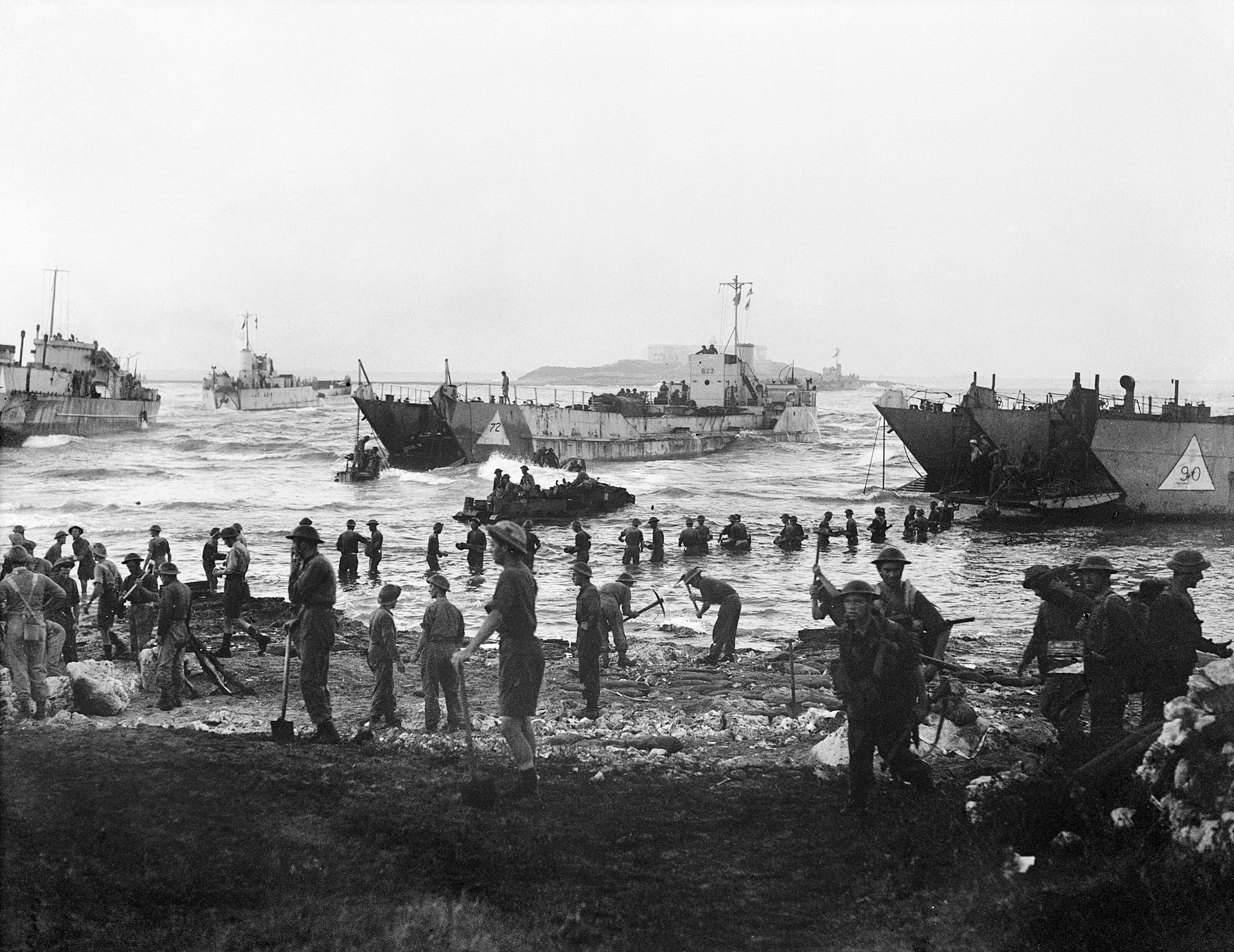
Under fascism, the regime suppressed Sicilian separatism, but the grievances did not disappear. The Allied invasion of Sicily in July 1943—Operation Husky—reopened the question of the island’s status. The Allied Military Government of Occupied Territories (AMGOT) administered Sicily for several months, and some American officials briefly considered the possibility of an independent Sicily under Allied protection. However, the Allies ultimately decided to return Sicily to Italian control, prioritizing a stable, anti-communist Italy over territorial reorganization.
But the window of opportunity had opened. Sicilian separatists, who had been organizing in secret, moved quickly to capitalize on the chaos.
The Founding of the Separatist Movement (1942–1944)
The origins of the post-war separatist movement predate the Allied invasion. In 1942, a group of Sicilian intellectuals, professionals, and landowners formed the Committee for the Independence of Sicily (Comitato per l’Indipendenza della Sicilia, or CIS). The committee was led by Andrea Finocchiaro Aprile, a wealthy landowner and former fascist official who had become disillusioned with Rome. The CIS operated clandestinely during the last years of fascist rule.
Following the Allied invasion, the CIS emerged into the open. In the spring of 1944, the committee transformed itself into the Sicilian Independence Movement (Movimento Indipendentista Siciliano, or MIS). The MIS’s program was simple: Sicily should become an independent republic, with its own parliament, its own currency, and its own foreign policy. The movement had broad support among the Sicilian middle class, which resented mainland taxes and bureaucracy, and among peasants, who hoped that independence would bring land reform.
The MIS also attracted a more dangerous element: armed bandits and Mafiosi, who saw separatism as a way to gain power and immunity from prosecution. The most famous of these was Salvatore Giuliano, a young peasant from the village of Montelepre, near Palermo. Giuliano had killed a carabiniere in 1943 and fled into the mountains, assembling a personal army of several hundred men. He was not a founder of the separatist movement, but he would later become its most notorious military leader.
Armed Phase: The EVIS and the Uprising of 1944–1945
The MIS’s military wing, the Volunteer Army for Sicilian Independence (Esercito Volontario per l’Indipendenza della Sicilia, or EVIS), was formed in 1944. Its commander was Antonio Canepa, a professor of philosophy who had fought in the Spanish Civil War. Canepa was a genuine nationalist, inspired by the Irish Republican Army and other anti-colonial movements. He sought to transform the EVIS into a disciplined guerrilla force, capable of challenging the Italian state.
The armed phase of the separatist movement peaked between late 1944 and mid-1945. The EVIS attacked carabinieri barracks, ambushed police patrols, and seized control of several towns in the province of Palermo. Separatist flags flew over villages in the mountains behind Palermo. The Italian state, still recovering from the war and the civil war, was slow to respond.
The turning point came in June 1945. In a shootout with Italian security forces in the town of Randazzo, Antonio Canepa was killed. His death was a severe blow to the EVIS; without his political leadership, the armed wing became increasingly dominated by bandits and local strongmen, including Salvatore Giuliano. The Italian state, now reinforced, began a systematic counterinsurgency campaign. By the end of 1945, the EVIS had been largely suppressed, though sporadic violence continued.
Salvatore Giuliano: Bandit, Separatist, Fugitive
Salvatore Giuliano is the most enigmatic figure of the Sicilian separatist movement. To his supporters, he was a Robin Hood-like hero who stole from the rich and gave to the poor, a defender of Sicilian honor against mainland oppression. To his enemies, he was a common criminal, a Mafia killer, and a murderer of innocents. The truth lies somewhere in between.
Giuliano was born in 1922 in Montelepre. He had little formal education. In 1943, he killed a carabiniere who was trying to arrest him for smuggling, and he fled into the mountains. He assembled a band of fellow outlaws, and with the chaos of the Allied invasion, his band grew into a small army. He claimed to be fighting for Sicilian independence, but his actions were often indistinguishable from banditry: he extorted money from landowners, kidnapped wealthy individuals for ransom, and assassinated rivals and informers.
Giuliano’s alliance with the MIS was always uneasy. The movement’s leaders, men like Finocchiaro Aprile, were respectable landowners who were embarrassed by Giuliano’s violence. Giuliano, for his part, resented the politicians who used him and then abandoned him. By 1946, the MIS and the EVIS had formally split; Giuliano continued his guerrilla campaign alone, though he still claimed to be fighting for independence.
The Italian government launched a massive manhunt for Giuliano, but he evaded capture, moving between safe houses provided by peasants and Mafiosi. His legend grew. In the impoverished villages of western Sicily, Giuliano was celebrated as a folk hero. Songs were written about him; his photograph was sold in the streets. He was the “King of Montelepre.”
The Political Breakthrough: The 1947 Regional Election
Despite the suppression of the armed insurrection, the political wing of the separatist movement continued to grow. In the 1947 Sicilian regional election—the first held under the new autonomy statute—the MIS ran a slate of candidates. The results were striking: the MIS won 8.8% of the vote and several seats in the Sicilian Regional Assembly. The party had become a significant political force, capable of influencing the balance of power on the island.
The election demonstrated that separatism was not merely a fringe movement. It had genuine popular support, particularly among peasants and the urban poor who had seen little improvement in their living conditions since the war. The MIS’s success alarmed the Italian government, which feared that a strong separatist showing could lead to renewed violence or even foreign intervention.
The Portella della Ginestra Massacre (May 1, 1947)
The turning point of the separatist movement—and the event that sealed Giuliano’s reputation as a villain—was the Portella della Ginestra massacre. On May 1, 1947, a crowd of peasants gathered at Portella della Ginestra, a mountain pass near Palermo, to celebrate May Day, a traditional left-wing holiday. The demonstration was organized by the Italian Communist Party and the Socialist Party, which were demanding land reform.
As the crowd of several hundred peasants listened to speeches, Giuliano’s men opened fire from the surrounding hills. They used rifles, pistols, and a light machine gun. Eleven peasants were killed instantly; three more died later from their wounds; and twenty-seven were wounded. The victims included women and children. The massacre was a brutal act of terrorism, designed to intimidate the left and to send a message to the Italian state.
The massacre shocked Italy. The government immediately blamed Giuliano and the separatists. But the truth was more complicated. Subsequent investigations revealed that Giuliano had acted with the complicity of the Mafia and, possibly, of elements within the Italian security forces. The massacre was not simply an act of banditry; it was a political assassination, aimed at destroying the peasant movement in western Sicily.
The Portella della Ginestra massacre destroyed any remaining sympathy for the separatist movement. The MIS condemned the massacre, but it was too late. The Italian government, which had been considering further concessions to Sicily, now had a free hand to crush the remnants of the insurrection. The massacre also marked the beginning of Giuliano’s decline. He became a fugitive, hunted by the police and abandoned by his former allies.
The Betrayal and Death of Salvatore Giuliano (1950)
In 1950, the Italian state finally caught up with Salvatore Giuliano. He was betrayed by one of his lieutenants, Gaspare Pisciotta, who had been arrested and offered a reduced sentence in exchange for information. On July 5, 1950, Pisciotta led the carabinieri to a house in Castelvetrano, where Giuliano was hiding. In the early morning hours, Giuliano was shot dead—according to the official version, in a shootout with the police. But Pisciotta later claimed that he had killed Giuliano himself, on orders from the Mafia and Christian Democratic politicians who wanted Giuliano silenced.
Giuliano’s body was displayed in the streets of Montelepre, where thousands of peasants filed past to pay their respects. His death marked the effective end of armed separatism, though the movement’s political remnants continued into 1951. Pisciotta was tried and convicted for his role in the Portella della Ginestra massacre; he died in prison in 1954, poisoned—it was rumored—by the Mafia.
The Political Resolution: Sicilian Autonomy (1946)
While the armed insurrection was being suppressed, the political wing of the separatist movement achieved a partial victory. In 1946, the Italian Constituent Assembly, which was drafting the new republican constitution, debated the status of Sicily. The Christian Democrats, eager to defuse separatism, supported a form of limited autonomy. The Communist Party, which had strong support in Sicily, also favored autonomy as a way to protect peasants’ interests.
The result was the Sicilian Statute of Autonomy (Statuto speciale per la Sicilia), approved by royal decree on May 15, 1946, and incorporated into the republican constitution of 1948. Sicily became one of five Italian regions with “special autonomy.” The statute granted Sicily its own parliament (the Sicilian Regional Assembly), its own government (the Regional Junta), and significant powers over agriculture, tourism, public works, and cultural heritage. The island also received a special financial arrangement: it kept a larger share of taxes collected on the island.
The autonomy statute was a compromise. It did not grant independence, and it left many powers—defense, foreign policy, justice, and most taxation—in the hands of the Italian state. But it was enough to satisfy the moderate separatists, who abandoned the MIS and entered the mainstream political system. Finocchiaro Aprile, the MIS leader, was elected to the Italian Senate as a Christian Democrat. The separatist movement was co-opted.
The Mafia, the State, and the Separatist Legacy
The Sicilian separatist movement cannot be understood without reference to the Mafia. The Mafia had deep roots in western Sicily, and it had long been opposed to strong state authority. The separatist insurrection offered the Mafia an opportunity to weaken the Italian state and to carve out zones of impunity. Mafiosi provided Giuliano with safe houses, weapons, and intelligence. In return, Giuliano left the Mafia alone—he did not attack their rackets or inform on their activities.
The relationship between the Mafia and the Italian state was more complex. Some Christian Democratic politicians, particularly in Sicily, were also Mafia allies. They used the Mafia to deliver votes, to suppress peasant protests, and to maintain social order. The Portella della Ginestra massacre, which was carried out by Giuliano with Mafia complicity, was also, according to some investigators, sanctioned by politicians who feared the growth of the Communist Party in the countryside.
The legacy of the separatist movement is still visible in Sicily today. The island’s special autonomy, granted in 1946, has given Sicilian politicians significant power, but it has also been a vehicle for corruption and clientelism. The Sicilian Regional Assembly has been plagued by scandals, and the Mafia has infiltrated its institutions. The movement’s promise of land reform and social justice was never fulfilled; the peasants who followed Giuliano remained poor.
In recent decades, a new, peaceful separatist movement has emerged in Sicily. Groups like the Sicilian National Front (Fronte Nazionale Siciliano) advocate for independence, but they have little popular support. The dream of a Sicilian republic, raised by the CIS in 1942, has faded into history.
Memory and Historiography
The Sicilian separatist movement has been remembered in different ways. For the Italian state, the movement was a criminal insurrection, led by bandits and Mafiosi, that threatened national unity. The official narrative emphasizes the brutality of the Portella della Ginestra massacre and the treachery of Giuliano. The state’s victory is celebrated as a triumph of law and order.
For Sicilian nationalists, the movement is remembered as a noble but failed attempt to liberate the island from mainland oppression. Giuliano, despite his crimes, is sometimes romanticized as a freedom fighter. The autonomy statute is seen as a partial victory, but not enough. The grievances that fueled the movement—economic exploitation, political marginalization, and cultural erasure—persist.
Historians have taken a more nuanced view. They emphasize the complexity of the movement: its mix of genuine popular grievances, elite manipulation, Mafia collusion, and Cold War geopolitics. They note that the movement was defeated not only by force but also by co-optation—the autonomy statute gave Sicilian elites a stake in the Italian state, and they abandoned the separatist cause.
The role of the United States remains debated. Some scholars have suggested that American officials briefly considered supporting an independent Sicily, but the evidence is limited. What is clear is that the Allies tolerated the separatist movement in its early stages, then suppressed it when it threatened Italian stability. The United States ultimately prioritized a unified, anti-communist Italy over any territorial reorganization.
Conclusion
The Sicilian separatist movement was a genuine popular uprising rooted in centuries of exploitation and neglect. It drew on the island’s history of foreign domination, its poverty, and its deep distrust of mainland Italian rule. The movement’s armed wing, led first by Antonio Canepa and later by the bandit Salvatore Giuliano, waged a guerrilla war against the Italian state. The movement’s political wing won nearly 9% of the vote in the 1947 regional election. But the movement was undone by its own internal divisions, by the brutality of the Portella della Ginestra massacre, and by the Italian state’s combination of military force and political co-optation.
The autonomy statute of 1946 defused the separatist threat. Sicily remained part of Italy, but with a degree of self-government that it had never enjoyed before. The movement’s legacy is ambiguous: it failed to achieve independence, but it won significant concessions. The grievances that fueled it—economic inequality, political marginalization, and cultural resentment—have not disappeared. The movement’s history is a reminder that Italy’s unification was never fully accepted by all of its citizens, and that the dream of an independent Sicily, however faded, has not entirely died.
Further Reading & Sources
· Dickie, John. Cosa Nostra: A History of the Sicilian Mafia. Hodder & Stoughton, 2004.
· Duggan, Christopher. A Concise History of Italy. Oxford University Press, 2015.
· Ginsborg, Paul. A History of Contemporary Italy: Society and Politics, 1943–1988. Penguin, 1990.
· Mack Smith, Denis. A History of Sicily: Modern Sicily After 1713. Chatto & Windus, 1968.
· Servadio, Gaia. Mafioso: A History of the Mafia from Its Origins to the Present Day. Secker & Warburg, 1976.
· Renda, Francesco. Storia della Sicilia dal 1860 al 1970. Sellerio, 1984. (Italian language.)
· Lupo, Salvatore. History of the Mafia. Columbia University Press, 2009.

Leave a Reply