
Introduction
On December 12, 1969, at 4:37 PM, a bomb packed with approximately seven kilograms of TNT exploded inside the Banca Nazionale dell’Agricoltura in Milan’s Piazza Fontana. The blast kille seventeen people, wounded eighty-eight, and reduced the bank’s interior to a mangled wreck of steel and shattered marble. The same afternoon, another bomb exploded at a bank in Rome, and a third device—found unexploded near the Tomb of the Unknown Soldier—was defused just in time. The massacre was not the first act of political violence in post-war Italy, but it was the opening salvo of what would become known as the anni di piombo—the Years of Lead. Over the following fifteen years, thousands of violent incidents, including bombings, assassinations, and kidnappings, claimed hundreds of lives and traumatized the Italian Republic to its core.
The Years of Lead were a period of intense political violence that set Italy apart from most other Western European democracies. Italy witnessed failed coup attempts, the kidnapping and murder of a former prime minister, the massacre of civilians in train stations and piazzas, and the systematic assassination of magistrates, journalists, and police officers. The violence came from all directions: far-left groups like the Red Brigades (Brigate Rosse) sought to overthrow the state through armed struggle, while neofascist organizations, operating within a shadowy “strategy of tension,” detonated bombs in public spaces to terrorize the population and, according to many investigators, to push the country toward authoritarian reaction.
This article traces the origins, course, and contested legacy of the Years of Lead. It examines the role of the Cold War, the student protests of 1968, the “Hot Autumn” labor strikes of 1969, and the secret networks—including NATO’s covert Operation Gladio—that have been alleged to have manipulated violence for political ends. It argues that the Years of Lead were not merely a criminal phenomenon but a violent expression of unresolved tensions that had been simmering since the civil war and the blocked transition of the 1940s.
The Origins: A Perfect Storm of Social Conflict
The Years of Lead did not emerge from a vacuum. By the late 1960s, Italy was a country transformed—and deeply unsettled. The economic miracle had created a new working class in the factories of the north, a new middle class of white-collar workers, and a new generation of university students who had never known fascism. But the miracle had also produced inequality, alienation, and resentment. The south remained poor. The factories were harsh. The political system, dominated by the Christian Democrats, seemed unresponsive and corrupt.
1968: The Global Year of Protest
In 1968, student protests erupted across the Western world—in Paris, Berlin, Berkeley, and Rome. Italian students, like their counterparts elsewhere, demanded educational reform, an end to the Vietnam War, and a break with the authoritarian structures of the university. But in Italy, the student movement quickly merged with a much larger and more powerful force: the labor movement.
The “Hot Autumn” (Autunno Caldo) of 1969 was a wave of strikes and factory occupations that swept through the industrial north. Workers demanded higher wages, shorter hours, better conditions, and the right to union representation. The strikes were massive: in September 1969, over five million workers walked off the job, shutting down factories across the country. The protests were often violent; police clashed with demonstrators, and the old order seemed to be crumbling.
The Hot Autumn succeeded. In 1970, the Italian parliament passed the Workers’ Statute (Statuto dei Lavoratori), which guaranteed basic labor rights: the right to organize, the right to strike, and protection from unfair dismissal. Wages rose significantly. Working conditions improved. But the victory of the labor movement also radicalized a fringe of the left. For some militants, the strikes and protests were not enough. They believed that the Italian state—corrupt, clientelistic, and tied to American imperialism—could not be reformed. It had to be destroyed.
The Birth of Armed Struggle
The first armed groups emerged in the late 1960s. The October 22 Group, formed in 1969, carried out a series of robberies and kidnappings before being crushed by police. Another organization, Lotta Continua (Continuous Struggle), was primarily a mass movement that combined political mobilization with sporadic violence, rather than a clandestine armed group. But the most infamous organization was still to come. In 1970, a clandestine group was formed in Milan. It called itself the Red Brigades.
The Red Brigades: The Face of Far-Left Terrorism
The Red Brigades (Brigate Rosse, or BR) were the most feared and effective terrorist group in Italian history. Founded by Renato Curcio, a sociology student, and Margherita Cagol, his wife, the BR were Marxist–Leninist revolutionaries who believed that Italy was on the verge of a revolutionary crisis. Their goal was to destabilize the state through armed struggle, creating the conditions for a Communist uprising.
The BR’s strategy was “attacking the heart of the state.” They targeted magistrates, police officers, journalists, industrial managers, and Christian Democratic politicians—the “servants of the imperialist state.” Their tactics included kneecapping (shooting victims in the legs to disable them), kidnapping, and assassination. In the early 1970s, the BR carried out a series of high-profile kidnappings, including that of judge Mario Sossi (1974) and industrialist Giorgio Corsi (1975).
The BR’s operational style was disciplined and secretive. They operated in cells, with members knowing only a handful of comrades. Their communiqués, issued after each action, were written in a dense, jargon-filled language that mixed Marxist theory with revolutionary romanticism. The BR saw themselves as soldiers in a war, and they acted accordingly.
Prima Linea and Other Far-Left Groups
The Red Brigades were not alone. Prima Linea (Front Line), formed in 1976 by former members of Lotta Continua, was a far-left armed organization that carried out assassinations and armed robberies. The Nuclei Armati Proletari (NAP, Armed Proletarian Nuclei), active from 1974 to 1976, targeted magistrates and prison officials. Smaller groups—the Communist Combatant Units, the Armed Proletarians for Communism—proliferated in the late 1970s, each with its own ideological nuance and tactical preference.
But the Red Brigades remained the most dangerous. By the late 1970s, they had several hundred active members and thousands of supporters. They had established cells in Rome, Milan, Turin, Genoa, and Venice. They had stockpiled weapons, forged documents, and built a clandestine infrastructure that proved almost impossible for the police to penetrate.
The Strategy of Tension and Far-Right Terrorism
While the Red Brigades captured the headlines, a different kind of violence was unfolding in the shadows: the “strategy of tension” (strategia della tensione). This was a campaign of neofascist terrorism—bombings, massacres, and coup attempts—allegedly designed to create an atmosphere of fear and chaos that would push the Italian public to demand authoritarian solutions. According to this interpretation, the strategy’s goal was to block the left’s advance, prevent a Communist electoral victory, and preserve the existing power structure.
The Piazza Fontana bombing of December 12, 1969, was the opening salvo of this strategy. Seventeen people were killed, and eighty-eight were wounded. The same afternoon, bombs exploded in Rome, and a third device was found unexploded near the Tomb of the Unknown Soldier. The attack was carried out by Ordine Nuovo (New Order), a neofascist paramilitary group. Subsequent investigations suggested ties between the group and Italian intelligence services, though the full chain of responsibility remains contested.
The immediate aftermath of the bombing revealed suspicions of state complicity that would persist throughout the Years of Lead. Police arrested dozens of anarchists and leftists, including Giuseppe Pinelli, a railway worker and anarchist activist. Pinelli was interrogated for days. On December 15, he “fell” from the fourth-floor window of the Milan police headquarters, dying instantly. The official explanation—that Pinelli had committed suicide—was widely disbelieved. The case became a cause célèbre for the left, fueling suspicion that elements within the state were involved in the violence.
The Massacres Continue
The pattern repeated throughout the 1970s. In May 1972, a car bomb killed three police officers in Peteano, near the Yugoslav border. In May 1974, a bomb exploded during an anti-fascist rally in Brescia’s Piazza della Loggia, killing eight people and wounding 102. In August 1974, a bomb on the Italicus train between Florence and Bologna killed twelve. In August 1980, a bomb planted in the waiting room of the Bologna railway station killed eighty-five people and wounded more than 200—the deadliest terrorist attack in post-war Italian history.
In each case, the bombers were neofascists, often with alleged ties to Italian military intelligence. Investigations have established the responsibility of specific neofascist groups for these massacres, but the question of whether they acted alone or with state support remains a subject of judicial and historical debate.
Operation Gladio: NATO’s Secret Army
In 1990, Italian Prime Minister Giulio Andreotti made a stunning confession to the Italian Senate: for nearly forty years, a secret NATO stay-behind army—code-named Gladio—had operated in Italy. Gladio had been established in the early 1950s, with the support of the CIA and British intelligence, to conduct resistance and guerrilla warfare in the event of a Soviet invasion of Western Europe. It consisted of 622 members, recruited from the military and intelligence services, and it maintained secret arms caches across the country.
But Gladio’s role in domestic terrorism has been the subject of intense controversy. Some investigators and magistrates have alleged that Gladio units were also involved in the strategy of tension—carrying out false-flag operations, bombing civilians, and then blaming the left. A parliamentary commission in the 1990s concluded that Gladio had not engaged in terrorism, but it acknowledged that some of its members had “deviated” from their official mission. No definitive proof that Gladio as an organization orchestrated domestic terrorism has been established, but the revelation of its existence confirmed for many Italians that the Cold War had deeply corrupted the republic.
For many Italians, however, the discovery of Gladio remains a source of legitimate suspicion, even if direct operational links to specific massacres have not been proven.
The Moro Kidnapping: The Apogee of the Years of Lead
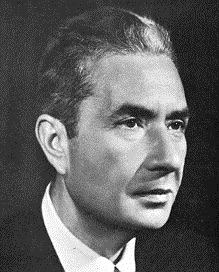
On the morning of March 16, 1978, Aldo Moro, the former prime minister and the president of the Christian Democratic party, was being driven through Rome toward the parliament building. A new government, led by Giulio Andreotti, was about to face a confidence vote—and that government relied on the external support of the Italian Communist Party, a historic breakthrough known as the “historic compromise.”
As Moro’s car turned onto Via Fani, a group of Red Brigades terrorists emerged from the shadows. They fired automatic weapons, killing all five of Moro’s bodyguards, dragged the elderly statesman from his car, and sped away. The kidnapping was a masterstroke of tactical planning. The BR had struck at the heart of the state, on the very day the historic compromise was to be sealed.
For fifty-four days, Italy held its breath. The Red Brigades issued communiqués demanding the release of imprisoned comrades in exchange for Moro’s life. They subjected Moro to a “people’s trial,” forcing him to write letters to his family, his party colleagues, and the Pope. The letters were heartbreaking: Moro, a devout Catholic and a sophisticated politician, begged the state to negotiate.
But the state refused. The Christian Democratic party, led by Andreotti and supported by the PCI, adhered to a policy of “state reason”—no negotiations with terrorists. The decision was agonizing. It meant sacrificing Moro to preserve the principle that the state could not bargain with armed groups.
On May 9, 1978, Moro’s body was found in the trunk of a red Renault 4 parked in Via Caetani, midway between the headquarters of the Christian Democratic and Communist parties. He had been shot eleven times. The Red Brigades had murdered him.
The Moro kidnapping was a trauma from which Italy has never fully recovered. President Sandro Pertini, a left-wing socialist who had fought in the resistance, said at the funeral of a murdered trade unionist: “It is not the President of the Republic speaking, but comrade Pertini. I knew the real Red Brigades: they fought with me against the fascists, not against democrats. For shame!”
The Decline of the Red Brigades and the End of the Years of Lead
The Moro murder was a pyrrhic victory for the Red Brigades. The assassination of a beloved, moderate statesman—a man who had sought to bring the Communists into government—alienated much of the BR’s remaining support. The police, meanwhile, had learned from their mistakes. In the late 1970s and early 1980s, a new generation of magistrates, led by Carlo Caselli and Giancarlo Caselli, developed sophisticated investigative techniques. They recruited “repentant” terrorists—former BR members who agreed to cooperate with the state in exchange for reduced sentences.
The most famous “repentant” was Patrizio Peci, a BR leader who began cooperating in 1980. His testimony led to dozens of arrests and the dismantling of the BR’s organizational structure. In 1981, the police captured Antonio Savasta, another BR leader, who also turned state’s evidence. By 1982, the BR’s ability to carry out major operations had been shattered.
The decline of the BR did not, however, bring an end to political violence. The Bologna railway station massacre in August 1980—the deadliest single attack of the Years of Lead—demonstrated that neofascist terrorism was still active. In December 1984, a bomb on the Rapido 904 train between Florence and Bologna killed sixteen people and wounded nearly 270. The attack was carried out by the Sicilian Mafia in collaboration with neofascists, as part of a plot to destabilize the government.
By the mid-1980s, however, the wave of political violence had subsided. The Cold War was winding down, the Italian Communist Party had abandoned armed struggle, and the state had developed effective counterterrorism capabilities. The last major BR operation occurred in 1988; the group formally disbanded in 1989. The Years of Lead were over.
The Toll and the Legacy
The human cost of the Years of Lead was staggering. According to the most reliable datasets, between 1969 and 1988 approximately 428 people were killed in political violence, and thousands more were wounded. The dead included judges, police officers, journalists, industrial managers, politicians, and ordinary citizens caught in bomb blasts. The violence left deep psychological scars on the Italian collective consciousness.
But the legacy of the Years of Lead is not only measured in bodies. The period also revealed the fragility of Italian democracy and the extent to which the Cold War had corrupted the republic. The discovery of Operation Gladio and the involvement of Italian intelligence services in the strategy of tension—alleged by magistrates and denied by the state—confirmed the suspicions of the left: that elements within the state had not merely failed to prevent terrorism but had, in some cases, actively participated in it.
The memory of the Years of Lead remains bitterly contested. For the right, the period is often reduced to a narrative of “Red terrorism”—a story of communist fanatics who murdered innocent people. For the left, the emphasis is on the “strategy of tension”—a narrative of state-sponsored neofascist violence designed to block social progress. The truth, as is often the case, lies somewhere in between: both far-left and far-right groups committed atrocities, and both were aided, in different ways, by the structures of the Cold War state.
In recent years, Italian courts have continued to grapple with the legacy of the Years of Lead. In 2001, three neofascists were sentenced to life imprisonment for the Piazza Fontana bombing. In 2023, the government of Prime Minister Giorgia Meloni—whose party, Brothers of Italy, has neofascist origins—faced criticism for failing to unequivocally define the Bologna massacre as a neofascist attack. The past, it seems, is not yet past.
Conclusion
The Years of Lead were the dark heart of the Italian Republic. They were the product of unresolved tensions from the civil war, the blocked transition of the 1940s, and the social upheaval of the economic miracle. They were also the product of the Cold War: a global conflict that played out in the streets of Milan, Rome, and Bologna, as the United States and the Soviet Union battled for influence through proxies and secret armies.
The Years of Lead left no winners. The Red Brigades were defeated, but their victims’ families still mourn. The strategy of tension failed to prevent the left’s advance—the Italian Communist Party remained a powerful force into the 1980s—but it poisoned the well of Italian politics. The state survived, but it emerged scarred and discredited.
Today, the anni di piombo are a memory—but a living one. The monuments to the victims, the plaques on the walls, the annual commemorations—all are reminders of a time when Italy came close to tearing itself apart. The Years of Lead are a warning: that democracy is fragile, that violence begets violence, and that the ghosts of the past do not easily fade away.
Further Reading & Sources
· Drake, Richard. The Aldo Moro Murder Case. Harvard University Press, 1995.
· Foot, John. The Archipelago: Italy Since 1945. Bloomsbury, 2018.
· Ganser, Daniele. NATO’s Secret Armies: Operation Gladio and Terrorism in Western Europe. Routledge, 2005.
· Moss, David. The Politics of Left-Wing Violence in Italy, 1969–85. Macmillan, 1989.
· Weinberg, Leonard. The Transformation of Italian Communism. Transaction Publishers, 1995.
· Willan, Philip. Puppetmasters: The Political Use of Terrorism in Italy. iUniverse, 2002.
Listen & Learn: Related Podcast Collections
Explore these curated episode collections to go deeper on the history behind this article:

Leave a Reply