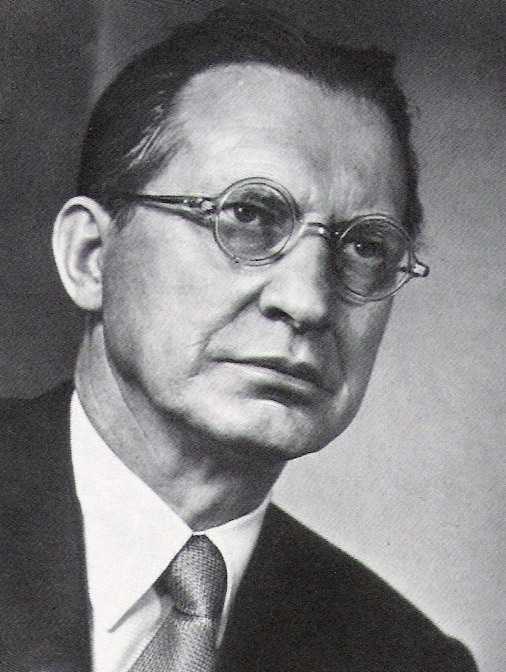

On April 18, 1948, Italians went to the polls in what was arguably the most consequential election in the country’s history. The stakes were widely perceived as extremely high. On one side stood the Christian Democracy (Democrazia Cristiana, DC), a centrist, Catholic-backed party led by Alcide De Gasperi, (pictured above) the prime minister who had steered Italy through the post-war transition. On the other side stood the Popular Democratic Front (Fronte Democratico Popolare), a coalition of the Italian Communist Party (PCI) and the Italian Socialist Party (PSI), led by the charismatic communist leader Palmiro Togliatti. Many contemporary observers believed that a victory for the left would bring Italy into the Soviet orbit—a seismic shift in the Cold War balance of power.
The campaign was heavily asymmetric. The United States, determined to keep Italy in the Western camp, intervened through funding, propaganda, and diplomatic pressure. The Vatican mobilized the Catholic Church, warning Italians against supporting communism and using its vast organizational network to back the DC. Italian Americans, including Frank Sinatra, made radio appeals urging their relatives in Italy to vote against the left. The campaign was marked by red-baiting, fear-mongering, and, in some cases, violence.
The result was a landslide for the Christian Democrats. They won 48.5% of the vote and an absolute majority in parliament. The Popular Democratic Front won only 31%. The Communists and Socialists were relegated to opposition, where they would remain for decades. Italy was firmly anchored in the Western bloc, joining NATO the following year. The 1948 election set the pattern for Italian politics for the next 40 years: Christian Democratic dominance, communist opposition, and a political system defined by anti-communism.
This article examines the 1948 Italian election: the candidates, the campaigns, the foreign intervention, and the consequences. It argues that the election was a turning point in Italian history, a moment when the Cold War came home and when Italy’s post-war political identity was forged.
The Road to 1948: Italy Between East and West
The 1948 election did not come out of nowhere. It was the culmination of years of political struggle, economic crisis, and Cold War polarization. Italy in the late 1940s was a country in flux. The monarchy had been abolished in 1946, replaced by a republic. A Constituent Assembly was drafting a new constitution, balancing Christian Democratic, Communist, and Socialist principles. The economy was in ruins, and the Marshall Plan had just begun to deliver aid. The winter of 1946–1947 had brought hunger and unrest.
The post-war Italian governments had been coalitions of anti-fascist parties, including the DC, the PCI, and the PSI. This “national unity” coalition had governed Italy since 1944, first under the monarchy and then under the republic. But the coalition was fracturing. The Cold War was hardening, and the United States made clear that it would not tolerate Communist participation in Western European governments. In May 1947, De Gasperi, under intense American pressure, expelled the Communists and Socialists from his cabinet. The left went into opposition, and the campaign for the 1948 election began.
The Communist Party was the largest in the West. Led by Palmiro Togliatti, a former Comintern official who had returned from exile in Moscow in 1944, the PCI had deep roots in the Italian working class. It had played a leading role in the resistance against fascism, and it commanded the loyalty of millions of workers, peasants, and intellectuals. The PCI’s message was simple: the party would complete the anti-fascist revolution, redistribute land, nationalize industry, and break Italy’s dependence on American capitalism. The party was also closely aligned with the Soviet Union, though Togliatti insisted that the PCI sought an “Italian road to socialism” that respected democratic institutions.
The Socialist Party, led by Pietro Nenni, was divided. Some socialists favored an alliance with the Communists; others favored a break. In 1947, the party’s right wing, led by Giuseppe Saragat, split off to form the Italian Democratic Socialist Party (PSDI), which aligned with the DC. The remaining socialists, under Nenni, formed the Popular Democratic Front with the Communists. The alliance was uneasy, but it represented a formidable electoral force.
The Christian Democrats were the largest party in the Constituent Assembly, with 207 of 556 seats. Led by De Gasperi, a devout Catholic from Trentino (a former Austrian territory), the DC was a centrist party that drew support from the Catholic Church, the middle class, and the peasantry. The DC’s platform combined anti-communism with social reform: it supported the Marshall Plan, NATO, and European integration, but also advocated for land reform, social welfare, and labor rights. The DC was not a monolithic party; it contained factions ranging from conservative monarchists to progressive Catholics. But it was united by one overriding goal: keeping the Communists out of power.
The Stakes: A Cold War Showdown
The 1948 election was not just about Italy; it was about the global balance of power. In February 1948, the Communist Party of Czechoslovakia, with Soviet backing, had seized power in a coup. The “Czech coup” sent shockwaves through the West, convincing many that Stalin was on the march. If Italy, with its strategic position in the Mediterranean, its industrial base, and its large Communist Party, also fell to the left, the consequences would be catastrophic for the United States and its allies.
A Communist victory in Italy would likely mean the end of the Marshall Plan for Italy, as the US Congress had already signaled that it would not send aid to Communist-led governments. It would mean Italy’s withdrawal from the emerging Western alliance, and possibly its alignment with the Soviet bloc. It would give the Soviet Union access to Italian ports, airfields, and industrial capacity. It would threaten France, which had its own large Communist Party, and could tip the balance in Greece, where a civil war was raging between Communist and anti-Communist forces. In short, many Western policymakers believed that a Communist Italy would be a strategic disaster.
The United States was determined to prevent this outcome. The Truman administration had already committed to the policy of containment, articulated in the Truman Doctrine (1947), which promised American support for “free peoples” resisting communist subjugation. Italy was a test case. If containment failed in Italy, it might fail everywhere.
The American Intervention: Dollars, Propaganda, and Covert Action
The American intervention in the 1948 Italian election was massive, unprecedented, and, for decades, secret. The United States used every tool at its disposal: economic aid, propaganda, diplomatic pressure, and covert operations. The goal was not just to help the Christian Democrats win but to ensure that the Communists lost.
The most visible form of intervention was the Marshall Plan. The European Recovery Program, launched in 1948, pumped hundreds of millions of dollars into Italy. The aid was delivered through the Christian Democratic government, which could claim credit for it. The US government made clear that if the Communists won, the aid would stop. This threat was highly effective: many Italian voters, particularly in the poor south, feared that a Communist victory would mean a return to hunger and poverty.
The United States also conducted a massive propaganda campaign. The Voice of America and Radio Free Europe broadcast anti-communist programs into Italy. The US Information Service distributed millions of leaflets, posters, and pamphlets. American movies, including anti-communist films, were shown in Italian cinemas. The US government also funded Italian anti-communist newspapers and journalists, including the influential newspaper Il Tempo.
Covert operations were directed by the CIA, whose Rome station was overseen by senior intelligence officials, including James Jesus Angleton, who played a major role there. The CIA funneled millions of dollars—estimates range from $10 million to $20 million, though exact figures remain disputed—to the Christian Democrats and to other anti-communist parties. The money was used for campaign expenses, for bribes, and for paying off politicians. The CIA also supported anti-communist trade unions, though the Italian Confederation of Workers’ Trade Unions (CISL) was not founded until 1950; earlier efforts focused on splitting the Communist-dominated General Confederation of Labor (CGIL) and funding rival labor organizations.
One of the most controversial covert operations was the so-called “letter campaign.” The CIA, working with Italian anti-communists, allegedly forged letters purporting to be from PCI leaders to Soviet officials, discussing plans for a post-election coup and for the massacre of political opponents. The letters were leaked to the press and published in Italian newspapers. While the authenticity of these documents remains disputed, and some details are difficult to verify, the campaign contributed to an atmosphere of suspicion and fear around the PCI.
Italian Americans also played a role. The US government enlisted prominent Italian Americans, including Frank Sinatra, to make radio appeals urging their relatives in Italy to vote against communism. These appeals were broadcast on Italian radio and were widely heard. The message was simple: a vote for the Communists was a vote against America and against the family. Sinatra’s involvement is documented, though the scale and orchestration of such appeals should not be overstated.
The total cost of American intervention is estimated by historians to have been in the range of $10–20 million (equivalent to $100–200 million today). It was one of the most extensive covert action campaigns of the early Cold War.
The Vatican Mobilization: The Church as Political Actor
The Vatican was the Christian Democrats’ most powerful ally. Pope Pius XII, a staunch anti-communist, viewed the PCI as the greatest threat to the Catholic Church. The Church had been persecuted in Communist countries: in Eastern Europe, Catholic bishops had been arrested, churches had been closed, and religious education had been banned. Pius XII was determined to prevent the same fate in Italy.
The Vatican’s mobilization was extraordinary. The Holy See did not issue a formal decree of excommunication specifically for voting Communist, but the Church condemned communism in the strongest terms. Catholics were warned that supporting communism was incompatible with the faith, and many priests preached anti-communist sermons. Catholic Action, the Church’s lay organization, organized voter registration drives, distributed campaign literature, and mobilized volunteers. The Vatican used its vast network of parishes, schools, and charitable organizations to spread anti-communist propaganda.
The Church’s message was not subtle. Communist atheism, the Vatican argued, would destroy the family, the Church, and Italian civilization. The PCI, it said, was a tool of Moscow, and a Communist victory would mean the end of religious freedom. The Church also warned that the Communists would nationalize Church property, arrest priests, and close Catholic schools.
The Vatican’s intervention was decisive in the south, where the Church’s influence was strongest. In rural areas, where illiteracy was high and poverty was endemic, the parish priest was often the most respected figure. The priest’s endorsement of the Christian Democrats—and his condemnation of the Communists—carried enormous weight.
The Vatican and the United States cooperated closely, though the nature of their coordination is debated. They shared intelligence and aligned their public messaging, but formal “sharing of intelligence” in a documented operational sense is difficult to prove. What is clear is that both parties had the same goal and worked in parallel to achieve it. The alliance between the Vatican and Washington was a key factor in the Christian Democratic victory.
The Campaign: Fear, Accusations, and Violence
The 1948 election campaign was one of the most intense and divisive in Italian history. Both sides used fear as a weapon. The Christian Democrats warned that a Communist victory would mean Soviet domination, the end of democracy, and the destruction of the family. They pointed to the Czech coup as a warning. The Communists warned that a Christian Democratic victory would mean the restoration of fascism, the protection of wealthy landowners, and continued subservience to American imperialism.
The rhetoric was inflammatory. The Christian Democratic slogan was “In the secrecy of the polling booth, God sees you.” The Communist slogan was “The Republic is in danger.” De Gasperi accused the Communists of planning a violent takeover. Togliatti accused the DC of being a front for monarchists and fascists.
Violence marred the campaign. In March 1948, a young communist activist was killed in a clash with police in Rome. In April, a socialist activist was shot and killed in Milan. There were bombings, beatings, and riots. The government, controlled by the DC, used the police to suppress communist rallies. The left accused the government of using state power to influence the election.
The election also saw the first widespread use of mass media in Italian politics. The Christian Democrats produced posters, films, and radio spots. The Communists also had their own media, including the newspaper L’Unità. But the Christian Democrats had far more resources, thanks to American funding and the Church’s organizational capacity.
The Results: A Landslide for Christian Democracy
On April 18, 1948, Italians voted in record numbers. Turnout was over 92%—one of the highest in Italian history. The results were announced over the following days. They were a landslide for the Christian Democrats:
Party/Coalition Votes Percentage Seats
Christian Democracy (DC)
12,740,042
48.5%
305
Popular Democratic Front (PCI-PSI) 8,136,656
31.0%
183
Socialist Unity (PSDI)
1,858,116
7.1%
33
National Bloc (Liberals, etc.)
1,003,727
3.8%
19
Monarchist Party
1,146,000
4.4%
14
Other parties
1,200,000
5.2%
21
The Christian Democrats won an absolute majority of seats (305 out of 574). They could govern alone, without coalition partners. The Popular Democratic Front won only 183 seats—a strong showing, but far from victory.
The regional breakdown mirrored the 1946 referendum. The DC won overwhelmingly in the south, where the Church’s influence was strongest, and in the rural north-east (Veneto, Lombardy). The Popular Democratic Front won in the “red belt” of central Italy: Emilia-Romagna, Tuscany, Umbria, and Marche, where the Communist Party had deep roots. The left also won in industrial cities like Milan and Turin, but the DC won in the suburbs and rural areas.
The result was a decisive repudiation of the Communist-led left. The Italian electorate had chosen the West, the Marshall Plan, and the Catholic Church over the Soviet Union, socialism, and atheism. The United States and the Vatican had achieved their goal.
The Aftermath: Christian Democratic Dominance and Communist Marginalization
The 1948 election set the pattern for Italian politics for the next four decades. The Christian Democrats governed Italy, sometimes alone, more often in coalition with smaller centrist parties (Liberals, Republicans, Social Democrats). The Communists remained in opposition, excluded from national government by the anti-communist consensus. The PCI was the largest communist party in the West, but it was also the most marginalized.
The election had immediate consequences. The Christian Democratic government accelerated Italy’s integration into the Western bloc. Italy joined NATO in April 1949. It accepted the Marshall Plan’s conditions, including trade liberalization and fiscal discipline. It began the process of European integration, becoming a founding member of the European Coal and Steel Community (1951) and the European Economic Community (1957).
Domestically, the Christian Democrats pursued a program of moderate reform. They implemented land reform, breaking up some large estates and distributing land to peasants. They expanded social welfare, including pensions, health care, and housing. They promoted industrial development, particularly in the north. But they also protected the interests of the Catholic Church, maintaining religious education in schools and keeping divorce illegal (until 1970).
The Communists were ostracized. They were excluded from government, and their leaders were monitored by the police. The United States continued to fund anti-communist trade unions and cultural organizations throughout the 1950s and 1960s. The PCI, for its part, remained loyal to Moscow, but after Stalin’s death in 1953, it began to develop a more independent line, seeking an “Italian road to socialism” that would be democratic and reformist.
The 1948 election also left a bitter legacy. The Communists and their supporters believed that the election had been heavily influenced—some would say stolen—by foreign intervention and Church intimidation. They argued that the Marshall Plan was a bribe, that the CIA had corrupted Italian politics, and that the Vatican had used its spiritual authority for political ends. The left never fully accepted the legitimacy of the post-1948 political order. The “blocked transition” from fascism to democracy, which had left many fascists in place, was compounded by a “blocked democracy,” in which the largest party in the country was excluded from power.
Historiography and Memory
The 1948 election has been the subject of intense historical debate. For decades, the extent of American intervention was unknown. The CIA’s role was revealed only in the 1970s, when congressional investigations (the Church Committee) uncovered documents detailing covert operations. The Vatican’s role was always visible, but the degree of coordination with Washington became clearer only later.
Historians have debated whether the election was “stolen” or “won.” Some argue that the Christian Democrats would have won even without American intervention. The DC was the largest party, De Gasperi was a popular leader, and the Italian electorate was deeply Catholic and anti-communist. The Marshall Plan, they argue, was a legitimate instrument of foreign policy, not a bribe. Others argue that American intervention was decisive. The CIA’s money, the threat to cut off aid, and the Vatican’s mobilization tipped the balance in a close election. Without foreign intervention, the left might have won, or at least forced a coalition government.
There is also the question of democracy. The 1948 election was free and fair in the sense that votes were counted honestly. But it was not fair in the sense that one side had vastly more resources, including foreign resources, and one side was subject to threats and intimidation. The election was, in the words of one historian, “a democratic election in an undemocratic context.” The United States and the Vatican intervened massively, but they did so largely through legal means (campaign contributions, propaganda, endorsements) rather than through vote-rigging or violence.
The memory of the 1948 election remains contested. For the right and center, April 18, 1948, is the day Italy chose freedom over tyranny, the West over the East, and democracy over dictatorship. For the left, it is the day Italy was robbed of an alternative, when foreign powers and the Church imposed a political order that excluded millions of Italians from representation. The division is a legacy of the Cold War, and it has not fully healed.
Conclusion
The 1948 Italian election was a Cold War showdown that shaped Italy for generations. The Christian Democrats, backed by the United States and the Vatican, defeated the Communist-led Popular Democratic Front in a landslide. The victory anchored Italy in the Western bloc, secured Marshall Plan aid, and set the stage for the Italian economic miracle. But it also created a political system in which the largest party on the left was permanently excluded from power, and in which foreign intervention became a permanent feature of Italian politics.
The election revealed the power of foreign intervention in democratic politics. The United States, through the CIA, the Marshall Plan, and propaganda, spent millions of dollars to influence the outcome. The Vatican, through the Church’s moral authority and organizational capacity, mobilized Catholic voters. The election was not stolen—the votes were fairly counted—but it was not a level playing field. The left never forgot this, and the bitterness of 1948 fueled political polarization for decades.
The 1948 election also revealed the depth of anti-communism in Italian society. The Italian electorate, despite the PCI’s roots in the resistance and its popularity among workers, was overwhelmingly Catholic and conservative. The fear of communism, amplified by the Church and by American propaganda, was a powerful electoral force. The DC’s victory was not only the result of foreign intervention; it was also the expression of a deep-seated cultural and religious identity.
In the end, the 1948 election was the founding moment of the Italian Republic. It established the political framework—Christian Democratic dominance, communist opposition, Western alignment—that would last until the 1990s. It was a victory for the West in the Cold War, but it was also a victory for the Italian people, who chose their future at the ballot box. Whether that choice was free or manipulated, legitimate or illegitimate, is a question that historians will continue to debate.
Further Reading & Sources
· Brogi, Alessandro. A Question of Self-Esteem: The United States and the Cold War Choices in France and Italy, 1944–1958. Praeger, 2002.
· Del Pero, Mario. The Eccentric Realist: Henry Kissinger and the Shaping of American Foreign Policy. Cornell University Press, 2010. (Includes background on Cold War Italy.)
· Ginsborg, Paul. A History of Contemporary Italy: Society and Politics, 1943–1988. Penguin, 1990.
· Harper, John Lamberton. America and the Reconstruction of Italy, 1945–1948. Cambridge University Press, 1986.
· Pons, Silvio. The Global Revolution: A History of International Communism, 1917–1991. Oxford University Press, 2014.
· Ventresca, Robert A. From Fascism to Democracy: Culture and Politics in the Italian Election of 1948. University of Toronto Press, 2004.
Listen & Learn: Related Podcast Collections
Explore these curated episode collections to go deeper on the history behind this article:

Leave a Reply