-

The fatwa issued by Khomeini in 1989 against Salman Rushdie’s novel escalated into a worldwide controversy. It highlighted the intersection of religious authority and free expression, leaving a lasting impact on debates about blasphemy and state power.
-

Introduction In the historiography of interwar Britain, the narrative is often dominated by the shadow of the two world wars or the economic misery of the Great Depression. Yet, beneath the surface of high politics and economic statistics, a fierce cultural struggle was being waged for the soul of the nation. It was a “civil war” fought not with munitions, but with information. The combatants were two emerging superpowers of the twentieth century: the popular press, headquartered in the chaotic, ink-stained bustle of Fleet Street, and the British Broadcasting Corporation, enshrined in the cool, white stone fortress of Broadcasting House.…
-
Introduction The narrative of British modernism has long been dominated by the spectral presence of the Bloomsbury Group. The intellectual geography of the early twentieth century is frequently mapped around the squares of WC1, defined by the stream-of-consciousness experiments of Virginia Woolf, the formalist aesthetics of Roger Fry, and the intimate ethical philosophy of G.E. Moore. This version of modernism is interior, domestic, and fiercely individualistic. It is a modernism of the drawing room and the private mind. However, as the jazz age of the 1920s gave way to the “low, dishonest decade” of the 1930s, the trajectory of British…
-
Introduction In the interwar years, Fleet Street was not merely a center of industry; it was a rival court to Westminster. The “Fourth Estate,” previously a fragmented collection of partisan journals and stately broadsheets, had coalesced into a high-volume, industrial machine dominated by a handful of men. Chief among these were Max Aitken, Lord Beaverbrook, and Harold Harmsworth, Lord Rothermere. These “Press Barons” were a new phenomenon in British public life. They were not content to merely report the news or even to influence opinion from the sidelines. They sought to dictate policy, break governments, and install their own candidates…
-
Introduction In January 1929, a new periodical appeared on the British newsstands, inserting itself quietly but firmly between the dense columns of The Times Literary Supplement and the sensationalist headlines of the Daily Mail. It was titled The Listener. Its cover was austere, its typography modern, and its provenance formidable: it was the publishing arm of the British Broadcasting Corporation. For the next sixty years, The Listener would serve as one of the most significant cultural barometers in British history. However, in the historiography of the twentieth century, it has often been relegated to a footnote, viewed merely as a transcript service for the radio. This…
-
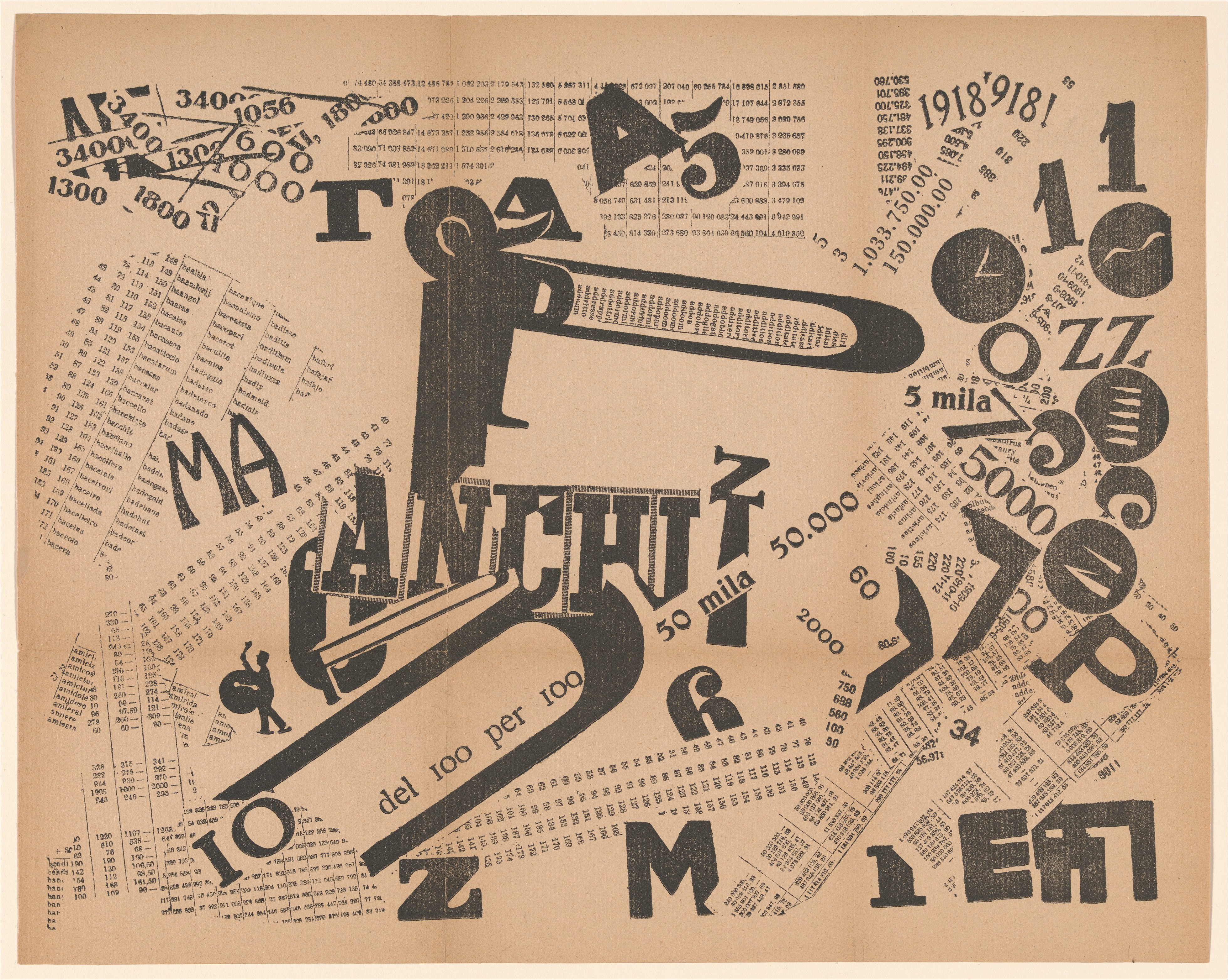
When Filippo Tommaso Marinetti’s Futurist Manifesto exploded across the front page of Le Figaro in February 1909, readers encountered not just new ideas but a new rhythm of language. Words shouted, lines fragmented, punctuation vanished. The manifesto didn’t simply describe modernity—it performed it. In the early twentieth century, artists and writers across Europe discovered that the printed page itself could be a weapon of revolution. Typography, layout, and design became expressions of speed, shock, and rebellion. From the Futurists in Italy to the Dadaists in Zurich, from the Constructivists in Russia to the Bauhaus in Germany, a generation of radicals…
-
At the dawn of the twentieth century, a new kind of journalism was born—one less interested in Parliament or policy than in people. Its headlines shouted rather than spoke, its photographs peered rather than illustrated, and its purpose was not to inform so much as to fascinate. The tabloid press changed the relationship between the public and the private. It invited readers to look inside other people’s lives and, in doing so, helped create one of the defining features of modern society: celebrity. This is the story of how gossip became news, how fame became a profession, and how mass…
-
Walk through a European city at the turn of the twentieth century, and the streets themselves would have looked like an art gallery. Posters—bright, bold, and impossible to ignore—covered walls, railway stations, and cafés. They advertised everything from plays and cabaret performances to soap, bicycles, and cigarettes. For the first time in history, visual art had escaped the museum. It was public, democratic, and everywhere. From Toulouse-Lautrec’s bohemian Paris to the functional precision of the Bauhaus, posters became the defining visual language of modern life. They merged art and advertising, pleasure and persuasion, and turned the modern city into a…
-
By the turn of the twentieth century, the modern magazine had become one of the defining artefacts of everyday life. Its glossy pages, serialized stories, household tips, advertisements, and celebrity profiles created a shared cultural universe that crossed class, gender, and geography. From The Strand in London to The Saturday Evening Post and Ladies’ Home Journal in America, the mass-market magazine was both mirror and motor of modernity. This essay explores how the magazine transformed reading from private act to collective experience, how it helped invent celebrity culture, and how its gendered and serialized content reshaped the rhythms of modern…