-

The popular imagination often pictures Classic Hollywood as a land of moral certainty, where virtue is always rewarded, sin is inevitably punished, and romantic clinches end politely at the bedroom door. This sanitized vision, however, was not the default state of American cinema. It was the product of a rigid and strictly enforced set of rules known as the Motion Picture Production Code. But before this Code clamped down in mid-1934, there existed a brief, audacious, and wildly entertaining period now known as Pre-Code Hollywood. Roughly spanning from the widespread adoption of sound in 1929 to the summer of 1934,…
-
The word “Hollywood” evokes a specific image: a glittering, self-contained world of sprawling backlots, glamorous stars under long-term contract, and powerful moguls who wielded absolute control. This was not an accidental byproduct of the film industry’s growth; it was a deliberate, revolutionary industrial invention known as the Studio System. Reaching its zenith in the 1930s and 1940s, the “Golden Age of Hollywood” was, in fact, the golden age of a vertically integrated, factory-like production model that efficiently manufactured dreams for a global audience. This system didn’t just make movies; it created the very mythology of Hollywood itself, standardizing storytelling, constructing…
-
Imagine a world where streets are not straight, but writhe and twist in impossible angles. Where shadows are not mere absences of light, but tangible, threatening entities that crawl across distorted walls. Where a character’s inner turmoil—their madness, their desire, their fear—is painted directly onto the physical world. This was the world of German Expressionist cinema, a movement that burned brightly in the Weimar Republic of the 1920s. While its most iconic films were few and its peak was brief, its impact was nothing short of seismic. The visual language of our collective nightmares, the grammar of cinematic suspense, and…
-
The history of early American cinema is not merely a history of technological innovation and artistic experimentation; it is also a history of ideology. The silver screen, from its earliest flickers, was not a blank slate but a potent tool for the projection, reinforcement, and occasional challenge of the nation’s deeply entrenched racial hierarchies. Long before D.W. Griffith’s The Birth of a Nation (1915) codified a virulently racist vision for the medium, American films were busy crafting a visual language of stereotype that would have lasting consequences. To study this era is to confront an uncomfortable truth: the development of…
-
The standard origin myth of sound cinema is elegant in its simplicity: in 1927, Al Jolson spoke a few lines in The Jazz Singer, audiences gasped, and the silent era vanished overnight. Studios scrambled, stars with squeaky voices saw their careers crumble, and cinema was reborn, fully formed, as the talkies. It’s a compelling story of disruptive innovation, but it is a profound historical oversimplification. The transition to synchronized sound was not a revolution but a protracted and chaotic evolution, a decades-long process of technological experimentation, industrial resistance, and cultural negotiation. The true story is not one of a sudden…
-
The popular imagination of early Hollywood is often a caricature: a boys’ club of powerful moguls and mustachioed directors, with actresses existing as glamorous but ultimately powerless commodities. This image, however, is a profound historical distortion, one retroactively applied from the later Studio System era. The truth is that the silent film era, particularly its first two decades, was a unique and unprecedented period of creative and commercial opportunity for women. Before the industrial consolidation of the 1920s rigidified hierarchies and codified gender roles, Hollywood was a frontier town, and on this new artistic and economic landscape, women were not…
-
If you were to step into a nickelodeon in 1897, you would not simply be a quieter version of a modern moviegoer. You would be a different kind of participant altogether. The flickering images you saw—a train pulling into a station, workers exiting a factory, a couple sharing a kiss—were novelties, spectacular in their mere existence. They were what film scholar Tom Gunning has famously termed a “Cinema of Attractions.” This cinema didn’t tell complex stories; it exhibited. It confronted the viewer directly, much like a magic trick or an amusement park ride, prioritizing showmanship over narrative. The journey from…
-
This article examines the Cotton Club, Harlem’s most notorious Prohibition-era nightclub, as a critical nexus of racial fantasy and cultural innovation in Jazz Age America. It argues that the club functioned as a hegemonic institution where white ownership meticulously crafted an exoticized “jungle” aesthetic for a wealthy, whites-only clientele, effectively commodifying Black bodies and artistry within a framework of primitivist desire. However, far from being a mere site of oppression, the club also became an unlikely incubator for Black musical excellence. Through a tripartite analysis of the club’s ownership and theming, the compositional strategies of Duke Ellington, and the politics…
-
The cultural ferment of the Jazz Age in the United States was soundtracked by a deeply segregated music industry, which produced two distinct, parallel musical economies. This article examines the genesis and implications of this dichotomy, contrasting the mainstream, white-dominated popular music market with the niche-marketed “Race Records” industry. It argues that the commercial category of “Race Records,” while a product of exploitative corporate structures designed to profit from racial segregation, inadvertently created a crucial platform for autonomous Black artistic expression. By analyzing the aesthetic divergences between these parallel soundscapes, the role of the Black press as a curatorial force,…
-
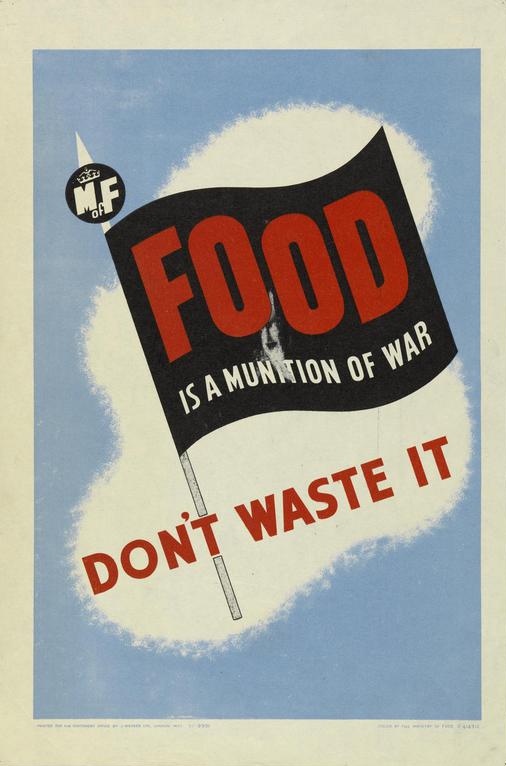
When the First World War began in 1914, nations discovered that modern war required more than guns and factories. It needed imagination. The conflict would be fought not only on the battlefield but in newspapers, cinemas, schools, and living rooms. For the first time, governments set out to manage what people felt. Posters, songs, films, and radio broadcasts became weapons in a struggle for morale. The same technologies that had been used to sell soap and cigarettes were now used to sell sacrifice and endurance. The twentieth century’s wars were also wars of culture — battles to control the stories…