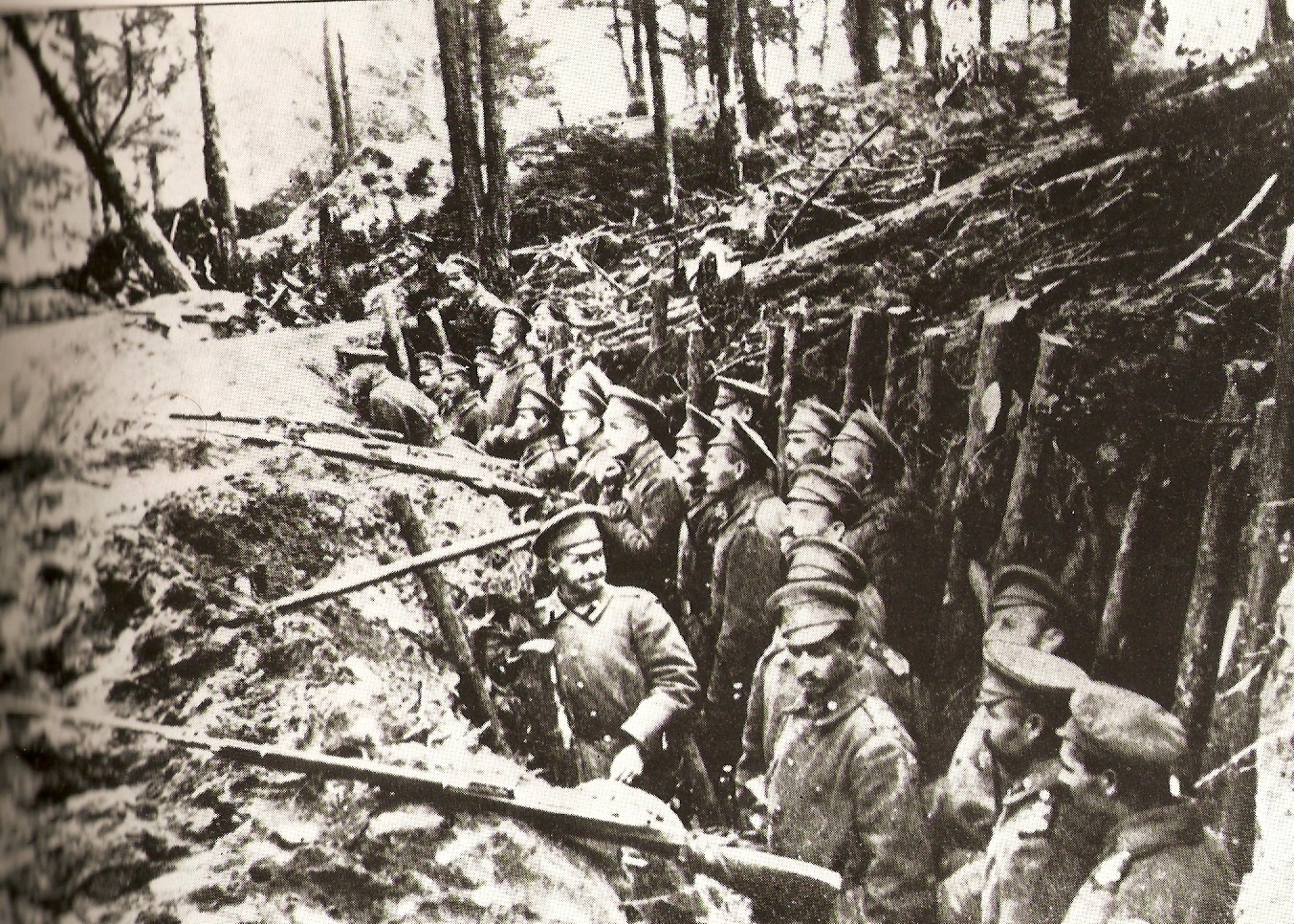

In December 1914, in the snowbound mountains of eastern Anatolia, the Ottoman Third Army began to shatter. Under the personal command of Enver Pasha, the Ottoman minister of war, nearly 100,000 troops launched a winter offensive against Russian positions around Sarikamish. Within weeks, the army had been catastrophically degraded—not primarily by enemy fire, but by frost, starvation, and the unforgiving terrain. By the time the survivors limped back to Erzurum, Ottoman casualties were on the order of 60,000 to 80,000, including dead, wounded, captured, and those who froze to death in the passes. The Battle of Sarikamish was a catastrophe of staggering proportions. Yet it was only the opening act of a struggle that would reshape the Caucasus, unleash ethnic violence on an unprecedented scale, and plant the seeds of modern nation-states from Armenia to Azerbaijan.
The Caucasus front was one of the longest and most brutal of the Ottoman Empire’s First World War theaters. Stretching from the Black Sea to the Persian frontier, it pitted the Ottoman and Russian empires against one another in a region of immense strategic importance—and immense ethnic complexity. Armenians, Georgians, Azeris, Kurds, and Russians all inhabited a landscape of mountain passes and fortified cities that had been contested for centuries. When war came, the Caucasus became a crucible: a place where imperial ambitions, nationalist aspirations, and genocidal violence fused into a conflict that would outlast the war itself.
For the Ottoman Empire, the Caucasus front was a disaster that exposed the limits of its military capacity and triggered a catastrophic reorientation of its internal policies. For Russia, it was a theater of initial success followed by revolutionary collapse. For the peoples of the region, it was a time of extraordinary suffering and, paradoxically, the birth of new national identities that would, in 1918, produce three short-lived independent republics—Armenia, Georgia, and Azerbaijan—which would be Sovietized by 1920–21, and whose legacies would shape conflicts that persist to this day.
The Strategic Stage: Empires at the Edge
The Caucasus region had been a zone of contention between the Ottoman and Russian empires for three centuries. By 1914, the border ran roughly north-south through the mountains of eastern Anatolia, with the Ottoman provinces of Erzurum, Van, Bitlis, and Trabzon facing the Russian-controlled Caucasus Viceroyalty, which included what is now Georgia, Armenia, and Azerbaijan. The region was a mosaic of ethnic and religious communities: Muslim Turks and Kurds in the Ottoman provinces; Christian Armenians and Georgians, and Muslim Azeris and North Caucasians, within the Russian Empire.
For the Ottomans, the Caucasus represented both a defensive necessity and a pan-Turkic dream. The Russian Empire had conquered vast territories inhabited by Turkic-speaking Muslims in the nineteenth century, and a strand of Ottoman nationalist thought—pan-Turkism—envisioned uniting these populations under Ottoman leadership. For Enver Pasha, the most prominent exponent of pan-Turkism among the CUP leadership, the Caucasus offered an opportunity to reclaim lost Ottoman lands, liberate fellow Muslims from Russian rule, and extend Ottoman influence as far as Central Asia.
For Russia, the Caucasus front was secondary to the struggle against Germany and Austria-Hungary, but it was no less important. The region contained the vital oil fields of Baku, which supplied Russian industry and military transport. Moreover, the Ottoman Empire was Russia’s historic enemy, and any Ottoman advance threatened the stability of Russia’s Muslim populations in the Caucasus and beyond. The Russian Caucasus Army, commanded first by the aging Viceroy Count Illarion Vorontsov-Dashkov and later by the more capable General Nikolai Yudenich, was a seasoned force with extensive experience in mountain warfare.
The terrain itself dictated the terms of combat. The Caucasus front was defined by rugged mountains, deep valleys, and high passes that became impassable in winter. Roads were few and primitive; railways extended only to Sarikamish on the Russian side and to Erzurum on the Ottoman side. Supply lines were stretched to the breaking point, and both armies relied on animal transport and requisition from local populations. In such conditions, mass offensives were extraordinarily difficult, and defensive positions—particularly the fortified Russian strongholds at Sarikamish, Kars, and Ardahan—offered immense advantages to the defender.
Sarikamish: Enver’s Folly
The Ottoman entry into the war in November 1914 found the Third Army, based in Erzurum, in a state of chronic weakness. Its forces numbered around 100,000 men, but they were poorly equipped, inadequately trained, and suffering from the effects of the recent Balkan Wars. The army’s commander, Hasan Izzet Pasha, advised against any major offensive until spring. He argued that the Russian Caucasus Army, though also understrength due to redeployments to the European front, was better supplied and held the defensive advantage.
Enver Pasha overruled him. Arriving in Erzurum in December 1914, the minister of war took personal command of the Third Army and ordered a winter offensive aimed at encircling and destroying Russian forces around Sarikamish. Enver’s plan was audacious: the IX and X Corps would march through the Allahuekber Mountains in a wide flanking maneuver, cutting the Russian railway line behind Sarikamish, while the XI Corps pinned the Russian front. If successful, the operation would annihilate the Russian Caucasus Army and open the road to the oil fields of Baku.
The plan ignored the terrain and the weather. The Allahuekber Mountains, with peaks exceeding 10,000 feet, were buried under deep snow, and temperatures dropped to -30°C. Ottoman troops, clad in summer uniforms and lacking winter boots, began to freeze in the passes. Thousands died of hypothermia before ever seeing a Russian soldier. Those who survived emerged from the mountains exhausted, disorganized, and without adequate supplies. Meanwhile, Russian commander Yudenich had concentrated his forces at Sarikamish, where they repelled repeated Ottoman assaults.
By mid-January 1915, Enver’s offensive had collapsed. The Ottoman Third Army had lost on the order of 60,000 to 80,000 men—killed, wounded, captured, or frozen to death. The army was shattered and combat-ineffective; it would be reconstituted over the following months but would never regain its pre-war strength. Enver returned to Istanbul in disgrace, though he managed to preserve his political position by deflecting blame onto his subordinates. The Third Army would remain a hollowed-out force for much of the remainder of the war, incapable of sustained offensive operations.
The catastrophe at Sarikamish had profound consequences beyond the military sphere. Enver’s defeat left the eastern provinces exposed to Russian incursions, and it created a power vacuum that Ottoman authorities would fill with a policy of systematic persecution against the Armenian population. The defeat also emboldened Russian forces, who would spend the next two years pushing deeper into Ottoman territory, capturing Erzurum in 1916 and advancing as far as Trabzon on the Black Sea coast.
The Armenian Genocide and the Caucasus Front
The link between the Caucasus front and the Armenian genocide is direct and deeply consequential. In the aftermath of Sarikamish, Ottoman leaders, particularly Enver Pasha and the Interior Minister Talat Pasha, concluded that the Armenian population of the eastern provinces posed a fifth column threat. Armenian volunteers had indeed fought with the Russian army, and Armenian guerrilla units had assisted Russian operations. But the Ottoman response went far beyond military necessity.
Sarikamish was a crucial catalyst that helped radicalize CUP policy toward the Armenian population. Alongside long-standing suspicion of Armenian national aspirations, documented cases of Armenian collaborationCollaboration
Full Description:The cooperation of local governments, police forces, and citizens in German-occupied countries with the Nazi regime. The Holocaust was a continental crime, reliant on French police, Dutch civil servants, and Ukrainian militias to identify and deport victims. Collaboration challenges the narrative that the Holocaust was solely a German crime. across Europe, local administrations assisted the Nazis for various reasons: ideological agreement (antisemitism), political opportunism, or bureaucratic obedience. In many cases, local police rounded up Jews before German forces even arrived.
Critical Perspective:This term reveals the fragility of social solidarity. When their Jewish neighbors were targeted, many European societies chose to protect their own national sovereignty or administrative autonomy by sacrificing the minority. It complicates the post-war myths of “national resistance” that many European countries adopted to hide their complicity.
Read more with Russian forces, and a broader CUP project of demographic engineering, the defeat at Sarikamish pushed the Ottoman leadership toward a radical solution. Beginning in April 1915, the Ottoman government ordered the deportation and mass killing of the Armenian population of Anatolia. The pretext was military necessity: Armenians were to be relocated from war zones to the Syrian desert. In practice, the deportation convoys were subjected to systematic massacre by Ottoman troops, Kurdish irregulars, and local militias. Hundreds of thousands died on death marches through the desert, while others were killed outright in their home villages.
The Caucasus front was intimately connected to these events. The eastern provinces of Erzurum, Van, and Bitlis—directly adjacent to the fighting—were among the principal killing fields of the genocide, though violence also unfolded across central and western Anatolia. The Russian advance into Ottoman territory in 1915–16 created waves of refugees—both Armenian and Muslim—who fled ahead of the advancing armies. The Ottoman destruction of the Armenian population was intended in part to eliminate a population that might collaborate with the Russians. Conversely, the Russian occupation of Erzurum and Van in 1916 allowed surviving Armenians to return briefly, only to be displaced again when the Russian army collapsed in 1917.
Historians continue to debate the precise number of Armenian dead, but the consensus ranges from 800,000 to 1.2 million. What is not debated is that the eastern provinces along the Caucasus front were among the principal theaters of the violence. The provinces of Erzurum, Van, Bitlis, and Trabzon—all directly affected by the fighting—saw the highest concentration of deportations and killings. The war on the Caucasus front, in other words, was not only a conventional military struggle but also a campaign of ethnic cleansing that aimed to remake the demographic landscape of eastern Anatolia.
The Russian Advance: Yudenich’s Victories
While Enver’s offensive had failed spectacularly, the Russian Caucasus Army under Yudenich was far more successful. Yudenich was a meticulous planner who understood the challenges of mountain warfare. He rejected the costly frontal assaults that characterized much of the war on other fronts, instead using infiltration, deception, and the exploitation of Ottoman weaknesses.
The Russian campaign of 1915–16 was a series of methodical advances. In May 1915, Russian forces captured the strategic town of Van, held by Armenian volunteers, though they were later forced to withdraw due to supply shortages. The main Russian offensive came in January 1916, when Yudenich launched a winter offensive that caught the Ottoman Third Army by surprise. Russian forces captured the fortress of Erzurum in February, followed by the Black Sea port of Trabzon in April. By the summer of 1916, Russian forces had advanced as far as Erzincan, deep into eastern Anatolia.
The Ottoman defense was hampered by the lingering effects of Sarikamish, the diversion of resources to Gallipoli and Mesopotamia, and the weakness of the reconstituted Third Army. German advisors urged Enver to focus on defensive warfare in the Caucasus, but Ottoman forces lacked the manpower and supplies to hold the line. The Russian occupation of large swaths of eastern Anatolia displaced hundreds of thousands of Muslim civilians, who fled west ahead of the Russian advance, adding to the humanitarian catastrophe already unfolding.
Yudenich’s successes made him one of the most successful Russian commanders of the war. But his victories also created new problems. The occupied territories were ethnically mixed and economically devastated. Russian military authorities struggled to administer the region, and tensions between Russian officials, Armenian political groups, and local Muslim populations simmered. The seeds of post-imperial conflict were already being sown.
The Russian Revolution: Collapse and the Rise of National States
The February Revolution of 1917 in Russia transformed the Caucasus front overnight. The Tsarist regime collapsed, and the Russian army began to disintegrate. Soldiers, exhausted by years of war and influenced by revolutionary propaganda, deserted in large numbers. Discipline collapsed, and the Caucasus Army—once the most effective Russian force—melted away.
The Ottoman government seized the opportunity. In early 1918, the newly reconstituted Ottoman Third Army (and later the Ninth Army) launched a series of offensives aimed at recovering the lost territories and pushing into the Russian Caucasus. Ottoman forces retook Erzurum, Trabzon, and Van with minimal resistance. By the summer of 1918, they had advanced into the Caucasus proper, capturing Kars and Batum and threatening Baku.
But the Ottoman advance coincided with a complex process of nation-building in the South Caucasus. With Russian authority gone, the peoples of the region moved to establish their own states. In April 1918, the Transcaucasian Federation—an uneasy alliance of Armenian, Georgian, and Azeri political forces—declared independence from Russia. The Federation quickly fractured, producing three separate republics: Georgia (May 1918), Armenia (May 1918), and Azerbaijan (May 1918).
The Ottoman government, now under the leadership of Enver and Talat, saw an opportunity to bring these new states into the Ottoman orbit. In June 1918, the Ottomans signed a peace treaty with Georgia and a treaty of friendship with Azerbaijan. But relations with the Armenian Republic were hostile. Ottoman forces advanced into Armenian territory, and fighting continued until the Armistice of Mudros in October 1918 halted Ottoman expansion.
The Armenian Republic, led by the Dashnak party, found itself in an impossible position. It had inherited a territory devastated by war, a population that included hundreds of thousands of Armenian refugees from Ottoman lands, and a hostile neighbor in the Ottoman Empire. Yet the brief period of Armenian independence (1918–1920) saw the flowering of Armenian national institutions, the establishment of a national army, and the consolidation of a national identity forged in the crucible of genocide and war.
The Caucasus Front and the Turkish War of Independence
The Armistice of Mudros (October 1918) brought an end to Ottoman participation in the First World War, but it did not bring peace to the Caucasus. The victorious Allies, particularly Britain, moved to secure control over the region’s oil fields and key communication routes. Ottoman forces withdrew to the pre-1914 border, leaving a power vacuum that would be filled by new conflicts.
For the nascent Turkish nationalist movement, led by Mustafa Kemal (later Atatürk), the Caucasus front remained a strategic concern. The new Republic of Armenia, backed by the victorious Allies, laid claim to Ottoman territories that had been inhabited by Armenians before the war—claims that included Erzurum, Van, and Trabzon. The Turkish nationalists, organizing in Ankara after the Allied occupation of Istanbul, were determined to resist Armenian expansion.
The Turkish-Armenian War of 1920 was a short but brutal conflict. Turkish nationalist forces, commanded by Kâzım Karabekir, launched a winter offensive into Armenian territory, capturing Kars and Alexandropol (Gyumri) and forcing the Armenian Republic to accept harsh peace terms. The Treaty of Alexandropol (December 1920) effectively ended Armenian independence; the Red Army invaded Armenia shortly thereafter, incorporating it into the Soviet Union.
The Caucasus front thus closed as it had begun: with empires collapsing and new states rising from their ruins. The Treaty of Kars (1921), signed between the Turkish Grand National Assembly and the Soviet republics of Armenia, Georgia, and Azerbaijan, established the modern Turkish-Soviet border, which remains largely unchanged today. The treaty confirmed Turkey’s frontier with Soviet Azerbaijan, including Nakhichevan’s status under Azerbaijani authority—arrangements that would later underpin Azeri-Turkish political and cultural closeness. The border cuts through the lands that had been contested for centuries, leaving Armenian national aspirations unfulfilled.
Nationalism Forged in War
The Caucasus front was not merely a theater of military operations; it was a crucible in which modern national identities were forged. Before the war, Armenian, Georgian, and Azeri nationalism existed as intellectual currents among small urban elites. The war transformed these currents into mass movements.
For Armenians, the experience of genocide and the brief period of independence created a national narrative centered on victimhood, survival, and the aspiration for statehood. The memory of the deportations, the defense of Van, and the heroism of Armenian volunteers in the Russian army became foundational elements of Armenian national identity. The failure to secure a larger territory at the Paris Peace Conference and the eventual Sovietization of Armenia left a legacy of trauma and irredentism that would resurface in the late twentieth century.
For Georgians, the war reinforced a sense of distinct identity separate from both Russia and Turkey. Georgia’s Menshevik-led republic, which survived until 1921, represented a rare experiment in social democracy in the post-war chaos. The brief period of independence, though short-lived, laid the groundwork for Georgian national consciousness and the eventual revival of Georgian statehood in 1991.
For Azeris, the war intensified Turkic identity and strengthened ties to Anatolia. Ottoman military support for the short-lived Republic of Azerbaijan (1918–1920) established a bond between Azeri nationalism and Turkish pan-Turkism that would persist throughout the twentieth century. The oil wealth of Baku, which had attracted Russian and then British interest, became a source of both pride and vulnerability.
For the Turkish Republic, the Caucasus front was a site of both trauma and triumph. The defeat at Sarikamish was a national humiliation, but the victories of 1918 and 1920 became part of the nationalist narrative of resurrection. The Treaty of Kars established the eastern border of the new Turkish state, and the demographic transformation of eastern Anatolia—the removal of the Armenian population and the settlement of Muslim refugees—created a more homogeneous national territory.
Historiography and Memory
The Caucasus front has been remembered differently by each of the peoples who fought there. In Turkish official memory, Sarikamish is a tragic disaster attributed to Enver Pasha’s arrogance, while the campaigns of 1918 and 1920 are celebrated as nationalist triumphs. The Armenian genocide, while central to Armenian national identity, remains officially denied by the Turkish state—a point of enduring diplomatic tension, though there is a spectrum of views within Turkish civil society.
In Russian memory, the Caucasus front is overshadowed by the larger tragedy of the Eastern Front and the Revolution. Yudenich’s victories are remembered as a bright spot in a war otherwise marked by Russian defeats, but the subsequent collapse of the Caucasus Army is treated as part of the general disintegration of the Tsarist state.
Western historiography, long focused on the Western Front, has—especially since the late twentieth century—paid more sustained attention to the Caucasus. The work of historians like Eugene Rogan, Michael Reynolds, and Sean McMeekin has illuminated the strategic importance of the region and the interconnectedness of the Caucasus with the larger war. Earlier foundational works, such as Allen and Muratoff’s Caucasian Battlefields (1953), remain essential references. New research on the Armenian genocide, drawing on Ottoman archives and survivor testimonies, has deepened understanding of the relationship between military events and mass violence.
What emerges from this scholarship is a picture of the Caucasus front as a space where the boundaries between conventional warfare and ethnic violence blurred. The combination of extreme terrain, ethnic diversity, great power rivalry, and revolutionary upheaval created conditions in which violence was directed not only at enemy armies but at entire populations. The Caucasus front was, in many ways, a preview of the horrors that would become commonplace in twentieth-century warfare: ethnic cleansing, mass displacement, and the deliberate targeting of civilians.
Conclusion
The Caucasus crucible transformed the Ottoman Empire, the Russian Empire, and the peoples who lived between them. The Battle of Sarikamish destroyed an Ottoman army and helped radicalize CUP policy toward the Armenian population, contributing to the decisions that culminated in genocide. The Russian advance of 1916 brought hope to Armenian nationalists but also displaced hundreds of thousands of Muslims. The Russian Revolution of 1917 created a vacuum that produced three new republics, only to see them absorbed by the Soviet Union and the Turkish Republic. By 1921, when the Treaty of Kars was signed, the map of the Caucasus had been redrawn in ways that would endure for nearly a century.
The legacy of the Caucasus front is still visible today. The border between Turkey and Armenia remains closed, a consequence of unresolved historical grievances. The Nagorno-Karabakh conflict between Armenia and Azerbaijan, which erupted in the late Soviet period and continued into the twenty-first century, has its roots in the post-World War I territorial disputes and the way Soviet authorities institutionalized those boundaries. The memory of Sarikamish, of the genocide, of the brief independence of 1918–1920, continues to shape national identities across the region.
In the end, the Caucasus front was more than a military campaign. It was a moment when empires died and nations were born—a process that was violent, traumatic, and transformative. The soldiers who froze in the passes of the Allahuekber Mountains, the refugees who fled before advancing armies, the intellectuals who declared independence in Tiflis, Erivan, and Baku—all were actors in a drama that reshaped the world between the Black Sea and the Caspian. Their story is a reminder that the First World War was not only a European conflict but a global convulsion, and that its consequences are still unfolding today.
Further Reading & Sources
· Allen, W. E. D., and Paul Muratoff. Caucasian Battlefields: A History of the Wars on the Turco-Caucasian Border, 1828–1921. Cambridge University Press, 1953 (reprinted 2011).
· Erickson, Edward J. Ordered to Die: A History of the Ottoman Army in the First World War. Greenwood Press, 2001.
· McMeekin, Sean. The Russian Origins of the First World War. Harvard University Press, 2011.
· Reynolds, Michael A. Shattering Empires: The Clash and Collapse of the Ottoman and Russian Empires, 1908–1918. Cambridge University Press, 2011.
· Rogan, Eugene. The Fall of the Ottomans: The Great War in the Middle East. Basic Books, 2015.
· Suny, Ronald Grigor. “They Can Live in the Desert but Nowhere Else”: A History of the Armenian Genocide. Princeton University Press, 2015.

Leave a Reply