
In the latest episode of the Explaining History Podcast, we explore Susan Pedersen’s extraordinary book The Guardians and the unplanned emergence of a mechanism through which colonised peoples learned to claim that they too were nations deserving to be heard.
It becomes way too easy, when reading history, to see the world through the eyes of the coloniser rather than the colonised. This is not simply a matter of bias; it is a function of how history is produced—who commissions it, who writes it, whose voices are preserved in the archives. The mandate system, the League of Nations framework through which Britain and France claimed legitimacy for their post-war territorial grabs, is often presented as a progressive innovation: a move from old-fashioned colonialism to enlightened trusteeship. But what did it look like from the perspective of those who suddenly found themselves under new rulers?
The Contradictions at the Heart of the Mandate System
For the victorious imperial powers, the mandate system was a tool to legitimate the territorial settlement agreed at Paris in 1919. For internationalists and League officials, it was a mechanism for spreading common norms about trusteeship and the open door. There was a strange alliance here: colonial imperialists and Wilsonian liberals, who saw a new world possible based on international law and treaties, one in which eventually colonial empires might no longer be possible.
Yet these liberals were imperial figures in their own right. They saw the mandates as childlike stages of development—some territories not yet ready for full freedom, others perhaps never to be ready. As Susan Pedersen writes in The Guardians, for a politicized minority in the territories to which it was applied, the mandate system became something simpler: a shameless betrayal of the promises of self-determination that the Allies had made in 1918 with their backs to the wall.
Britain and France hadn’t just called on indigenous troops for their campaigns; they had also promised that any new dispensation in Africa as well as the Middle East would be crafted in consultation with those populations themselves. Yet once they had secured their conquests, and once the United States exited the room, those promises were pushed aside.
The Wave of Protest
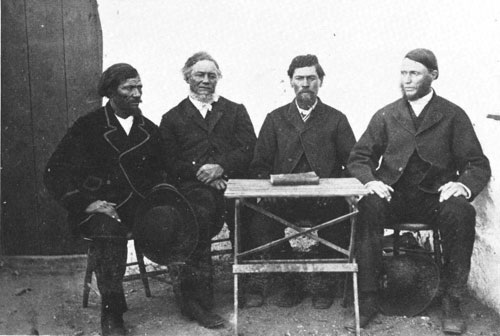
Douala elites in Cameroon, Anglophone traders in Togo, Samoan chiefs, the stubbornly independent Rehoboth Basters of South West Africa, and a host of Arab organisations and potentates mobilised in protest. Communities happy to voice their detestation of German or Ottoman rule now wrote to dispute the decisions reached in Paris and San Remo.
Much of that epistolary wave came ashore in imperial capitals, where it was suppressed by local officials or quietly filed away. Yet even though the League of Nations in 1919 and 1920 was little more than a post box, some appeals made their way to the Secretariat’s temporary quarters. And they left a surprising deposit in their wake: a petition process, through which populations living under mandatory rule learned to claim that they too were nations deserving to be heard.
The Unplanned Mechanism
This petition process was perhaps the most significant aspect of the mandate system, for it brought the voices of the system’s subjects—albeit muted, ventriloquised and distorted—into the rooms in which their fates were determined. But this process was entirely unplanned. Neither the Covenant nor the mandate texts made any provision for petitioning.
When the Milner Commission had been drafting those texts in the summer of 1919, all members save the American George Louis Beer agreed that while it was appropriate to allow governments to appeal to the Permanent Court of International Justice, if inhabitants of the mandates themselves were given such rights, as the French colonial minister Henri Simon put it, “all administration would be impossible.”
Yet a petition process arose despite those objections. On a fundamental level, its emergence was the achievement of petitioners themselves—of those thousands of men and women who, often at considerable risk, raised their voices against the new dispensation.
Old Traditions, New Arenas
Some drew upon earlier political and discursive traditions. Ottoman subjects had petitioned Ottoman authorities before 1914. Samoan chiefs and Douala elites had sent appeals about administrative practices or land rights to the Wilhelmine government. But those appeals were made to national states claiming sovereignty over those they ruled, not to an international body.
To understand how petitioning moved into the international sphere, we must examine what happened to those appeals to Geneva in the years immediately following the peace conference. As Pedersen shows, some familiar figures exploited mounting outrage and Anglo-French antagonism to create the League’s most truly global structure for mobilisation, protest and claim-making.
The West African Catalyst
The struggle for petitions began in West Africa. Although the British held much of southern Cameroon, including the crucial port of Douala, until 1916, and most of Togo, including the port of Lomé, until 1919, Britain ceded the bulk of both territories to France in exchange for recognition of claims elsewhere. Those retrocessions were unpopular with local British officials, with the Liverpool-based Association of West African Merchants, and with English-speaking or German-speaking Douala and Ewe elites who had worked for British or German firms before 1914 or during wartime British occupation.
In 1918, British authorities in both territories reported that local people were resisting French pressure to sign testimonials in their favour. Appeals soon followed. “There can, I fear, be very little doubt that French rule in West Africa is in even worse odour amongst the natives than was that of the Germans before 1914,” Hugh Clifford, Governor of the Gold Coast, wrote to the Colonial Secretary in December 1918.
From Cameroon, the British Consul warned that Douala elites might depart for Nigeria en masse. The Foreign Office warned local officials that if they encouraged African disaffection, they might have a diplomatic incident on their hands. But if officials had to watch their tongues, J.H. Harris of the Anti-Slavery Society did not.
The Anti-Slavery Society and the Amplification of Grievance
Harris had been outraged when Lloyd George reneged on his promise to consult African opinion. He vented his anger and his low opinion of French actions in West Africa in a series of hard-hitting articles in The Times, The Manchester Guardian, The Contemporary Review, and other indisputable organs of public opinion.
Harris’s high profile and the Anti-Slavery Society’s strong ties to West African churchmen and traders made him the obvious channel for African grievances. Douala protests about partition and French occupation had arrived on his desk in 1919. In 1920 and 1921, he received reports from several sources, including one J.T. Mensah, a former clerk in a British trading company, about conditions in French-mandated Togo.
Through his ties to Liverpool merchant interests, Ormsby Gore saw some of this material and grew convinced that inhabitants under the mandate must have the right to petition the League. In January 1921, a League of Nations Union committee under his chairmanship urged the Council to recognise that right.
The Arab Nationalist Mobilisation
In Geneva, William Rappard had come to the same conclusion. A few West African petitions had made their way to the Secretariat, but protests against the British and French dispensation in the Middle East were flooding the League. The San Remo decision of April 1920, Faisal’s subsequent expulsion from Syria, the establishment of Greater Lebanon, and the publication—revealed first in the Jewish Chronicle, which had managed to secure a copy before The Times, in February 1921—of the draft Palestine mandate incorporating the Balfour Declaration unleashed protests from King Hussein of the Hejaz and from Arab organisations around the world.
The emphasis in those appeals could vary. Most, however, would have agreed, as Faisal put it in a letter on behalf of his father in February 1921, that French and British actions violated not only the wartime Allied pledges, but also the provisional recognition of Arab independence contained in Article 22 itself. If Britain and France intended to impose their own rule, he warned prophetically, they would have the effect of “making permanent the present state of unrest throughout the Middle East.”
What Faisal and his father were saying was simple: the British betrayed us. They lied to us. They promised one thing under the Hussein-McMahon correspondence, they carved up the Middle East under the Sykes-Picot Agreement, and then they issued the Balfour Declaration. The prospect of an Arab nation was now divided into mandates. And this, as Faisal chillingly predicted, would lead to a state of permanent unrest. The rest, as they say, is the history of the 20th century.
The Syrio-Palestinian Congress
Direct lobbying in Geneva accompanied those missives. After the French expelled Faisal’s government from Damascus in July 1920, many of his former ministers and supporters had sought refuge in Cairo, where Michel Lutfalla, son of a rich Lebanese Christian émigré, had started building an organisation to coordinate the Arab nationalist movement.
There were plenty of disagreements to overcome. Pan-Islamists like Rashid Rida and the Druze aristocrat and former Ottoman official Shakib Arslan did not share Lutfalla’s loyalty to the Hashemite cause. Some Palestinian nationalists resented Syrian dominance and what they saw as a Hashemite willingness to compromise with Zionism. Nevertheless, at Lutfalla’s invitation, and largely at his expense, in late August 1921, right before the opening of the Second League Assembly, an impressive gathering of Arab nationalists from across the divides convened in Geneva and formed the Syrio-Palestinian Congress.
Lutfalla was elected president, Rida its vice president, and Arslan—the man who would become Arab nationalism’s first most indefatigable interlocutor in Europe—its secretary. The Congress intended to bring before the League their demands for independence, the termination of the mandates, and the withdrawal of the Balfour Declaration. Erase everything you have agreed, they said, and decolonise the Arab world—and do it now.
The League’s Response
Yet just as King Hussein discovered that the Council would not entertain his appeals against the San Remo Accords in 1920, so too the Syrio-Palestinian Congress found that neither the Council nor Sir Eric Drummond, the League’s Secretary-General, would receive them. Only Rappard heard them out, emerging from those meetings with considerable sympathy for the exiled Arab nationalists and a good sense of their grievances.
But what was he to do with this information, or with the mounting pile of appeals against the Middle East settlement? They should be circulated to the Council and to all League member states, Rappard told Drummond. Given the tremendous agitation about the A-mandates—the top tier of the mandated system—that seemed a minimal concession to their authors’ pleas for League intervention.
Drummond flatly disagreed. The Council had decided that the Allied powers, not the League, were responsible for allocating mandates. An extraordinary statement: invalidating the League of Nations automatically when it came to mandates, saying that this was a grab by Allied nation-states. Drummond would prefer to keep documents “full of absurd allegations” from travelling further.
Most reluctantly, on Drummond’s express orders, Rappard withdrew all the protests from the dossier sent to delegates to the Second Assembly, save two which had been inadvertently promised circulation in a letter signed by Drummond himself—a decision that captures perfectly Drummond’s punctilious adherence to the letter rather than the spirit of the law.
A Conscience-Stricken Official
The Assembly did not take the question up. Rappard remained conscience-stricken about his part in pushing the Arab nationalists off stage. “Personally, I cannot bring myself to feel that we are doing our full duty towards the inhabitants of these territories,” he wrote to Drummond on the 11th of October 1921, after the Assembly had closed. “The Arab protests might have been often naive and badly worded, but I do feel that they can make out a strong case against the way in which they have been and are being treated by France and Great Britain.”
Behind the scenes, Rappard had already taken steps to circumvent his obstructive chief. He raised the matter of petitions at the Permanent Mandates Commission’s very first session, held immediately following that Second Assembly. There, Ormsby Gore lent his support: if any resident in a British colony had a right to appeal to the Privy Council, surely an inhabitant of a mandated territory ought to be able to appeal to the League. By the end of that first session, it was clear that the Mandates Commission would make a bid to receive petitions.
Rethinking the Failure of the League of Nations
There is something important to consider here. When we talk about the failure of the League of Nations, the popular narrative is that by the late 1930s, it had failed to stop Japan in Manchuria, failed to stop Italy in Abyssinia, and was a busted flush that Hitler swept away. But if you were somebody in Palestine or Cameroon or Lebanon in the early 1920s, what must you have thought of the League of Nations?
It couldn’t stop the British and the French from establishing their own empires. The Allied powers had taken from the League the management of the mandates. Our way of looking at things—a Western, Anglo-American, Anglo-French way of looking at things—is based on the outcome of the complete failure of the League by 1939.
However, if you were colonised, if you were from a mandate, if you were being colonised, the expression of self-determination at the Paris Peace Conference and the will to be part of a unified and independent Arab state had been swept off the page by 1920. For the people of the Arab world, the League of Nations had failed within one year.
Conclusion: The Voices That Refused to Be Silenced
What emerges from Pedersen’s account is a story of imperial hubris, international idealism, and the unplanned emergence of a mechanism through which colonised peoples learned to claim that they too were nations deserving to be heard. The petition process was the achievement of petitioners themselves—of thousands of men and women who, often at considerable risk, raised their voices against the new dispensation.
They did not succeed in overturning the mandates. They did not prevent the division of the Arab world into British and French spheres of influence. But they did something perhaps more significant: they learned to use the League’s own mechanisms against it. They learned to frame their grievances in the language of international law and self-determination. They learned that their voices, however muted and distorted, could reach Geneva.
And when the Second World War came, and the mandate system collapsed under the weight of its own contradictions, those voices were ready. The leaders who would negotiate independence for Syria, Lebanon, Jordan, Iraq, and Palestine had learned their politics in the crucible of the mandate system. They had learned to petition, to lobby, to make their case before international bodies. They had learned that the promise of self-determination, however betrayed, could be reclaimed.
The history of the mandate system is not just the history of imperial imposition. It is also the history of resistance, of the unplanned emergence of new political actors, of voices that refused to be silenced. And it is a reminder that the failure of the League of Nations looked very different from the colonised world than it did from London or Paris or Geneva.
Susan Pedersen’s The Guardians is the best book on the mandate system I have ever read—a work of extraordinary scholarship that recovers the voices of those too often silenced in the archives.
If you enjoyed this piece, please consider supporting the Explaining History Podcast. We’re migrating from Patreon to Substack—more details soon.

Leave a Reply