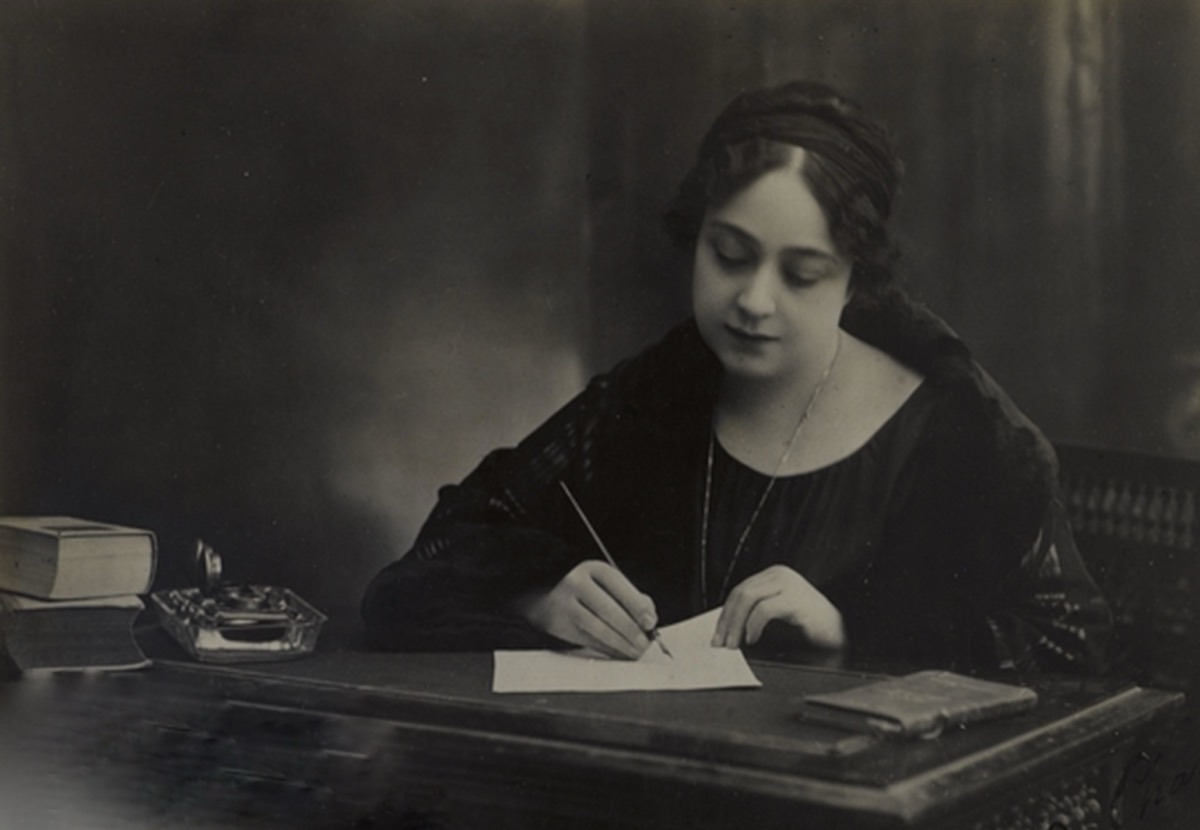

“When a woman stands up for her own rights, she stands up for the rights of her entire nation.” — Sarojini Naidu, Indian poet and political leader
In 1923, Huda Shaarawi, a prominent Egyptian feminist, disembarked from a train at Cairo’s main station after attending an international women’s conference in Rome. Before a crowd of supporters, she performed a simple, revolutionary act: she removed her face veil. This was not merely a personal choice but a calculated political gesture, signaling Egyptian women’s entry into modernity and the national struggle. That same year, she founded the Egyptian Feminist Union, explicitly linking women’s emancipation to Egypt’s liberation from British rule. A continent away in southeastern Nigeria, thousands of Igbo women were six years away from launching the “Women’s War” of 1929, using traditional practices of collective female protest to challenge colonial taxation and authority, a rebellion that would shake the British administration to its core.
This article argues that in colonial contexts, the “Woman Question” was fundamentally remapped. In Egypt, India, and Nigeria, debates about women’s rights—concerning veiling, education, suffrage, and inheritance—became inextricable from the project of anti-colonial nationalism. Women were cast in a dual, often contradictory role: as symbolic guardians of cultural authenticity and as essential vectors of modernizing progress. This unique positioning created a powerful, tense alliance between feminist and nationalist goals, where women’s agency was simultaneously mobilized and constrained by the larger struggle for independence. The resulting feminist thought was neither a mere import from the West nor a purely indigenous tradition, but a distinct, hybrid ideology forged in the fire of anti-colonial resistance.
The Theoretical Terrain: Nation, Gender, and the Colonial Paradox
To understand this phenomenon, one must first grasp the unique dilemma of anti-colonial nationalism. Colonized intellectuals and leaders sought to reject European political domination while selectively adopting the tools of European modernity—science, education, political organization—to strengthen their societies. This created a profound tension: how to become modern without becoming Western?
The “Spiritual” versus the “Material” Domain
Indian political thinker Partha Chatterjee identified a crucial strategy: nationalists divided social life into two domains. The “material” domain—science, technology, economics, statecraft—was conceded as an area where the West had superiority and from which one could borrow. The “spiritual” or “inner” domain—encompassing language, religion, family, and the roles of women—was declared the sovereign, essential core of national identity, to be protected from Western influence.
This framework is key to understanding the colonial “Woman Question.” Women’s bodies and behaviors became the primary terrain upon which battles over culture and modernity were fought. The colonizer often justified rule through a “civilizing mission” that pointed to the “backward” status of native women (through practices like sati, child marriage, or seclusion) as proof of societal inferiority. In response, nationalist movements embarked on their own “reform from within.” Improving women’s condition—through education, abolishing regressive customs, and elevating their role as mothers of the nation—became a patriotic duty, a way to demonstrate civilizational strength and moral superiority over both traditional society and the colonial critic.
This placed women activists in a complex bind. Their demands for rights gained legitimacy and urgency from the nationalist project. Yet, their agendas were often subordinated to, and policed by, the larger nationalist goal, which feared that excessive “Western-style” feminism would undermine cultural unity. This is the essence of the dual burden: fighting colonial rule while navigating the patriarchal limits of the very national community they sought to liberate.
Egypt: Unveiling the Nation
In Egypt, the feminist movement was born directly from anti-colonial ferment. The 1919 Revolution against British rule saw unprecedented participation by women, who organized protests, boycotts, and published nationalist manifestos. The sight of veiled women marching in the streets politicized the female body and demonstrated that the nation needed all its members.
Huda Shaarawi and the Egyptian Feminist Union (EFU)
The founding of the EFU in 1923 formalized this link. Its platform cleverly intertwined feminist and nationalist aims:
- Education: Promoting girls’ education to create enlightened mothers who could raise strong, patriotic citizens.
- Legal Reform: Campaigning against polygamy and for restrictions on divorce, arguing that strong, modern families were the bedrock of a strong, modern nation.
- Social Welfare: Establishing clinics and vocational training, addressing national weakness through public health and economic productivity.
Shaarawi’s famous unveiling was the perfect symbol of this synthesis. Casting off the hijab (specifically the face veil) was framed not as imitation of the West, but as a return to an authentic, pre-Islamic Egyptian modernity and a rejection of the Ottoman/Turkish customs associated with backwardness. It was a declaration of Egyptian women’s—and by extension, Egypt’s—readiness for self-rule. However, the EFU’s activism was largely elite-led and focused on legal and social reform within an Islamic framework, carefully avoiding a direct assault on religion or appearing too “Western,” which would have alienated it from the broader nationalist movement led by the male-dominated Wafd Party.
India: Motherhood, Mobilization, and Containment
The Indian struggle presented a similar, yet distinct, dynamic. Social reform movements of the 19th century had already made the status of women—condemning sati, promoting widow remarriage—a central issue of national regeneration.
Sarojini Naidu: The Poet-Patriot
Sarojini Naidu, known as the “Nightingale of India,” exemplified the integrated feminist-nationalist. A close ally of Gandhi, she served as President of the Indian National Congress in 1925. Her feminism was expressed through the idiom of nationalist service. She championed women’s entry into the public sphere through participation in Gandhi’s Non-Cooperation and Civil Disobedience movements—boycotting foreign goods, making salt, and facing imprisonment. For Naidu, political activism was the highest form of women’s duty, an extension of their nurturing and sacrificial roles as mothers onto the national stage.
The Gandhian Framework: Spiritualized Motherhood
Gandhi’s philosophy was pivotal. He idealized women as inherently non-violent, self-sacrificing, and morally superior—the natural practitioners of his satyagraha (truth-force). He mobilized millions of women by appealing to this spiritualized motherhood. This brought women into the movement en masse but within a prescribed ideological boundary. Their activism was celebrated as an expression of essential feminine virtue, not necessarily of individual rights or gender equality. The demand for a uniform civil code or radical reforms in Hindu personal law was often sidelined by the Congress leadership to maintain Hindu-Muslim unity and social conservatism. Women were crucial soldiers in the nationalist army, but rarely its generals when it came to setting the post-independence social agenda.
Nigeria: The Women’s War and the Limits of Nationalist Framing
The 1929 “Women’s War” (Ogu Umunwanyi) in Igboland presents a powerful contrast, highlighting an anti-colonial feminism that emerged largely outside Western-educated, nationalist frameworks.
The Rebellion Against the Warrant Chiefs
The revolt was sparked by fears that British colonial authorities, through their imposed “Warrant Chiefs,” were planning to tax women, who were the primary traders and controllers of local markets. Using traditional tactics of mass protest—”sitting on a man” (surrounding and berating), singing ridicule songs, and symbolically destroying property—tens of thousands of women from multiple ethnic groups coordinated to besiege and burn Native Court buildings.
Feminism from Below
This was feminism as direct, collective action. Its ideology was rooted in indigenous female political institutions and economic power, not in imported concepts of rights. The women were defending their traditional autonomy in the marketplace and their community’s social order against a colonial state that had misunderstood and destabilized it. They operated in a sphere parallel to the emerging, male-dominated Nigerian nationalist groups, who were often puzzled by or distanced themselves from the revolt.
The Women’s War demonstrates that the relationship between feminism and anti-colonialism was not always a neat alliance orchestrated by elite nationalists. It could be a grassroots explosion where women defined the terms of their resistance, defending their space within the traditional and challenging the colonial, without waiting for a male-led nationalist movement to grant them permission or frame their grievances.
Comparative Analysis: Tensions, Alliances, and Post-Colonial Echoes
Across Egypt, India, and Nigeria, a common pattern emerges, though with different inflections.
The Complex Role of Western Feminist Allies
Figures like British suffragist Millicent Fawcett or American journalist Katherine Mayo (whose controversial book Mother India sparked outrage) played ambiguous roles. Their critiques of “backward” practices could provide ammunition for colonial administrators, forcing nationalists to address women’s issues defensively. Yet, their international networks and moral support could also bolster local feminists. This relationship was fraught with condescension and strategic calculation on both sides.
The Central Tension: Mobilization vs. Constraint
In each case, the nationalist movement mobilized women as symbols, organizers, and moral forces, granting their activism a legitimacy and scale it might not have achieved alone. Yet, it simultaneously constrained the radical potential of that feminism. Demands that threatened religious authority, male privilege, or national unity were routinely deferred with the promise, “After independence.” The nationalist narrative often instrumentalized women’s progress as a sign of national maturity, rather than embracing it as an intrinsic good or a project of fundamental gender justice.
The Post-Colonial Legacy
This historical configuration left a deep legacy. In many post-colonial states, the early fervor for women’s rights waned as male leaders consolidated power. The “dual burden” often persisted: women were celebrated as mothers of the nation in rhetoric, while laws and social structures remained deeply patriarchal. The feminist movements that re-emerged in the latter 20th century often had to fight against the very nationalist states they had helped bring into being, confronting the unfinished business of the anti-colonial compact.
Conclusion: A Third Path Forged in Struggle
The feminist thought that emerged in colonial Egypt, India, and Nigeria was not a derivative discourse. It was a creative, forceful, and distinct “third path” forged in the particular crucible of anti-colonial struggle. It understood that the personal was not just political, but national. Women activists skillfully navigated the impossible duality of being symbols of tradition and engines of progress, using the space opened by nationalism to advance their cause, even as they pushed against its boundaries.
The story of Huda Shaarawi unveiling, Sarojini Naidu rallying crowds, and the Igbo women burning courthouses is not a sidebar to the history of anti-colonialism; it is central to it. It reveals that the struggle for national sovereignty and the struggle for gender justice were—and remain—deeply intertwined projects. The “dual burden” was a source of tension, but also of unique power, producing a resilient feminist legacy that continues to inspire the global fight for equality today. It teaches us that liberation is indivisible, and that no nation can be truly free while half its people remain fettered.

Leave a Reply