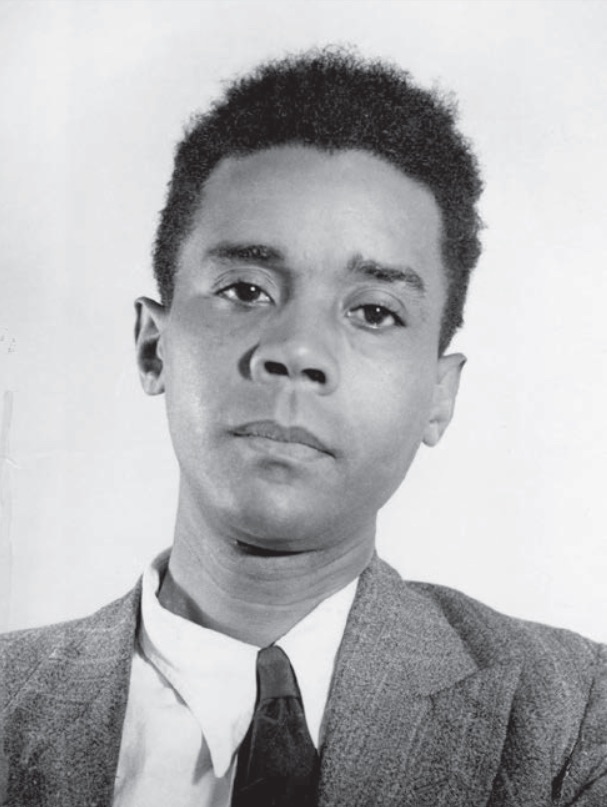

“The first words upon the lips of any Pan-African agitator on arrival in London were ‘Where can I find George Padmore?’”.
C.L.R. James
The Ticket of Leave – C.L.R. James Departs Trinidad, 1932
In 1932, a young Trinidadian schoolteacher named Cyril Lionel Robert James boarded a ship bound for England. He carried with him a manuscript on the life of the radical abolitionist Toussaint Louverture and a contract to write about cricket for the Manchester Guardian. He left behind a colonial society he found stifling, seeking the intellectual ferment of the metropole. His journey was not unique. Across the Caribbean and Africa, a generation of similarly gifted, restless minds were in motion—George Padmore from Trinidad to New York, Moscow, and London; I.T.A. Wallace-Johnson from Sierra Leone to Hamburg and Moscow; Jomo Kenyatta from Kenya to London and the Soviet Union.
This mass displacement was not a side effect of anti-colonialism; it was its crucible. The dominant narrative of anti-colonial struggle often centers on local resistance and charismatic nationalist leaders in their home territories. However, a more complex and globally connected truth lies in the itineraries of these intellectuals. Anti-colonial modernity was forged in transit. Through their physical journeys across the Black Atlantic world—connecting Harlem, London, Paris, Moscow, and port cities across Africa—these figures constructed a radical network that transformed a collection of local grievances into a coherent, global critique of empire. Their personal displacement fueled a political and intellectual awakening, creating a diasporic public sphere where ideas of liberation were exchanged, synthesized, and amplified.
The Geography of Discontent: Mapping the Anti-Colonial Network
The anti-colonial network of the interwar period was not a formal organization but a constellation of hubs, each with its own political and cultural flavor, connected by the movement of people and print.
· Harlem: The Cultural Ferment
The Harlem Renaissance of the 1920s was more than an artistic flowering; it was a political awakening. For Caribbean intellectuals like George Padmore (then Malcolm Nurse), arriving in New York provided a shocking education in both Jim Crow racism and the power of Black cultural and political assertion. Here, he joined the Communist Party USA, editing its Negro Champion newspaper, and was radicalized by the vibrant debates on race, class, and empire. Harlem was a gateway, demonstrating that the “Negro question” was an international one.
· Moscow: The Ideological Forge
In the late 1920s and 1930s, the Soviet Union positioned itself as the arch-enemy of imperialism. Its Comintern established the International Trade Union Committee of Negro Workers (ITUCNW) in 1928, a radical platform aimed at organizing Black workers globally. For anti-colonial activists, Moscow offered theoretical training, material support, and a potent ideology. Padmore was elected to the Moscow City Soviet and helped run the ITUCNW. Wallace-Johnson attended the International Labor and Defence Conference in Moscow, where he roomed with Jomo Kenyatta and studied Marxist theory. Moscow provided a framework that linked colonial exploitation to global capitalism.
· London: The Political Heart
As the capital of the world’s largest empire, London became the unavoidable nexus for anti-colonial organizing. It was where the network’s strands converged. Padmore, deported from Nazi Germany, settled there and reunited with his childhood friend C.L.R. James. Together with figures like Amy Ashwood Garvey, Ras Makonnen, and Wallace-Johnson, they transformed a committee supporting Ethiopia into the International African Service Bureau (IASB) in 1937. The IASB, with Padmore as its driving force, became a relentless propaganda machine, publishing critiques of colonialism that were banned across the empire. London was the operational center where theory met practice, and global solidarity was organized.
· Paris: The Literary Salon
While London focused on political agitation, Paris became the center for cultural and philosophical resistance. Here, the Négritude movement was born in the pages of journals like L’Étudiant Noir, co-founded by the Senegalese poet-politician Léopold Sédar Senghor. Négritude used the French language and European philosophical tools to defiantly assert the value of African culture and identity. This intellectual project, though distinct, was in constant dialogue with the more Marxist-oriented activism in London, creating a rich, transnational discourse on liberation.
The Maritime Dimension: Print, Sailors, and the Subaltern Network
The movement of elite intellectuals was only one layer of this global network. Beneath it pulsed a vital, subaltern circuit: the maritime world of Black seamen. They were the circulatory system of the anti-colonial movement.
· The Seaman as Courier
Black sailors from the Caribbean, West Africa, and the United States worked on imperial shipping lines, which made them ideal, if unintended, conduits for radical ideas. They smuggled banned publications like the ITUCNW’s journal, The Negro Worker, in their sea bags, disguising them as religious tracts to bypass colonial customs officials. A sailor arriving in Liverpool from Hamburg could carry pamphlets from Padmore; another departing for Lagos or Kingston would distribute them.
· The Port City as Incubator
Dockside districts in cities like Liverpool, Cardiff, Hamburg, and Marseilles became informal hubs where sailors, dockworkers, students, and activists exchanged news and ideas. I.T.A. Wallace-Johnson himself worked as a sailor and edited The Seafarer, a newsletter for black sailors, using his maritime connections to build networks. These port communities were melting pots where the abstract theories of Moscow or London were translated into the concrete grievances of workers across the colonized world.
The network was not a static entity but a dynamic process that fundamentally transformed those who moved through it. Their journeys were exercises in ideological alchemy, where political beliefs were constantly tested and reshaped.
Case Studies in Ideological Alchemy: The Transformative Journey
· George Padmore: From Comintern Agent to Pan-Africanist Strategist
Padmore’s trajectory is the archetype. From Trinidad, he moved to Harlem (radicalization), then to Moscow (ideological training), where he rose to lead the ITUCNW. Stationed in Hamburg, he witnessed the rise of Nazism firsthand. His break with the Comintern in 1933–34 was pivotal. He grew disillusioned with what he saw as the subconscious racism of European comrades and Moscow’s willingness to soften its anti-colonial stance for geopolitical reasons. Expelled and deported to London, he shed his communist orthodoxy but not his Marxism. He repurposed his formidable organizing skills toward a broader, more flexible Pan-Africanism. He became the “organizing spirit” of the 1945 Pan-African Congress in Manchester, the event that directly set the course for African decolonization. Padmore’s journey was one of synthesis, forging a unique ideology from communism, black nationalism, and anti-imperialism.
· I.T.A. Wallace-Johnson: The Syndicalist Circuit
Wallace-Johnson’s path illustrates the fusion of labor organizing with anti-colonial politics. A Sierra Leonean, he traveled as a seaman and union organizer before representing West African workers at the ITUCNW conference in Hamburg under an alias. His subsequent trip to Moscow for study cemented his radicalization. Returning to West Africa, he applied this transnational perspective to local struggle, founding the West African Youth League and agitating for workers’ rights. For Wallace-Johnson, travel provided the tactical toolkit—trade unionism, pamphlet warfare, international solidarity—that he deployed against colonial authorities in Lagos, Accra, and Freetown.
· The Fifth Pan-African Congress, Manchester 1945: The Network Converges
The climax of this networked struggle was the Fifth Pan-African Congress in Manchester in October 1945. Organized by Padmore and the IASB network, it was a conscious departure from earlier, more elite congresses. Attendees included future presidents Kwame Nkrumah (Gold Coast/Ghana) and Jomo Kenyatta (Kenya), trade unionists, and activists. The congress declared, “We are determined to be free. We want the right to govern ourselves.” Its resolutions directly linked colonial liberation to working-class struggle, a clear imprint of the Marxist and syndicalist currents that had flowed through the network for decades. Manchester was not the beginning but the moment the diaspora’s work was handed back to the continent, catalyzing the final push for independence.
Legacies: The Network’s Afterlife
The impact of this itinerant generation extended far beyond the winning of formal independence.
· The Brain Drain Reversed
Figures like Nkrumah and Kenyatta returned home to lead their nations, importing ideas of non-alignment, pan-African unity, and socialist development forged in diaspora. Padmore became an advisor to Nkrumah in Ghana, symbolizing the direct line from London exile to Accra’s independence celebrations.
· The Foundations of Diaspora Studies
The lived experience of this network—its condition of “double consciousness,” its hybrid cultural production, its resistance to nationalist essentialism—provided the raw material for later academic fields. Paul Gilroy’s seminal concept of the “Black Atlantic” (1993), which describes a transnational, culturally hybrid identity formed through the circuits of the Atlantic world, is a direct theoretical descendant of the networks traced by Padmore, James, and their comrades.
· A Blueprint for Global Solidarity
The model of activism perfected by this network—using exile to build international pressure, leveraging media and propaganda, forging alliances across racial and class lines—established a blueprint for later global solidarity movements, from anti-apartheid to Palestinian liberation.
Conclusion: The Roots of a Rootless Generation
The anti-colonial victory was not simply the result of battles fought on native soil. It was equally the product of conversations in London flats, debates in Moscow lecture halls, pamphlets passed hand-to-hand in port slums, and letters exchanged across oceans. The power of this movement sprang from the unique perspective of displacement. The “itinerants of revolution,” forever looking at their homelands from the outside, could see the architecture of empire whole. Their rootlessness became their greatest strength, allowing them to construct a vision of freedom that was, by necessity, internationalist, interconnected, and fiercely cosmopolitan.
In the end, the empire was defeated not only by those it excluded but by those it inadvertently connected. The very routes of trade, administration, and migration that Britain, France, and Portugal used to maintain their dominance became the channels through which their demise was meticulously planned. The revolution had no single capital; its headquarters were in transit, its manifesto written in the margins of a steamship ticket.

Leave a Reply