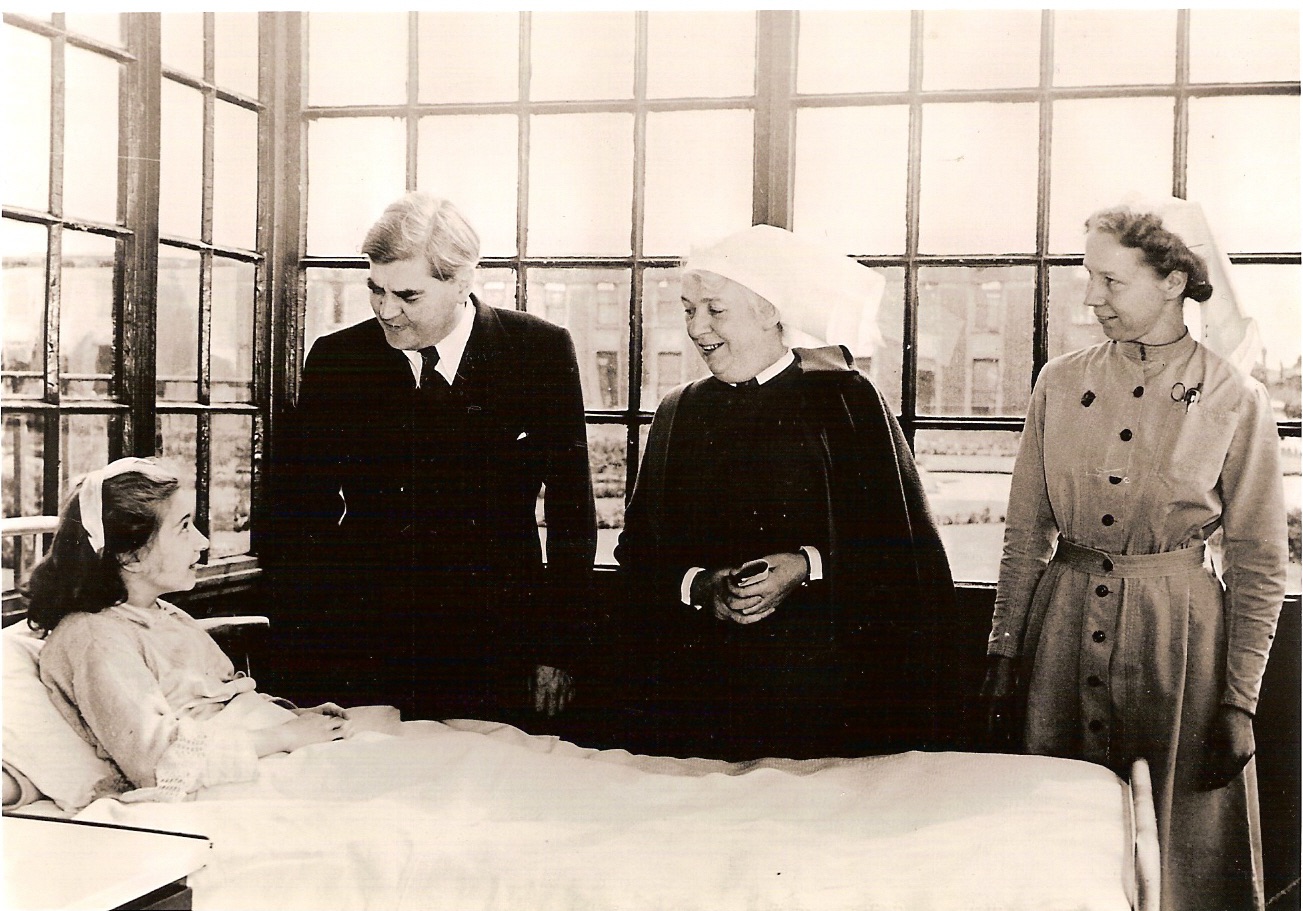

On the morning of 5 July 1948, a new era in British history began. At hospitals, clinics, and doctors’ surgeries across the country, the National Health Service (NHS) opened its doors for the first time. It was not the first universal healthcare system in the world—Germany’s compulsory insurance dated back to the 1880s, the Soviet Union had state provision, and New Zealand’s Social Security Act of 1938 had already taken major steps toward universal coverage. But the NHS was the first comprehensive, universal, tax-funded system free at the point of use on a national scale. For the first time in British history, a nation committed itself to providing healthcare to every citizen, regardless of income, age, or medical condition, without a bill at the end. The old system, in which healthcare was a patchwork of charity, private insurance, and means-tested public assistance, was swept away. In its place came a revolutionary principle: healthcare was a right, not a privilege.
The man who drove this transformation was Aneurin Bevan, the fiery and brilliant Labour politician appointed Minister of Health in Clement Attlee’s post-war government. Bevan was an unlikely architect of a national institution. The son of a coal miner from Tredegar in South Wales, he had left school at thirteen and gone to work in the pits. He had no university education, no medical training, and no formal background in health administration (though he had significant political and organisational experience, including local government work and deep involvement in the Tredegar Medical Aid Society). But he possessed an unshakeable conviction that the old order—in which working-class families feared illness not only for its physical toll but for the catastrophic financial consequences—was intolerable. “Illness is neither an indulgence for which people have to pay, nor an offence for which they should be penalised,” he declared in a 1948 speech. “It is a misfortune. The cost of treating it should be borne by the community.”
The creation of the NHS was not a smooth process. Bevan faced ferocious opposition from the British Medical Association (BMA), representing doctors who feared that state control would erode their professional independence and income. He faced resistance from Conservative politicians, who argued that the service would be unaffordable and would destroy personal responsibility. He faced scepticism from within his own cabinet, where some worried about the cost. Yet Bevan prevailed through a combination of political cunning, strategic compromise, and sheer determination. When the NHS opened, it was hailed as a triumph. Within weeks, it was treating millions of patients who had never before had ready access to a doctor.
This article traces the origins, political battles, implementation, and legacy of the National Health Service. It examines the dismal state of healthcare before 1948, the role of the wartime Emergency Medical Service, the influence of the Beveridge Report, Bevan’s epic struggle with the BMA, the compromises he made, and the immediate impact of the new service. It argues that the NHS was not merely a piece of social legislation but a moral declaration—a statement that a civilised society does not allow its citizens to suffer or die for want of money.
The Old Order: Healthcare Before 1948
Before the NHS, British healthcare was a chaotic and often cruel patchwork. There was no universal system, no guarantee of access, and no protection against the financial ruin that a serious illness could bring. For those who could afford it, private doctors and private hospitals provided excellent care. For the poor, the options were limited and often demeaning.
The Panel System (1911–1948)
The only significant state intervention before 1948 was the National Insurance Act of 1911, championed by Liberal Chancellor David Lloyd George. The Act created a “panel system” that gave employed workers (but not their families) access to a general practitioner (GP). The GP was paid a capitation fee per patient. The scheme covered about 15 million workers (estimates range from 13 to 16 million, depending on the year), but it excluded their wives, children, and the unemployed. Hospital care, specialist treatment, and medicines were largely excluded, though some panel patients could access limited drug benefits, and hospital access sometimes came through voluntary contributions or GP referral.
The panel system was a start, but it had severe limitations. GPs were overworked and underpaid. The quality of care varied enormously. And for anyone outside the insured working class—which meant most women, children, the elderly, and the unemployed—illness was a financial catastrophe. A visit to a doctor could cost a week’s wages; a hospital stay could wipe out a lifetime of savings.
Voluntary and Municipal Hospitals
Hospitals fell into two categories. The “voluntary” hospitals were charitable institutions, often founded in the nineteenth century by philanthropists, religious groups, or local benefactors. They provided free care to the poor, but they relied on donations, bequests, and fundraising. They were chronically underfunded, and their facilities were often outdated. Patients who could afford to do so were expected to make a contribution.
The “municipal” hospitals, run by local authorities (Poor Law Unions or later local councils), were the descendants of the workhouse infirmaries. These were the hospitals of last resort. By the 1930s, after the Local Government Act of 1929, many had improved significantly, but standards remained uneven. In some areas, municipal hospitals offered decent care; in others, they were still overcrowded and stigmatised. To be treated in a workhouse infirmary was to be marked as a pauper—a badge of shame that many working-class families dreaded.
The Cost of Illness
The financial burden of illness was crushing. A study in the 1930s found that a single serious illness could cost a working-class family up to six months’ wages. Many families delayed seeking treatment until it was too late. Others were bankrupted by medical bills. The dread of the “doctor’s bill” was a constant presence in working-class life. As one Labour MP put it: “The fear of sickness is the greatest fear that haunts the working-class home.”
The Second World War changed everything. The Emergency Medical Service (EMS), created in 1939 to treat military and civilian casualties, demonstrated that the state could coordinate and fund a large-scale hospital system effectively. The EMS integrated many voluntary and municipal hospitals, funded them from central taxation, and coordinated their operations. The result was a dramatic improvement in care. The wartime experience convinced many—including doctors and hospital administrators—that a national, state-coordinated system was feasible.
The Beveridge Report: The Blueprint for a New Britain
In 1941, the wartime coalition government commissioned the economist and social reformer Sir William Beveridge to write a report on social insurance. Beveridge was a formidable figure—a classic liberal who had spent a lifetime studying poverty and unemployment. His report, published in December 1942, became an instant bestseller. Over 600,000 copies were sold in the first few months. It was read in factory canteens, in army barracks, and in air-raid shelters.
Beveridge proposed a comprehensive system of social insurance that would protect every citizen “from the cradle to the grave” against the five “giant evils” of society: Want (poverty), Disease, Ignorance, Squalor (poor housing), and Idleness (unemployment). His plan included a National Health Service that would provide free medical treatment to all. “A revolutionary moment in the world’s history is a time for revolutions, not for patching,” Beveridge wrote.
The report’s popularity put pressure on all political parties to commit to post-war reform. The coalition government accepted the principle of a national health service, but it left the details vague. After Labour’s landslide victory in 1945, the task of translating Beveridge’s vision into legislation fell to Aneurin Bevan.
Aneurin Bevan: The Man and the Mission
Aneurin “Nye” Bevan was born in 1897 in Tredegar, a mining town in the South Wales valleys. His father, David, was a coal miner; his mother, Phoebe, a domestic servant. The family lived in a two-up, two-down cottage with an outdoor toilet. Bevan left school at thirteen and went to work in the mine. He was a voracious reader, educating himself in the local miners’ institute library.
Bevan became a trade union activist and, in 1929, was elected Labour MP for Ebbw Vale. He was a brilliant orator—passionate, witty, and cutting. He was also a radical. In the 1930s, he had advocated for a “Popular Front” with Communists and Liberals to defeat the National Government. He was a fierce critic of Winston Churchill’s wartime leadership, which made him unpopular in some circles. But Attlee respected his intellect and his fire.
When Attlee became Prime Minister in July 1945, he appointed Bevan as Minister of Health, with responsibility for implementing the National Health Service. It was a massive brief. Bevan also oversaw housing, a separate but related crisis. He threw himself into the task with characteristic energy. “I shall be ruthless,” he warned.
The Tredegar Model
Bevan grew up in a community that had already created a prototype of the NHS. The Tredegar Medical Aid Society, founded in the nineteenth century, was a mutual fund to which miners contributed a small weekly sum. In return, they received free medical care from local GPs and access to a cottage hospital. The Society was not perfect, but it demonstrated that collective funding and local administration could work. Bevan often cited Tredegar as his inspiration. “All my life I had seen the evils of the old system,” he later wrote. “I had seen the fear of illness and the fear of the doctor’s bill.”
The Battle with the Doctors: Bevan vs. the BMA
The greatest obstacle to the NHS was not the Treasury (though that was a struggle) but the British Medical Association (BMA), which represented the vast majority of British doctors. The BMA was deeply suspicious of the Labour government and hostile to a state-run health service. Its leaders feared that doctors would become salaried employees of the state, losing their professional independence and their ability to set their own fees.
The Consultants: Won Over by a Masterstroke
Bevan understood that he needed to split the medical profession. He knew that the hospital consultants—the elite specialists who worked in the voluntary hospitals—had different interests from the GPs. Consultants feared that a nationalised service would deprive them of their private patients and their lucrative fees.
Bevan offered the consultants a deal they could not refuse. He promised that senior consultants would be able to work part-time for the NHS and continue their private practice alongside. They would be paid generous salaries, and they would retain control over hospital administration through a system of medical advisory committees. The consultants’ main professional bodies, including the Royal College of Physicians, swung behind Bevan. (The precise influence of the Royal Colleges varied, but they were an important part of the coalition Bevan assembled.) The BMA’s position was fatally weakened. Bevan famously remarked that he had “stuffed their mouths with gold.”
The GPs: The Long Struggle
The GPs were harder to convince. They resented the loss of their independent contractor status. They feared that they would become “municipal employees” subject to bureaucratic control. The BMA instructed its members not to join the NHS, and for months the impasse continued.
Bevan played a waiting game. He knew that public opinion was on his side. The NHS was wildly popular; polls showed that over 80% of the public supported free healthcare. He also knew that many GPs, especially younger ones, were attracted by the security of a guaranteed income and the prospect of improved facilities.
The breakthrough came in May 1948. The BMA, facing internal dissent, agreed to a compromise. GPs would not be salaried employees; they would be independent contractors paid by the government on a capitation basis (a fee per patient). They would be free to treat private patients alongside NHS patients. They would have a statutory right to be consulted on the administration of the service. On these terms, the BMA recommended that its members join the NHS. By the appointed day, 94% of GPs had signed up.
The Key Compromises: Pay Beds, Private Practice, and Prescription Charges
Bevan was a radical, but he was also a pragmatist. He understood that to build a universal system, he had to make concessions to the powerful medical establishment. These concessions would prove controversial for decades.
Pay Beds
The most contentious compromise was the retention of “pay beds”—beds in NHS hospitals that could be used by private patients willing to pay for them. Bevan argued that pay beds were necessary to attract and retain senior consultants, who valued the income and prestige of private practice. His left-wing critics accused him of selling out to the elites. The compromise persisted for decades; pay beds were significantly reduced under the Labour government in the 1970s, but they were never completely abolished. (There was no 2019 phase-out milestone; a small number of pay beds still exist in NHS hospitals today.)
Private Practice
The NHS did not abolish private medicine. Doctors were free to treat private patients outside the NHS, and patients were free to pay for private care. Bevan’s vision was a universal public service, not a monopoly. He believed that the NHS would prove so superior that private practice would wither away. He was wrong. Private practice thrived alongside the NHS, creating a two-tier system that Bevan had hoped to avoid.
Prescription Charges
Bevan was adamant that the NHS should be free at the point of use, with no charges for anything. He famously declared that the NHS would be “free as the air.” But in 1949, facing a severe budget crisis, the Treasury forced him to accept charges for dental and optical services, and later for prescriptions. The first prescription charge (one shilling, or 5p) was introduced in 1951. Bevan was furious. He threatened to resign. He was persuaded to stay, but the charge was a small crack in the principle of universal free care. (The charge was later abolished by Harold Wilson’s Labour government in 1965, reintroduced in 1968, and has remained ever since, with various adjustments.)
The Launch: 5 July 1948
On 5 July 1948, the NHS opened its doors. The launch was not a single ceremony but a quiet administrative shift. Hospitals that had been voluntary or municipal became state-owned. GPs who had signed up began treating NHS patients. The public responded with overwhelming enthusiasm.
The scale of unmet need was staggering. Within the first month, over 2 million dental patients registered. Approximately 30,000 pairs of spectacles were dispensed daily. Waiting lists for hospital treatment, which had been years long, began to shorten. The number of outpatient visits doubled in the first year.
The most dramatic impact was on the elderly and the poor. Elderly patients who had never seen a dentist or an optician received free treatment. Women who had given birth at home without medical assistance now had access to antenatal care. Children with untreated tonsillitis, hernias, or other conditions received surgery.
One often-told anecdote (perhaps more representative than literally documented) captures the spirit of the time: a Scottish woman in her seventies, who had worn the same pair of spectacles for thirty years, was fitted with new lenses. When she put them on, she wept. “I can see my grandchildren’s faces properly for the first time,” she said. Whether or not this exact story is true, thousands of similar moments occurred across the country. The NHS had delivered on its promise.
The Immediate Impact and the Cost
The NHS was expensive. The government had estimated that the service would cost about £170 million per year. In its first year, it cost nearly £300 million. The Treasury was alarmed. The Chancellor of the Exchequer, Sir Stafford Cripps, was a strict fiscal conservative (ironic for a Labour minister). He demanded cuts.
Bevan defended the NHS passionately. He argued that the service was not a drain on the economy but an investment in the nation’s health. Healthier workers were more productive. Reduced mortality and morbidity saved the state money in the long run. He also argued that the high initial costs reflected decades of pent-up demand; once the backlog was cleared, costs would stabilise.
The cost did not stabilise. The NHS has always been expensive, and its costs have risen faster than GDP. But Bevan’s defence was prescient: the NHS has consistently been one of the most cost-efficient health systems in the developed world, measured by spending per capita relative to life expectancy and other outcomes. (It is not always top-performing on every metric—cancer survival and waiting times have been areas of concern—but its efficiency is widely acknowledged.)
Bevan’s Resignation and Later Career
Despite the success of the NHS, Bevan’s tenure as Minister of Health was short-lived. In 1951, the Labour government, facing a severe budget crisis (driven by the cost of rearmament for the Korean War), proposed introducing prescription charges. Bevan was opposed to any charge on principle. He argued that it violated the founding principle of free care.
The cabinet overruled him. Bevan resigned from the government on 22 April 1951, along with two other left-wing ministers, Harold Wilson and John Freeman. The resignation was a blow to Attlee’s government, which lost a key figure and a powerful orator. But Bevan did not fade from politics. He later became Shadow Foreign Secretary (1956–59) and Deputy Leader of the Labour Party (1959), remaining a central figure in the party’s left wing until his death. His legacy, however, was already secure. The NHS survived.
The Legacy: The NHS as British Institution
The National Health Service has become a central pillar of British identity. It has often been described as “the closest thing the English have to a religion”—a remark widely attributed to former Chancellor Nigel Lawson, though the exact phrasing varies. Whatever its origin, the sentiment is accurate. Opinion polls consistently show that the NHS is the institution Britons are most proud of—more than the monarchy, the armed forces, or the BBC. For the left, it is a monument to the post-war Labour government and the principle of collective action. For the centre and the right, it is a symbol of British decency and pragmatism.
The NHS has weathered many crises: funding shortages, staffing crises, the COVID-19 pandemic, and political debates about reform. Governments of all parties have pledged to protect it, even as they sought to reform it. Margaret Thatcher’s Conservative government (1979–1990) introduced an internal market but preserved free care. Tony Blair’s Labour government (1997–2007) increased funding dramatically and reduced waiting times but also introduced private sector involvement. The 2012 Health and Social Care Act, passed by the Conservative-Liberal Democrat coalition, restructured the NHS in ways that many feared would lead to privatisation. Yet the NHS endures.
The impact of the NHS on health outcomes, while significant, must be placed in context. Infant mortality had been falling steadily since the early twentieth century, and life expectancy had been rising. The NHS contributed to accelerating these trends, particularly by improving access for the poor and reducing regional disparities, but it was not the sole cause. Nevertheless, the disappearance of the “doctor’s bill” as a source of working-class anxiety was a profound social transformation.
Aneurin Bevan did not live to see the NHS become an institution. He died in 1960, aged 62, after a long battle with cancer. At his funeral, his widow, Jennie Lee, received a letter from a former miner who had been treated by the NHS. “He saved us from the fear of the doctor’s bill,” the miner wrote. “I hope he knew what he meant to us.”
Conclusion
The creation of the National Health Service was the greatest single achievement of the Attlee government. It was also the most radical. No other country had implemented a system of this scope, funded primarily through general taxation and free at the point of use on a national scale. The doctors opposed it; the Conservatives opposed it; even some of Bevan’s cabinet colleagues had doubts. But Bevan’s vision prevailed, and the NHS became a model that inspired similar systems elsewhere.
The NHS was not perfect. It had funding problems from the start. The compromises on pay beds and private practice created a two-tier system. The prescription charge, introduced despite Bevan’s opposition, violated the principle of free care. But the core principle—that healthcare should be a right, not a commodity—was established. The NHS transformed the health of the nation. Infant mortality fell more rapidly in the decades after 1948 than before, and life expectancy continued to rise. The dread of the “doctor’s bill” disappeared.
The NHS was not only a practical reform but a moral declaration. It said that in a civilised society, no one should suffer or die because they cannot afford to pay. It said that the state has a positive duty to care for its citizens. And it said that collective action, through the mechanism of democratic government, could build a better world. In an age of cynicism about politics, the NHS remains a testament to what democratic socialism can achieve.
Further Reading & Sources
· Bevan, Aneurin. In Place of Fear. Heinemann, 1952.
· Foot, Michael. Aneurin Bevan: A Biography (2 volumes). Davis-Poynter, 1973.
· Klein, Rudolf. The New Politics of the NHS: From Creation to Reinvention. Radcliffe Publishing, 2010.
· Pater, John. The Making of the National Health Service. King Edward’s Hospital Fund, 1981.
· Timmins, Nicholas. The Five Giants: A Biography of the Welfare State. HarperCollins, 1995.
· Webster, Charles. The National Health Service: A Political History. Oxford University Press, 1998.
· The National Archives (UK). “The National Health Service 1948–2008.” Online exhibit.

Leave a Reply