
Introduction
For nearly half a century, from the birth of the Italian Republic in 1946 to its dramatic collapse in the early 1990s, Italian politics was defined by a single party: Christian Democracy (Democrazia Cristiana, or DC). The DC was not a party in the conventional sense. It was a coalition of factions, a political machine, a patronage network, and a cultural movement all rolled into one. It drew support from the Catholic Church, from the business class, from peasants, from housewives, from civil servants, and from millions of Italians who feared the alternative: the Italian Communist Party (PCI). The DC remained the dominant governing party from 1946 until 1994, leading successive coalition governments and providing nearly every prime minister. Its leaders—Alcide De Gasperi, Amintore Fanfani, Aldo Moro, Giulio Andreotti—were the architects of the republic, the engineers of the economic miracle, and the managers of the Cold War alliance with the United States.
But the DC’s dominance came at a cost. The party was notoriously factionalized, with competing currents that often seemed more interested in internal power struggles than in governing. It was deeply corrupt, particularly in its later decades, when kickbacks, bribes, and clientelism became endemic. It was dependent on external support—first from the Vatican, later from the United States—which led critics to question its sovereignty. And it was unable to solve Italy’s chronic problems: the north-south divide, organized crime, an inefficient state bureaucracy, and a mountainous public debt.
The DC era ended in a spectacular collapse. In the early 1990s, a wave of corruption investigations—known as Mani pulite (Clean Hands)—swept away the entire political establishment. The DC, which had seemed eternal, dissolved in 1994. Its legacy is contested: for its defenders, the DC was the guarantor of Italian democracy and prosperity; for its critics, it was a corrupt, clientelistic machine that blocked reform and excluded the left from power for half a century.
This article traces the rise, dominance, and fall of Christian Democracy in Italy. It examines the party’s origins in the anti-fascist resistance, its consolidation under De Gasperi, its transformation into a catch-all machine, its management of the Cold War, and its eventual collapse in the 1990s. It argues that the DC was the central institution of the Italian Republic—for better and for worse.
Origins: Wartime Foundation and Catholic Revival
Christian Democracy was founded in wartime Italy in 1943, drawing on older Catholic political traditions. Before the war, Italian Catholics had been divided. The Catholic Church had opposed the unification of Italy in the 19th century, and successive popes had forbidden Catholics from participating in the politics of the Italian state (the so-called non expedit). The fascist regime, however, had made peace with the Church through the Lateran Treaty of 1929, which recognized the Vatican as a sovereign state and made Catholicism the state religion. Many Catholics had supported fascism, or at least tolerated it.
But a minority of Italian Catholics had opposed the regime. They came from the tradition of Christian democracy—a political movement that sought to apply Catholic social teaching to modern politics, advocating for democracy, social justice, and the dignity of labor. The most important figure in this tradition was Luigi Sturzo, a Sicilian priest who had founded the Italian People’s Party (PPI) in 1919. The PPI had been a mass Catholic party, but it was suppressed by Mussolini in 1926. Sturzo went into exile, and Christian democracy went underground.
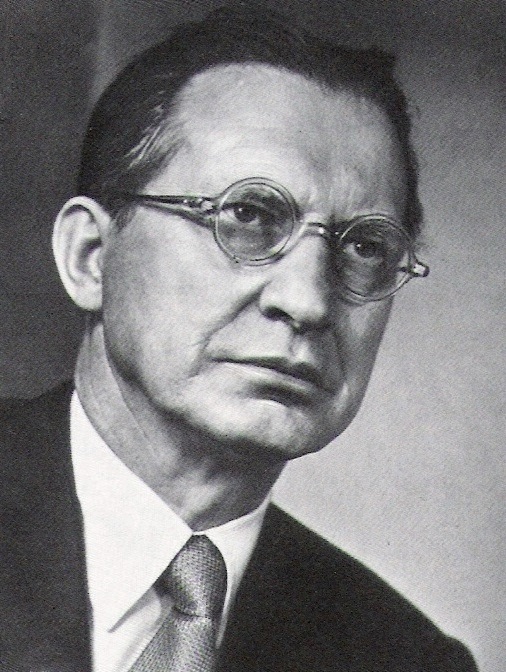
During the anti-fascist resistance (1943–1945), Catholic partisans fought alongside communists, socialists, and liberals. The experience of shared struggle created bonds of trust and cooperation. In 1943, representatives of the anti-fascist parties—including the newly formed Christian Democracy party—met in Rome and formed the National Liberation Committee (CLN). The DC was not a legal continuation of the PPI—the fascist regime had formally dissolved it—but it clearly claimed and inherited much from the PPI tradition, including its symbols and Catholic political identity. The party was led by Alcide De Gasperi, (pictured above) a former PPI deputy who had worked in the Vatican library during the fascist years.
The DC’s founding principles were rooted in Catholic social teaching: the dignity of the human person, the importance of the family, the principle of subsidiarity (that decisions should be made at the lowest possible level), and the rejection of both laissez-faire capitalism and state socialism. The DC sought a “third way” between American capitalism and Soviet communism—a social market economy that balanced growth with equity, private property with social welfare, and individual freedom with community solidarity.
But the DC was also a practical political party. Its primary goal was to prevent the Communists from coming to power. In the post-war years, the DC positioned itself as the party of order, of the West, and of the Church. It drew support from the middle class, the peasantry, and the conservative south. It was anti-communist, pro-American, and pro-European.
The De Gasperi Era: Consolidation and Alignment (1945–1953)
Alcide De Gasperi was a founding figure of the Italian Republic. A devout Catholic from Trentino (a former Austrian territory), De Gasperi had been a deputy in the Austrian parliament before the First World War and in the Italian parliament after. He was a moderate, a pragmatist, and a skilled diplomat. As prime minister from 1945 to 1953, he guided Italy through the transition from monarchy to republic, the drafting of the constitution, the peace treaty with the Allies, the expulsion of the Communists from government, the Marshall Plan, and the 1948 election.
De Gasperi’s greatest achievement was anchoring Italy in the Western bloc. He was a major pro-Western leader who, together with his coalition allies, accepted the Marshall Plan, which rebuilt the Italian economy. He led Italy into NATO in 1949, despite opposition from the left. He was a founding father of European integration, supporting the European Coal and Steel Community (1951) and the proposed European Defence Community (1954, which ultimately failed). De Gasperi believed that Italy’s future lay in a united Europe, not in neutrality or alignment with the East.
Domestically, De Gasperi pursued moderate reforms. He supported land reform, breaking up some large estates in the south and distributing land to peasants. He promoted industrial development, particularly in the north. He expanded social welfare, including pensions and health care. But he was also a conservative: he maintained the Lateran Treaty, which gave the Catholic Church special status; he kept religious education in schools; and he resisted divorce and abortion rights.
De Gasperi’s style of leadership was consensual. He built coalitions with smaller centrist parties—Liberals, Republicans, Social Democrats—and kept the Communists and Socialists in opposition. This “centrist” formula (centrismo) was the model for Italian politics for the next four decades: the DC at the center, governing in coalition with smaller parties of the center-left or center-right, with the left permanently excluded.
De Gasperi’s downfall came in 1953. His government proposed a new electoral law that would give a bonus to the coalition that won 50% of the vote—a transparent attempt to lock in DC dominance. The law was narrowly passed but was nicknamed the “swindle law” (legge truffa) by the opposition. In the 1953 election, the DC-led coalition fell just short of 50%, and the law was never applied. De Gasperi resigned, and he died the following year. The De Gasperi era was over, but the DC era had just begun.
The Fanfani Era: The Party as Machine (1954–1963)
After De Gasperi, the DC transformed from a party of notables into a modern political machine. The architect of this transformation was Amintore Fanfani, a young, ambitious politician from Tuscany. Fanfani understood that the DC’s future depended on organization: a mass membership, a network of local branches, control over patronage, and a presence in every village and city neighborhood.
Fanfani built the DC into a formidable machine. He established the “Fanfani fiefdom” in the south, where the party used state resources to reward supporters and punish opponents. He created the “little college” (collegietto), a group of young, loyal politicians who would carry out his orders. He expanded the party’s presence in trade unions, cooperatives, banks, and state-owned enterprises. By the early 1960s, the DC was not just a political party; it was a parallel state.
Fanfani also shifted the DC’s ideology to the left. He believed that the DC needed to compete with the Communists for working-class votes, not just rely on anti-communism. He supported a more active role for the state in the economy, including state-owned enterprises (the IRI, ENI, etc.). He advocated for social welfare, public housing, and education reform. This “center-left” orientation (apertura a sinistra, or “opening to the left”) was controversial within the DC, but Fanfani pushed it through.
The center-left formula brought the Socialists (PSI) into government for the first time since 1947. In 1963, the DC formed a coalition with the PSI, led by Aldo Moro, a moderate from the DC’s left wing. The Communists remained in opposition, but the center-left coalition represented a shift: the DC was now willing to govern with parties to its left, as long as they were not Communist.
The center-left coalition pursued a program of reforms: nationalization of the electricity industry (1962), the introduction of the “scuola media unica” (unified middle school, 1962), and the expansion of social welfare. But the coalition was unstable. The Socialists were divided, and the DC’s right wing opposed any cooperation with the left. The center-left experiment would collapse and restart repeatedly over the next decade.
The Moro Era: The Historic Compromise and the Years of Lead (1963–1978)
Aldo Moro was the DC’s most sophisticated leader. A law professor from Bari, Moro was a moderate, a conciliator, and a man of deep Catholic faith. He believed that Italy’s problems—economic stagnation, social conflict, political polarization—could be solved only by bringing the Communists into a broader governing relationship. This idea would later be formalized as the “historic compromise” (compromesso storico), a term more closely associated with PCI secretary Enrico Berlinguer in the mid-1970s. Moro’s approach was a precursor and a key part of the same strategic opening.
Moro’s strategy was controversial. The United States was deeply opposed to Communist participation in Italian government. The Vatican was skeptical. The DC’s right wing was hostile. But Moro believed that the Communists, under Berlinguer (who became PCI secretary in 1972), had changed. Berlinguer had broken with Moscow, condemned the Soviet invasion of Czechoslovakia (1968), and embraced a “Eurocommunist” line that emphasized democracy and pluralism. The PCI was no longer a revolutionary party; it was a social democratic party with a red flag.
The historic compromise never fully materialized—the Communists never formally entered government—but they did come close. In 1976, after a successful election for the PCI (34% of the vote), the DC formed a government that relied on Communist support in parliament. This was the “national solidarity” government, led by Giulio Andreotti (another DC heavyweight). The Communists did not hold cabinet positions, but they were consulted on major decisions and voted with the government on key legislation. This was a significant shift, but it fell short of formal coalition.
The national solidarity experiment was cut short by the Red Brigades, a far-left terrorist group that had declared war on the Italian state. In 1978, the Red Brigades kidnapped Aldo Moro, the architect of the opening to the left. After 55 days of captivity, during which the government refused to negotiate, Moro was murdered. His body was found in the trunk of a car in central Rome. The assassination was a trauma for Italy. The historic compromise died with Moro.
The “Years of Lead” (anni di piombo), a period of political violence that lasted from the late 1960s to the early 1980s, had already claimed hundreds of lives. The Moro kidnapping was its climax. The DC, which had been the party of order, now seemed unable to protect its own leaders. The party’s legitimacy was shaken.
The Andreotti Era: Power, Patronage, and Corruption (1978–1992)
After Moro’s death, the DC was led by a new generation of politicians. The most powerful was Giulio Andreotti, a tiny, bespectacled, and brilliant politician from Rome. Andreotti was a master of the backroom deal, a man who had served in more governments than anyone else (he was prime minister seven times). He was also a man of dark rumors: he was suspected of ties to the Mafia, to the secret services, and to far-right terrorist networks. He was later tried for alleged Mafia association and acquitted, but the allegations and the trials themselves became part of his controversial legacy.
Andreotti’s Italy was a country of patronage, clientelism, and corruption. The DC controlled a vast network of state-owned enterprises, banks, and agencies. These were used to reward supporters: jobs, contracts, pensions, and subsidies flowed to DC voters and to the party’s factional allies. The system was known as “partitocrazia” (partyocracy)—rule by political parties, not by the people.
The DC’s corruption was not secret; it was an open secret. The party funded itself through kickbacks on public contracts. This system, exposed dramatically in the early 1990s, came to be known as “Tangentopoli” (Bribe City). The Mafia, which had strong ties to the DC in Sicily, also played a role in some regions. The DC was not a criminal organization, but it was deeply enmeshed in a system of corruption.
Despite the corruption, the DC remained popular. It was the only party that could defeat the Communists. It was the party of the Church, of the family, of social order. For millions of Italians, particularly in the south, the DC was the guarantor of stability and the source of material benefits. The system worked—for those who were inside it.
But the system was also failing. The public debt ballooned from 50% of GDP in 1970 to over 100% by 1990. The state was inefficient and bloated. The north-south divide widened. Organized crime, particularly the Mafia, grew more powerful. And the DC’s leaders grew more arrogant, more distant from the people, and more dependent on the system of kickbacks and bribes.
The Collapse: Mani Pulite and the End of Christian Democracy (1992–1994)
The DC’s collapse was sudden and spectacular. In 1992, a Milanese magistrate named Antonio Di Pietro began investigating a small socialist politician who had accepted a bribe. The investigation, known as Mani pulite (Clean Hands), quickly spiraled. More politicians were implicated, then more, then more. The system of kickbacks—the “Tangentopoli” system—was exposed in all its squalor.
The investigations revealed that the DC, along with the other governing parties, had been systematically bribed by businessmen seeking public contracts. The bribes were not small; they ran into the billions of dollars. The money flowed to party treasuries, to individual politicians, and, in some cases, to the Mafia. The DC’s leaders, including the supposedly incorruptible Andreotti, were implicated. (Andreotti was later acquitted, but he faced serious allegations.)
The public was horrified. The same DC that had presented itself as the party of morality, of the Church, of the family, was revealed to be a den of thieves. The old anti-communist justification—”vote for us or the Communists will win”—no longer worked. The Communist Party had dissolved in 1991, replaced by a social democratic party (the Democratic Party of the Left). The Cold War was over. The threat was gone.
In the 1992 election, the DC’s vote share collapsed to 29%—its lowest ever. In 1993, a referendum abolished the proportional representation system that had sustained the DC’s power. New elections were called for 1994. By then, the DC was in terminal decline. Its leaders were under investigation; its reputation was destroyed; its patronage networks were unraveling.
In January 1994, the DC dissolved. Its remnants split into two parties: the Italian People’s Party (PPI), which tried to continue the DC tradition, and the Christian Democratic Centre (CCD), which aligned with the new right. Neither ever regained the DC’s dominance. The 1994 election was won by a new political force: Forza Italia, a party created by the media mogul Silvio Berlusconi. The Christian Democracy era was over.
The Legacy: Assessing Christian Democracy
The DC’s legacy is contested. For its defenders, the DC was the guarantor of Italian democracy. It prevented a Communist takeover, anchored Italy in the West, rebuilt the economy, and presided over the economic miracle. It gave Italy stability, prosperity, and a voice in Europe. The DC’s leaders—De Gasperi, Moro, Fanfani—were statesmen of the highest order.
For its critics, the DC was a corrupt, clientelistic machine that blocked reform, excluded the left from power, and enriched its own members at public expense. It perpetuated the north-south divide, tolerated the Mafia, and ran up a staggering public debt. The DC’s anti-communism was a convenient excuse for maintaining a system of privilege and corruption.
Both views contain truth. The DC did stabilize Italian democracy at a moment when it could have collapsed. It did integrate Italy into the West. It did oversee the economic miracle. But it also failed to reform the state, to fight corruption, to develop the south, and to create a modern, efficient political system. The DC was a party of the Cold War; when the Cold War ended, the DC ended with it.
The DC’s collapse in the 1990s was a trauma for Italy. The party that had seemed eternal was gone. The system of government that had lasted for 50 years was swept away. Italy entered a period of political chaos, with governments changing rapidly and corruption scandals continuing to erupt. The vacuum left by the DC was filled by Berlusconi, a populist billionaire who offered a new kind of politics: media-driven, personality-centered, and anti-establishment.
The DC’s legacy also lives on in the institutions it created. The Italian constitution, the European alignment, the social market economy, the welfare state—these are all products of the DC era. The party’s best leaders, particularly De Gasperi and Moro, are still revered as founding fathers. The party’s worst legacy—corruption, clientelism, inefficiency—is still being cleaned up.
Conclusion
For nearly half a century, Christian Democracy was the dominant force in Italian politics. It led every government, controlled the state, and shaped the nation’s political culture. It was the party of the Church, of the West, of stability, and of prosperity. It was also the party of corruption, clientelism, and stagnation. The DC was a paradox: a party that saved Italian democracy and a party that corrupted it; a party that built the republic and a party that nearly destroyed it.
The DC’s collapse in the 1990s was a turning point in Italian history. The end of the Cold War, the exposure of corruption, and the rise of new political forces swept the old order away. The DC, which had seemed eternal, dissolved in a matter of months. Its leaders, who had been treated as demigods, were reduced to defendants in corruption trials.
But the DC’s legacy endures. The Italy that emerged from the Cold War—a republic, a democracy, a member of NATO and the European Union—was largely the DC’s creation. The problems that still afflict Italy—the north-south divide, organized crime, political corruption, public debt—were also part of the DC’s legacy. The DC was not a simple story of good or evil; it was a complex story of success and failure, of idealism and cynicism, of statesmanship and corruption.
The Christian Democracy era is over, but its shadow still hangs over Italian politics. The parties that replaced the DC—Berlusconi’s Forza Italia, the center-left Democratic Party—are still struggling to escape its legacy. The DC may be gone, but the Italy it created is still here.
Further Reading & Sources
· Ginsborg, Paul. A History of Contemporary Italy: Society and Politics, 1943–1988. Penguin, 1990.
· Gundle, Stephen, and Simon Parker, eds. The New Italian Republic: From the Fall of the Berlin Wall to Berlusconi. Routledge, 1996.
· Leonardi, Robert, and Douglas A. Wertman. Italian Christian Democracy: The Politics of Dominance. St. Martin’s Press, 1989.
· McCarthy, Patrick. The Crisis of the Italian State: From the Origins of the Cold War to the Fall of Berlusconi. St. Martin’s Press, 1995.
· Newell, James L. The Politics of Italy: Governance in a Normal Country. Cambridge University Press, 2010.
· Spotts, Frederic, and Theodor Wieser. Italy: A Difficult Democracy. Cambridge University Press, 1986.
Listen & Learn: Related Podcast Collections
Explore these curated episode collections to go deeper on the history behind this article:

Leave a Reply